perfect food pairings

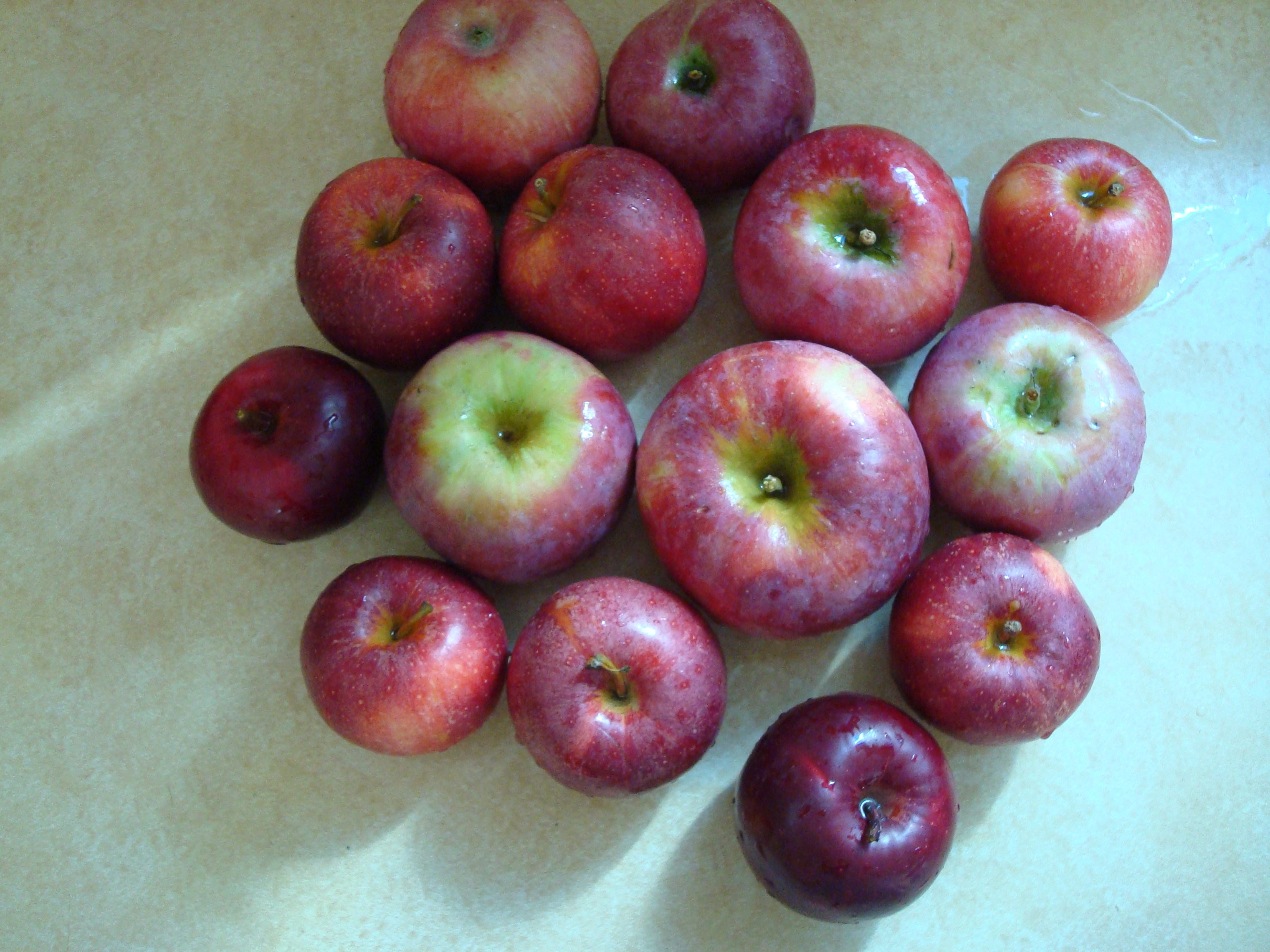
When I think of foods that pair together nicely the obvious answer is peanut butter and chocolate (duh!) but there are of course others: salmon and dill, beets and goat cheese, figs and bacon (but what doesn’t bacon go with?), and so on and so forth.  But I live in Wisconsin now and we all know what Wisconsin is known for: yes, I’m talking about cheese.  In Wisconsin restaurants they put a slice of cheddar cheese on apple pie… wha-wha-what???

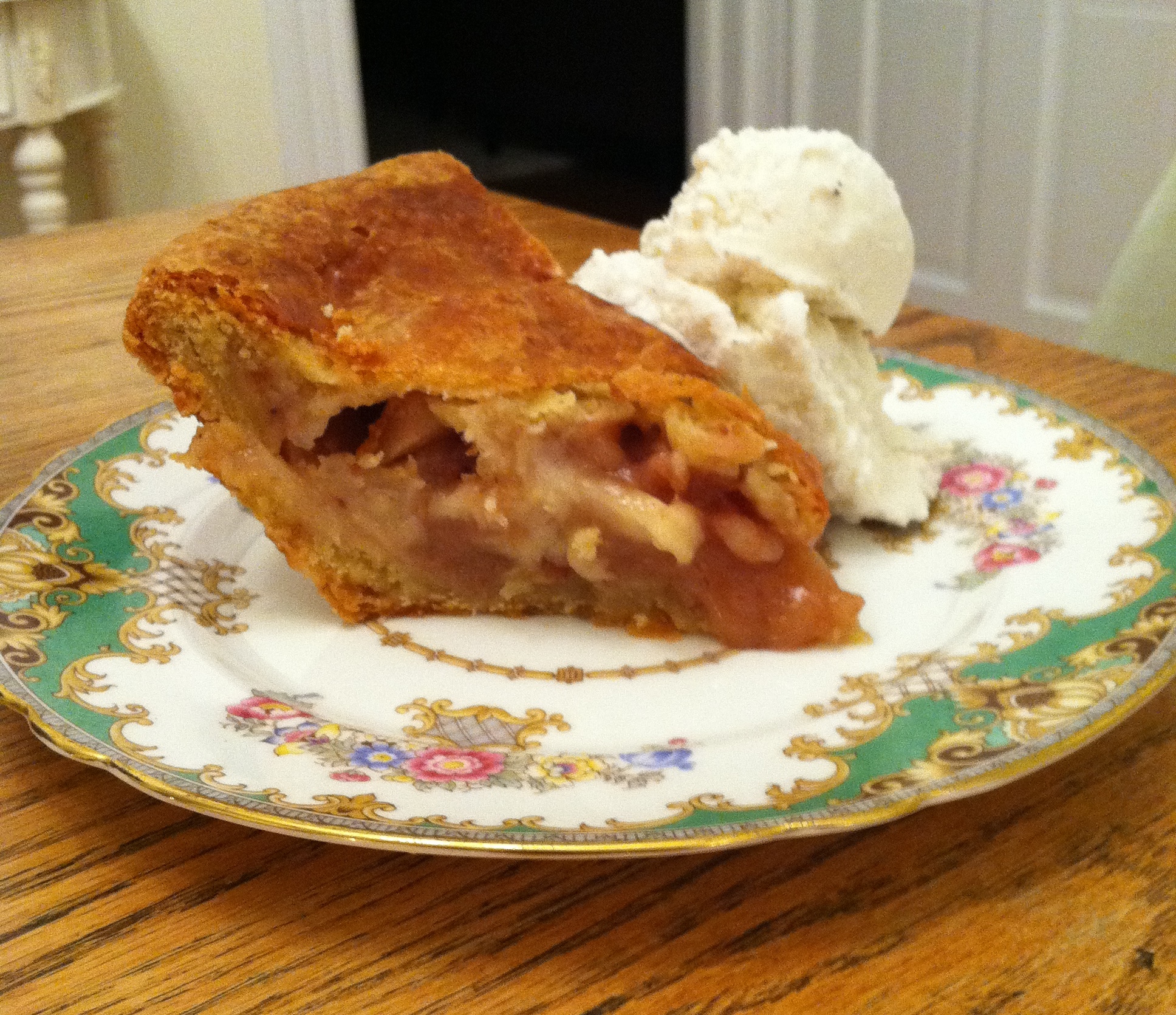
I’ve actually had this recipe for long before I moved to Dairyland so it seems fitting that I wound up in this fine state.  However, this recipe one-ups the slice of cheese on top of the apple pie by incorporating the cheese into the crust.  It’s pure genius and must be tried immediately.

I highly recommend enjoying it heated up with a scoop of vanilla ice cream on top.  Yet another wonderful pairing!

Apple Pie with Cheddar Crust (found at www.marthastewart.com)

  • 1 1/2 pounds (about 3) Granny Smith apples, peeled, cored, and cut into 1/4-inch-thick wedges
  • 2 pounds (about 5) Cortland apples, peeled, cored, and cut into 1/4-inch thick wedges
  • 3/4 cup sugar
  • 1/2 cup all-purpose flour
  • 2 teaspoons fresh lemon juice
  • 3/4 teaspoon ground cinnamon
  • 1/4 teaspoon freshly grated nutmeg
  • 1/4 teaspoon salt
  • 1/8 teaspoon ground cloves
  • 2 tablespoons unsalted butter, cut into small pieces
  • 1 large egg, beaten
  • Cheddar Crust dough (see recipe below)

Preheat oven to 450 degrees. Divide dough into two pieces. On a lightly floured work surface, roll out each to a 13-inch circle.

Fit one circle into a 10-inch pie plate; transfer plate to a baking sheet. Put other circle on another baking sheet. Refrigerate dough until cold, at least 30 minutes.

Stir together apples, sugar, flour, lemon juice, cinnamon, nutmeg, salt, and cloves.  Spoon into bottom pie crust. Dot filling with butter. Cover with top crust.  Fold edges over; crimp decoratively to seal. Cut a steam vent. Chill in freezer until firm, about 30 minutes.

Brush with egg. Bake pie 10 minutes. Reduce oven temperature to 350 degrees. Bake until golden brown, about 45 minutes. Tent with foil; bake until juices are bubbling, about 45 minutes more. Let cool at least 1 1/2 hours before serving.

Cheddar Crust (found at www.marthastewart.com)

  • 2 1/2 cups all-purpose flour, plus more for dusting
  • 1 teaspoon sugar
  • 1/2 teaspoon salt
  • 14 tablespoons (1 3/4 sticks) cold unsalted butter, cut into small pieces
  • 4 ounces white cheddar cheese, coarsely grated (about 1 1/2 cups)
  • 1/2 cup ice water

Process flour, sugar, and salt in a food processor. Add butter; pulse until pea-size lumps appear. Pulse in cheese. With processor running, add ice water; process just until dough comes together.

Turn dough out; gather into a block. Wrap in plastic wrap. Refrigerate until cold, at least 30 minutes or up to 2 days.

final burst of summer

How can it be Labor Day weekend already?  Didn’t summer just get started?  Just a few weeks ago I bought raspberries, blueberries, cherries, and yes even strawberries at the farmer’s market and now the only fruit I can find there is apples?  What???

No matter.  I didn’t let a little lack of fruit at the farmer’s market stop me from making something I wanted to ever since I saw a picture of it in July’s Bon Appetit magazine: hand pies.  And not just one batch of hand pies– I went full-on and did a double batch for a bbq I attended and made both blueberry and cherry varieties. 

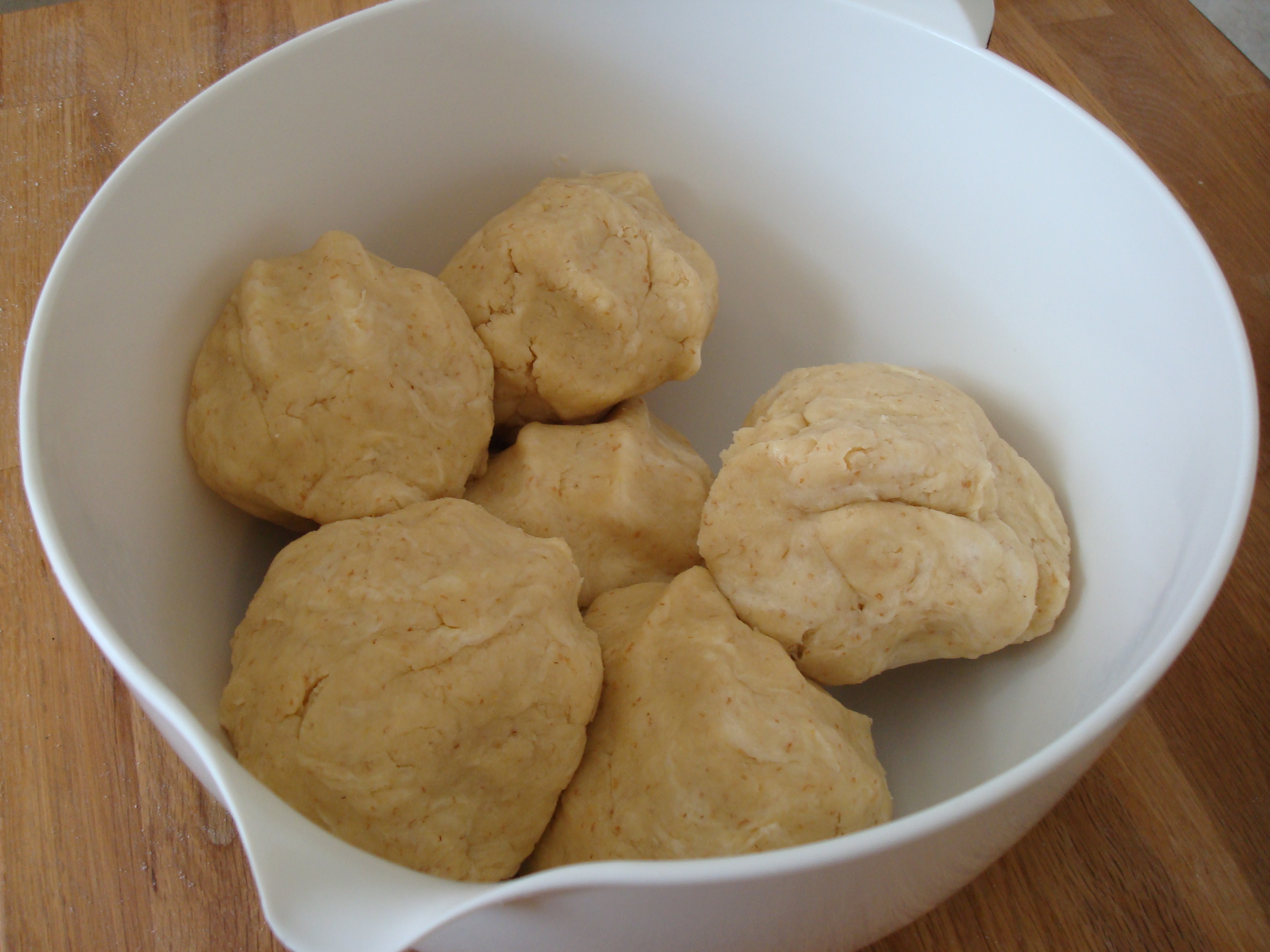
And what does every pie start with?  Crust of course.

I made a lot of crust.  I knew there were going to be a lot of people at the bbq and since the recipe only made 12 individual pies I didn’t want anyone to feel left out so made 24 little hand pies.  What was I thinking?

The making of the crust was pretty simple, as was the making of the fillings.  In general, I find pies to be one of the easiest and quickest desserts to make and the thought of individual pies just seemed so quaint and fun that I couldn’t help myself.
I had visions of wrapping them all cute in individual wax paper bags and serving them from a basket lined with a vintage dish towel with some fun floral pattern on it.  Sounds lovely and charming, right?

A word to the wise: do not make these when you are slightly pressed for time.  Also it’s probably a good idea not to make them the first time you meet your future in-laws, say, or when you’re trying to impress your new boss.  Neither of those things was the case with me, I’m just trying to think of scenarios when it might not be a great time to try something so meticulous as crafting hand pies.

The rolling out of the dough and the slicing up into squares went well.  Dropping filling onto the squares even went pretty well, too.  (Note the below image was the last batch I put together.  The first few go-rounds were definitely not so photo-worthy…)

I’m a generous person and I want everyone’s pie to have a generous portion of filling.  That is not a good way to think when making hand pies.  A little dollop will do in this case.  Anything more than that will ooze out the side of the pie and prevent you from being able to seal it.

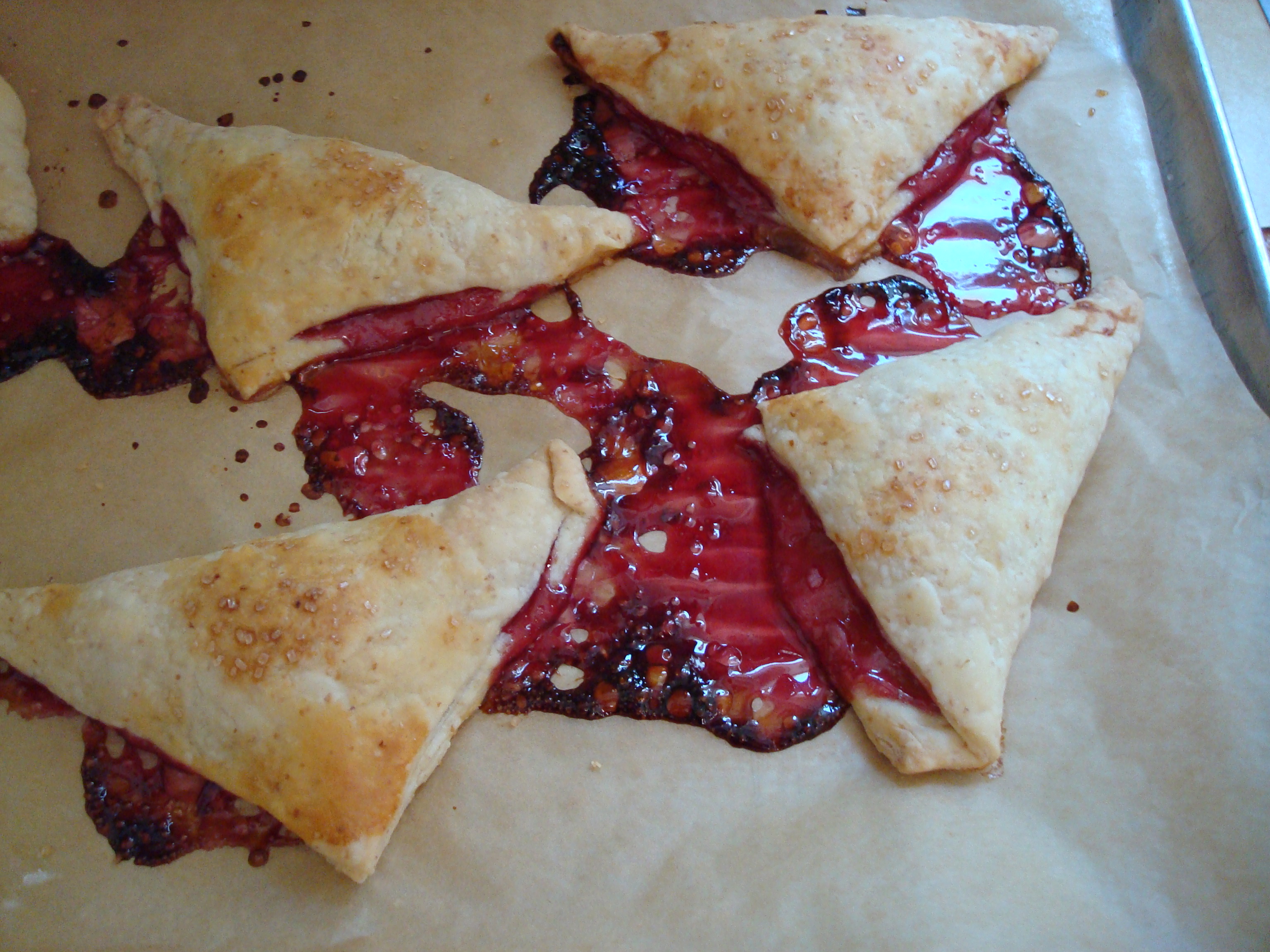
Sealing the pie is key.  Above is one of the few pies that actually looked halfway decent.  Below you will see the finished product when pies are not sealed properly.  Not the prettiest, but thank goodness for that parchment paper.  That saved me from having to scrub the baking sheets afterwards.  Thank you parchment  paper!

Fortunately the pies were not so unattractive once peeled off the parchment paper.  In fact, they were even kind of cute.  I ran out of time for the whole wax paper bag thing, but in the end it didn’t really matter– they were a hit at the bbq.  Happy Labor Day weekend and I hope you enjoy these last moments of summer!

Hand Pies (adapted from Blackberry Hand Pie and Cherry Hand Pie recipes from www.epicurious.com)

  • Pastry dough for a double-crust pie (see recipe below)
  • 2 tablespoons milk
  • 2 tablespoons raw sugar

Blueberry Hand Pie Filling

  • 2 ½ cups blueberries
  • 2 tablespoons plus 1 teaspoon tapioca flour
  • 1/4 teaspoon cinnamon
  • 6 tablespoons sugar

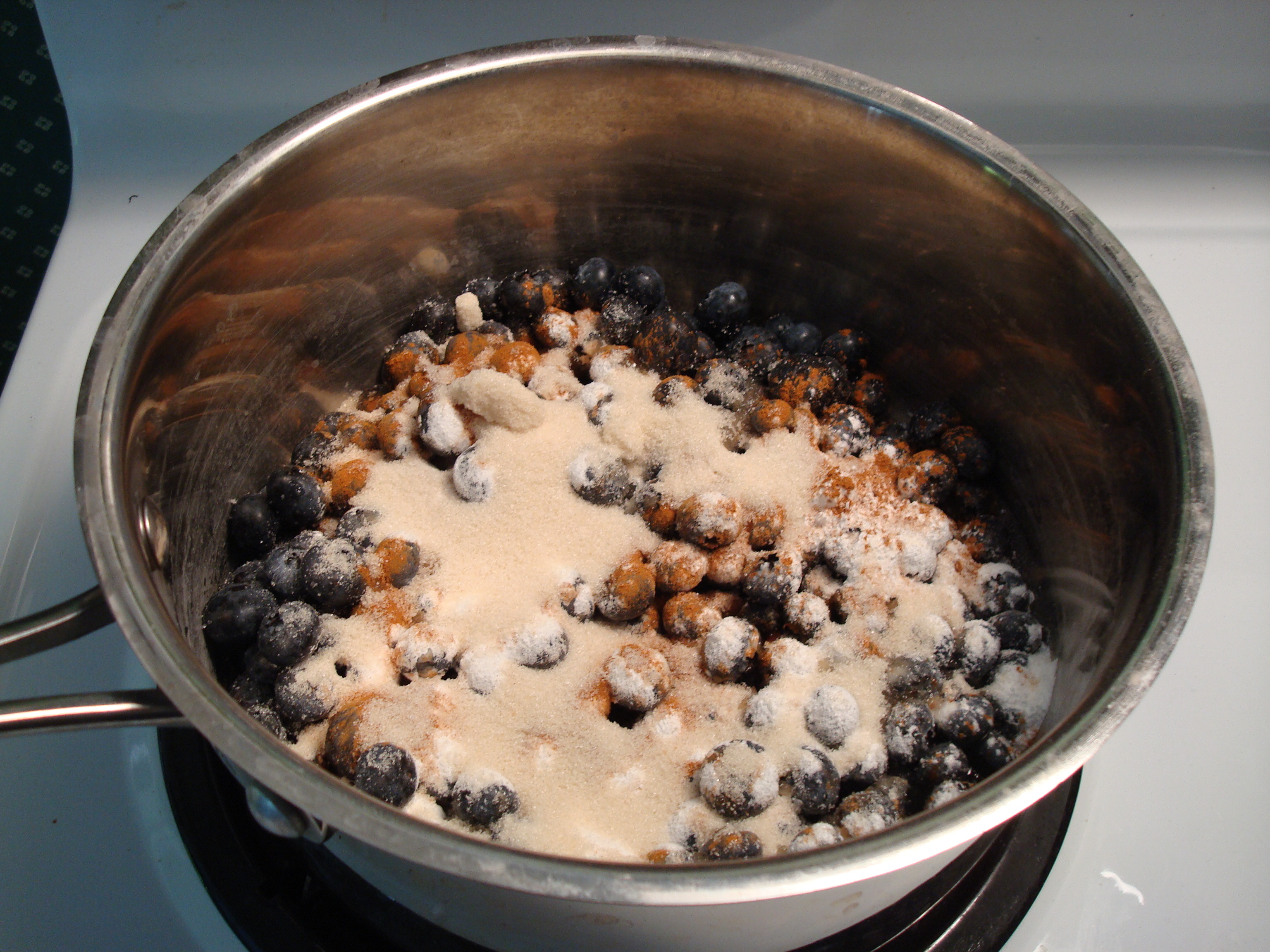
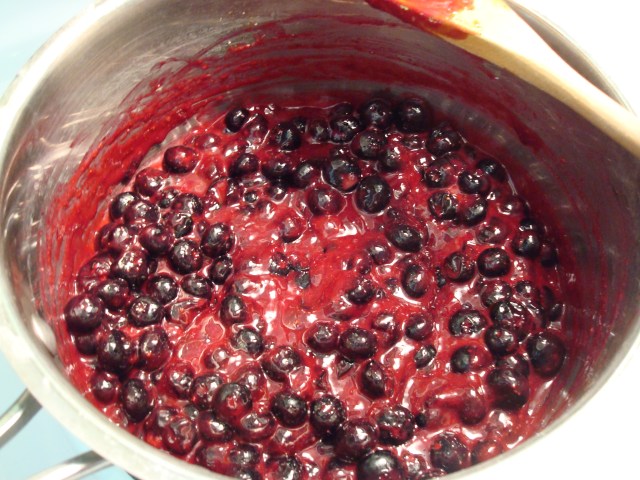
Cook blueberries, tapioca flour, cinnamon and sugar in a 2-quart heavy saucepan over moderate heat, stirring frequently, until mixture just boils and is thickened, about 5 minutes. Transfer to a shallow bowl to cool.

Cherry Hand Pie Filling

  • 1 1/2 tablespoons tapioca flour
  • 2 cups fresh cherries, stemmed and pitted, or about 12 ounces frozen pitted cherries, unthawed
  • 1/2 cup sugar
  • 1/8 teaspoon kosher salt

Combine fresh cherries, sugar and salt in a large saucepan. Cook over medium heat, stirring occasionally, until cherry juices are released, about 5 minutes. Add tapioca flour; bring to a boil, stirring often. Remove from heat and let cool to room temperature, stirring occasionally.

Hand Pie Instructions

Put oven racks in upper and lower thirds of oven and preheat oven to 375°F. Line baking sheets with parchment paper.

Roll out half of dough 3/4 inch thick on a lightly floured surface with a lightly floured rolling pin into a 16- by 11-inch rectangle, then trim into a 15- by 10-inch rectangle, reserving scraps. Cut into 6 (5-inch) squares. Place a heaping tablespoon of fruit filling in center of 1 square. Moisten edges of square with milk and fold into a triangle, pressing edges to seal. Transfer to a lined baking sheet and press tines of a fork around edges of triangle. Make 5 more triangles in same manner, arranging them 1 inch apart on baking sheet. Repeat with remaining dough and filling, rerolling all of the scraps together once to make 12 triangles total.

Brush triangles with milk and sprinkle with remaining 2 tablespoons raw sugar. Bake, switching position of pans halfway through baking, until pies are golden, about 30 minutes total. Transfer pies to racks to cool.

Pastry Dough (found at epicurious.com)

  • 2 1/2 cups all-purpose flour
  • 1 1/2 sticks (3/4 cup) cold unsalted butter, cut into 1/2-inch cubes
  • 1/4 cup cold vegetable shortening (preferably trans-fat-free)
  • 1/2 teaspoon salt
  • 5 to 7 tablespoons ice water

Blend together flour, butter, shortening, and salt in a bowl with your fingertips or a pastry blender (or pulse in a food processor) just until mixture resembles coarse meal with some small (roughly pea-size) butter lumps. Drizzle 3 tablespoons ice water (for a single-crust pie) or 5 tablespoons for a double-crust pie evenly over mixture and gently stir with a fork (or pulse) until incorporated.

Squeeze a small handful of dough: If it doesn’t hold together, add more ice water 1/2 tablespoon at a time, stirring (or pulsing) until incorporated. Do not overwork dough, or pastry will be tough. Turn out dough onto a work surface. For a single-crust pie, divide dough into 4 portions; for a double-crust pie, divide dough into 8 portions. With heel of your hand, smear each portion once or twice in a forward motion to help distribute fat. Gather all dough together with pastry scraper. For a single-crust pie, press into a ball, then flatten into a 5-inch disk. For a double-crust pie, divide dough into 2 pieces, with one slightly larger, then form each into a ball and flatten each into a 5-inch disk. If dough is sticky, dust lightly with additional flour. Wrap each disk in plastic wrap and chill until firm, at least 1 hour.
life is just a bowl of…

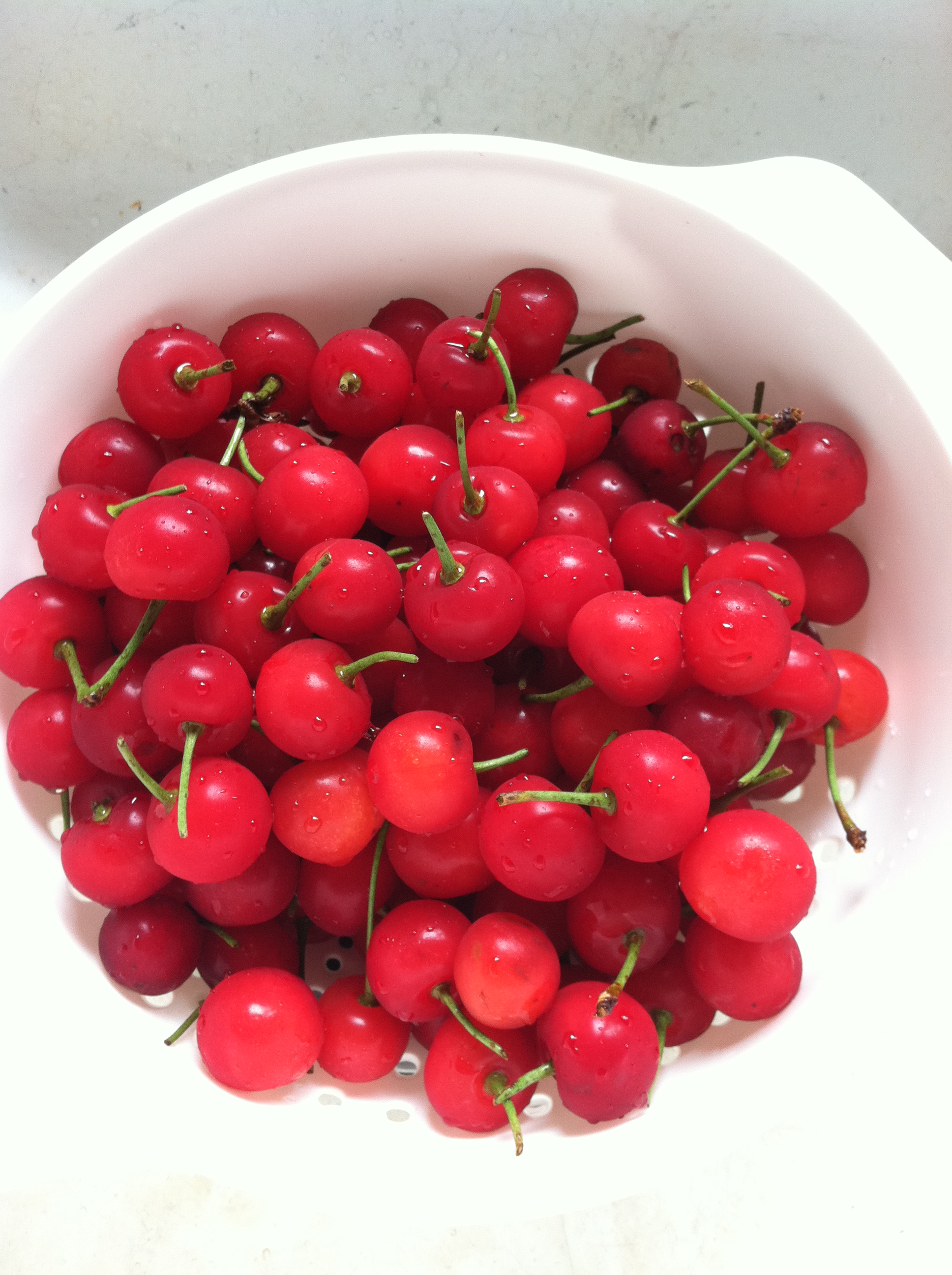
Cherry season!

Cherry pie is my most favoritist kind of pie and while I have made many of them over the years I’ve never actually done so with fresh cherries so thought it best to amend that as soon as possible.  Now, unfortunately I don’t have one of those little tools that helps you pit things like olives and cherries so I did so by hand.  Don’t so much recommend that…

…though apart from squirting a little cherry juice in my eye, the hand-pitting worked out just fine.

I’m going to let you in on a little secret: I’m not great with rolling out crust and pinching the ends all fancy and purty.  Don’t get me wrong, the crust tastes just fine, but it usually looks like a hot tranny mess as the kids (used to) say.  There are holes.  Sometimes I have to pull extra dough from the side where the crust is thicker and use it to patch the holes.  But let me let you in on another secret: no one seems to care that they’re not always the most picture-perfect-looking pies ’cause they taste pretty darn good.

With that being said, this is the first time I have ever attempted a lattice crust.

Not bad, but you can definitely see where I had to do a bit of stretching and patching.  But to be honest with you I don’t trust baked goods that look too perfect.  Same thing goes for people, but we’ll save that for a later date.

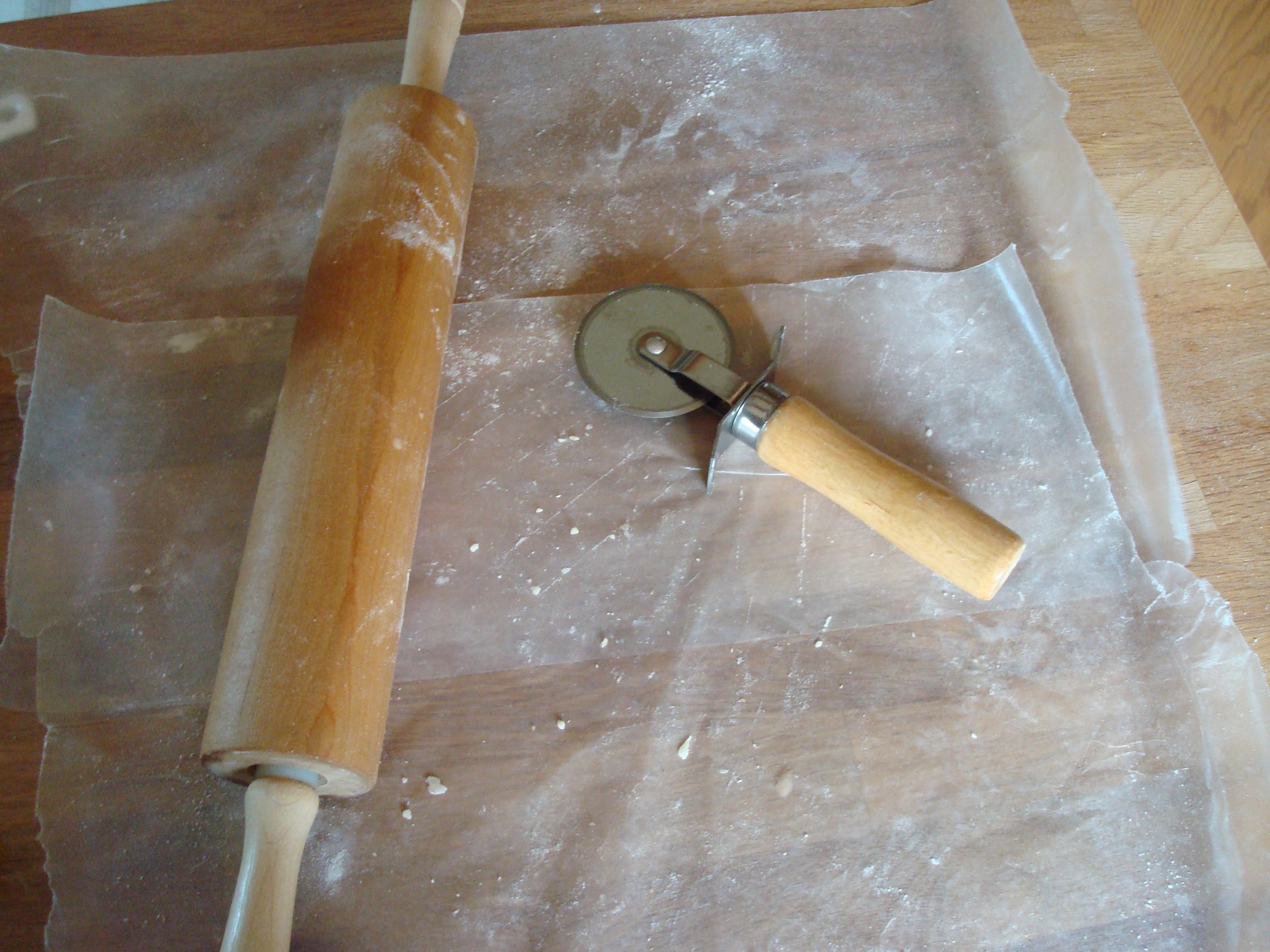
The lattice crust required me to use a utensil that rarely gets attention in my house:

I’m referring to the pizza cutter of course.  The rolling pin gets all sorts of love chez moi.

And I think the extra effort was worth it!

I promise to get some vegetables or at least savory dishes on the blog soon.  Clearly you see where my preferences lie…

Rustic Cherry Pie (adapted slightly from a recipe found in the Spring ’11 edition of Edible Grand Traverse magazine)

  • 4 cups pitted tart cherries
  • 1 cup sugar
  • ¼ cup flour
  • Pie crust (see recipe below)

Preheat oven to 425 degrees.  Line a 9-inch pie plate with one crust and place into freezer.  Put cherries in a mixing bowl.  Mix sugar and flour together; stir into cherries.  Pour cherry filling into unbaked frozen pie crust.  Top with a full crust or lattice pastry.

Bake for 20 minutes at 425.  Lower heat to 350 and bake for another 40-45 minutes, until filling is bubbly.  In last 20 minutes of baking cover crust with aluminum foil if crust is browning.

Two Crust Pie Pastry (from Betty Crocker’s Cookbook)

  • 2 cups all-purpose or unbleached flour
  • 1 teaspoon salt
  • 2/3 cup plus 2 tablespoons shortening
  • 4 to 5 tablespoons cold water

Mix flour and salt in medium bowl.  Cut in shortening, using pastry blender or crisscrossing 2 knives, until particles are size of small peas.  Sprinkle with cold water, 1 tablespoon at a time, tossing with fork until all flour is moistened and pastry almost leaves side of bowl (1 to 2 teaspoons more water can be added if necessary).

Gather pastry into a ball.  Shape into two flattened rounds.  If desired, wrap flattened rounds of pastry in plastic wrap and refrigerate about 30 minutes to firm up the shortening slightly, which helps make the baked pastry more flaky and lets the water absorb evenly throughout the dough. 

Roll pastry on lightly floured surface, using floured rolling pin, into circle 2 inches larger than upside-down pie plate.  Fold pastry into fourths and place in pie plate; or roll pastry loosely around rolling pin and transfer to pie plate.  Unfold or unroll pastry and ease into plate, pressing firmly against bottom and side and being careful not to stretch pastry, which will cause it to shrink when baked.

chess pie, take two

After making the chess tart a few weeks ago I quickly researched other versions of chess pie and found one that involves two things I know and love: blueberries and mascarpone cheese.  I happened to have some mascarpone cheese leftover from something I baked a few weeks prior, so thought it was a sign from the heavens.

This pie was not as sweet as the chess tart and the blueberries and mascarpone complimented each other well.

A short post today but will be back later in the week with a rustic cherry pie.  My favorite!

Blueberry Mascarpone Chess Pie (recipe by John McMillan published in Fresh Home magazine)

  • Pie dough (see recipe below)
  • 4 eggs
  • 1 cup sugar
  • ½ cup 2% milk
  • ½ cup butter, melted
  • 2 tablespoons all-purpose flour, divided
  • ½ teaspoon vanilla
  • 1 cup fresh or frozen blueberries
  • ¼ cup Mascarpone cheese

Roll dough out and place in 9-inch pie plate; flute edges.  Line unpricked pastry with a double thickness of heavy-duty foil.  Bake at 450 for 8 minutes.  Remove foil; bake 5 minutes longer.  Cool on a wire rack.

In a small bowl, whisk the eggs, sugar, milk, butter, 1 tablespoon flour and vanilla.  Toss blueberries with remaining flour; fold into filling.

Pour into crust.  Drop cheese by teaspoonfuls over filling.

Bake at 350 for 40-45 minutes or until a knife inserted near the center comes out clean (cover edges with foil during the last 25 minutes to prevent overbrowning if necessary).  Cool on a wire rack.  Refrigerate leftovers.

One Crust Pie Pastry (from Betty Crocker’s Cookbook)

  • 1 cup all-purpose or unbleached flour
  • ½ teaspoon salt
  • 1/3 cup plus 1 tablespoon shortening
  • 2 to 3 tablespoons cold water

Mix flour and salt in medium bowl.  Cut in shortening, using pastry blender or crisscrossing 2 knives, until particles are size of small peas.  Sprinkle with cold water, 1 tablespoon at a time, tossing with fork until all flour is moistened and pastry almost leaves side of bowl (1 to 2 teaspoons more water can be added if necessary).

Gather pastry into a ball.  Shape into flattened round.  If desired, wrap flattened round of pastry in plastic wrap and refrigerate about 30 minutes to firm up the shortening slightly, which helps make the baked pastry more flaky and lets the water absorb evenly throughout the dough.

Roll pastry on lightly floured surface using floured rolling pin into circle 2 inches larger than upside-down pie plate.  Fold pastry into fourths and place in pie plate; or roll pastry loosely around rolling pin and transfer to pie plate.  Unfold or unroll pastry and ease into plate, pressing firmly against bottom and side and being careful not to stretch pastry, which will cause it to shrink when baked.

a souvenir for you

I did not do much shopping on my recent trip.  I think this partially has to do with the fact that I work in the retail industry and the last thing I want to do most days is shop for stuff after being surrounded by it all day.  Sure, I still do my fair share of shopping, but it just doesn’t hold the same thrill it once did.  This is probably why I now measure most trips (and even just my daily life, for that matter) on food eaten and enjoyed.  And much food was eaten and enjoyed on this trip.

One of the best things I ate while in England was lemon polenta cake.  Polenta cake?  Craziness.  Polenta is often associated with savory Italian dishes, but it can also be used in sweet dishes too.  Love the versatility.  I also am growing to love lemon desserts more and more as I get older.  They are refreshing and usually not overly sweet and therefore the perfect ending to a large meal.

So when I returned from my trip I immediately started researching recipes and found one for this very cake and it just happened to be from an English foodie: Nigella Lawson.  I used to watch her program on the Food Network and loved how she never measured things perfectly and unapologetically licked spoons after mixing batters.  Sort of like an English version of Paula Deen who I also think is the bee’s knees.

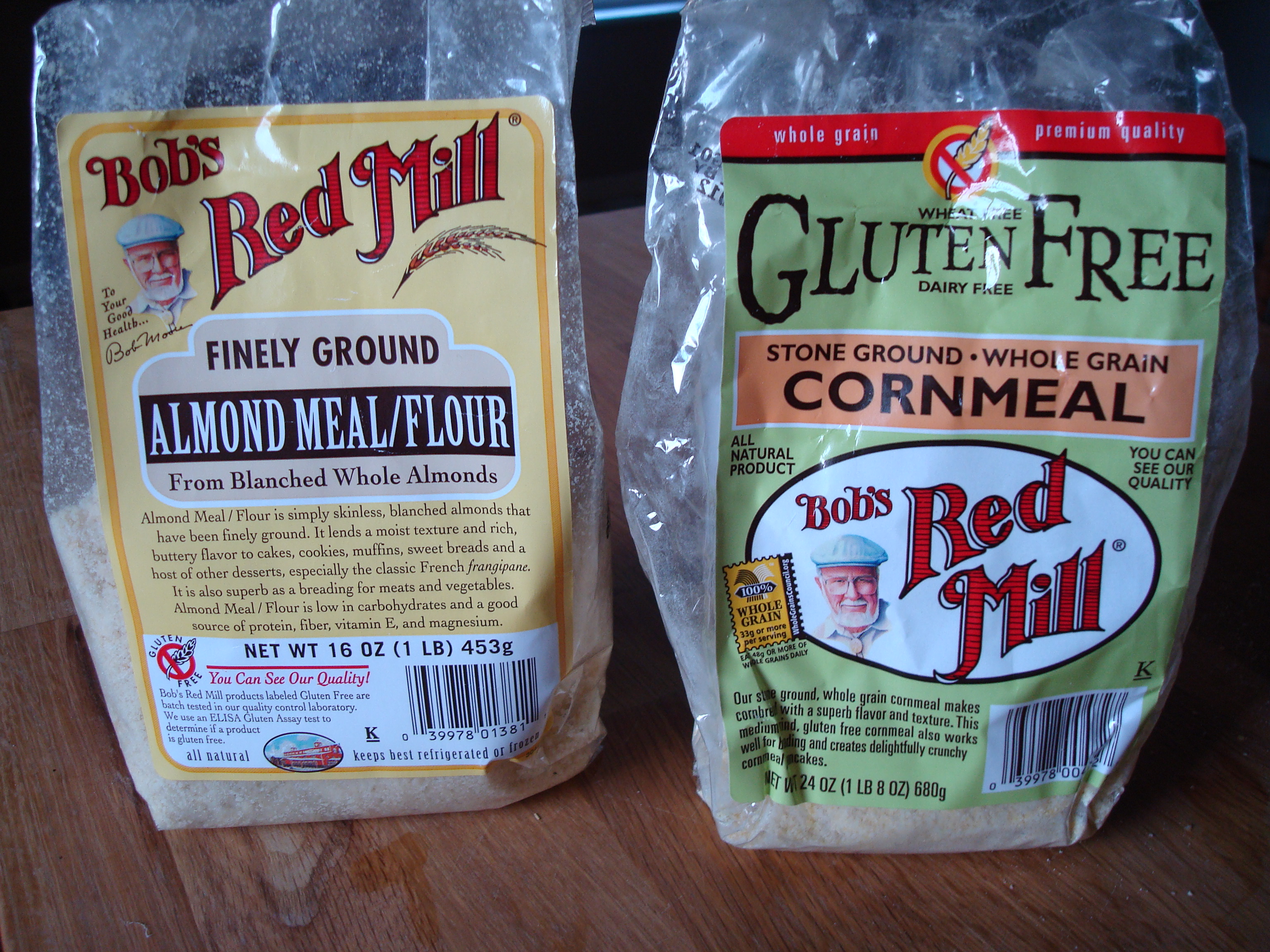
I read recipes like I read books and I could tell that this one was going to be good.  I was also pleased to see that it does not contain wheat flour as I have been meaning to experiment more with gluten-free baking because I have a sneaking suspicion that I might have a wheat sensitivity.  Apart from the polenta (or cornmeal as many of us know it here) there is also almond flour which is very light and surprisingly easy to find even in conventional grocery stores.

The result?  At the risk of sounding immodest, I’d say it was just as good as what I ate across the pond…

Lemon Polenta Cake (adapted very slightly from a Nigella Lawson recipe found at www.foodnetwork.com)

Cake:

  • 1 3/4 sticks (14 tablespoons) soft unsalted butter, plus extra for greasing
  • 3/4 cup superfine sugar
  • 2 cups almond meal/flour
  • 3/4 cup fine polenta/cornmeal
  • 1 1/2 teaspoons baking powder (gluten-free if required)
  • 3 eggs
  • Zest 2 lemons (save the juice for the syrup)

Syrup:

  • Juice 2 lemons (see above)
  • Heaping 1 cup confectioners’ sugar

For the cake: Line the base of your cake pan with parchment paper and grease its sides lightly with butter. Preheat the oven to 350 degrees F.

Beat the butter and sugar till pale and whipped, either by hand in a bowl with a wooden spoon, or using a freestanding mixer.

Mix together the almond meal, polenta and baking powder, and beat some of this into the butter-sugar mixture, followed by 1 egg, then alternate dry ingredients and eggs.

Finally, beat in the lemon zest and pour the mixture into prepared pan and bake in the oven for about 40 minutes. It may seem wobbly but a cake tester should come out with just a few crumbs and the edges of the cake will have pulled away from the sides of the pan. Remove from the oven to a wire cooling rack, but leave in its pan.

For the syrup: Make the syrup by boiling together the lemon juice and confectioners’ sugar in a small saucepan. Once the confectioners’ sugar has dissolved into the juice, you’re done. Prick the top of the cake all over with a toothpick, pour the warm syrup over the cake, and leave to cool before taking it out of its pan.

Make Ahead Note: The cake can be baked up to 3 days ahead and stored in airtight container in a cool place. Will keep for total of 5 to 6 days.

Freeze Note: The cake can be frozen on its lining paper as soon as cooled, wrapped in double layer of plastic wrap and a layer of foil, for up to 1 month. Thaw for 3 to 4 hours at room temperature.