the great pumpkin: puree and pepitas

This year I’m planning to make Thanksgiving dinner entirely from scratch– no cans, no prepackaged business, just 100% homemade– prepared from raw ingredients, with my own two hands. I know I can do it because last year I pretty much only opened one can (chili peppers to add a kick to corn pudding). I can totally get by without a can opener this year.
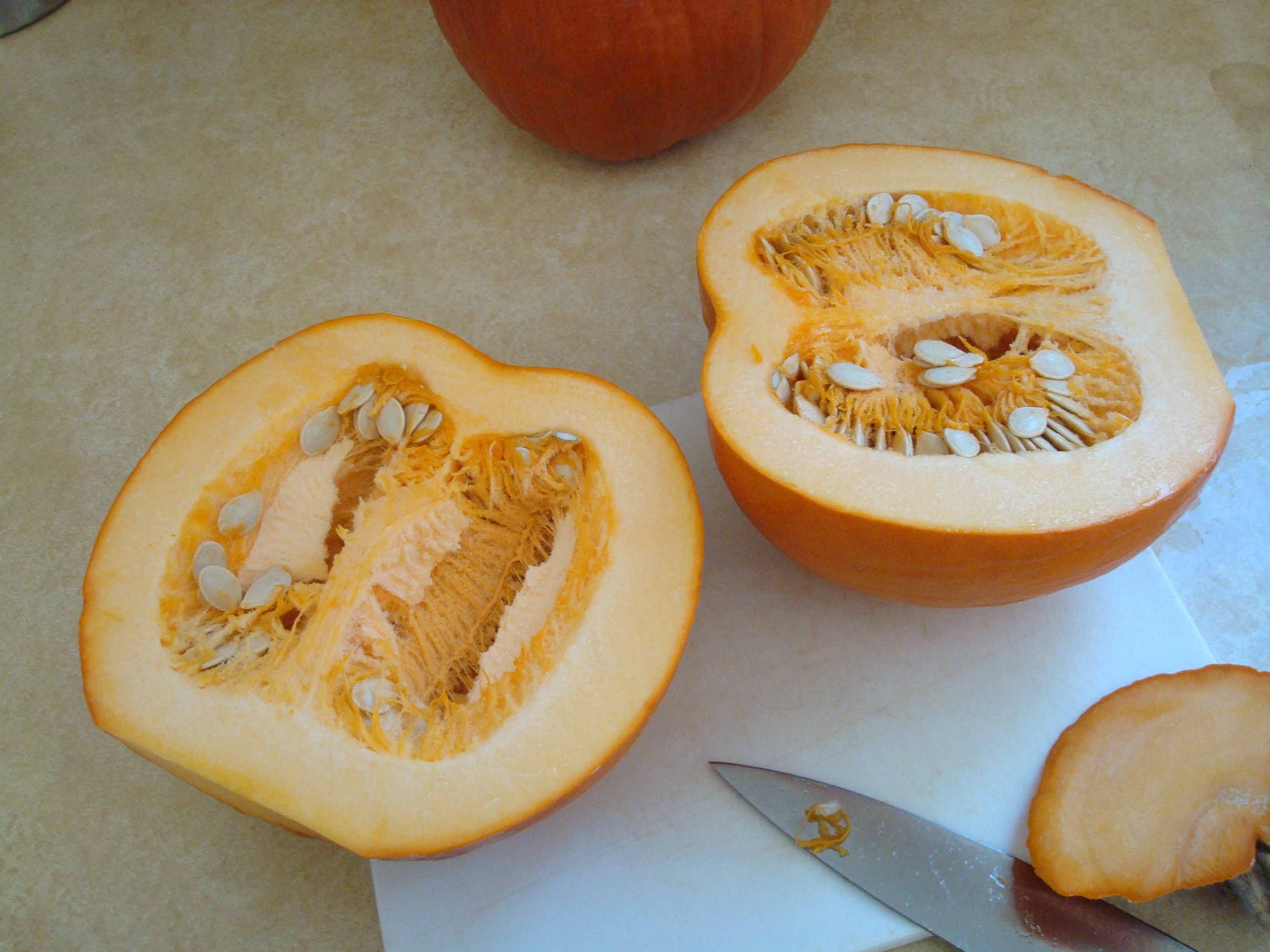
And since it’s pretty much a requirement that pumpkin make an appearance in at least one form or another during Thanksgiving (or in some cases it appears in multiple forms) I spent a little time this past weekend making my own pumpkin puree. It’s simple! All you need is a little bit of time and a good knife.
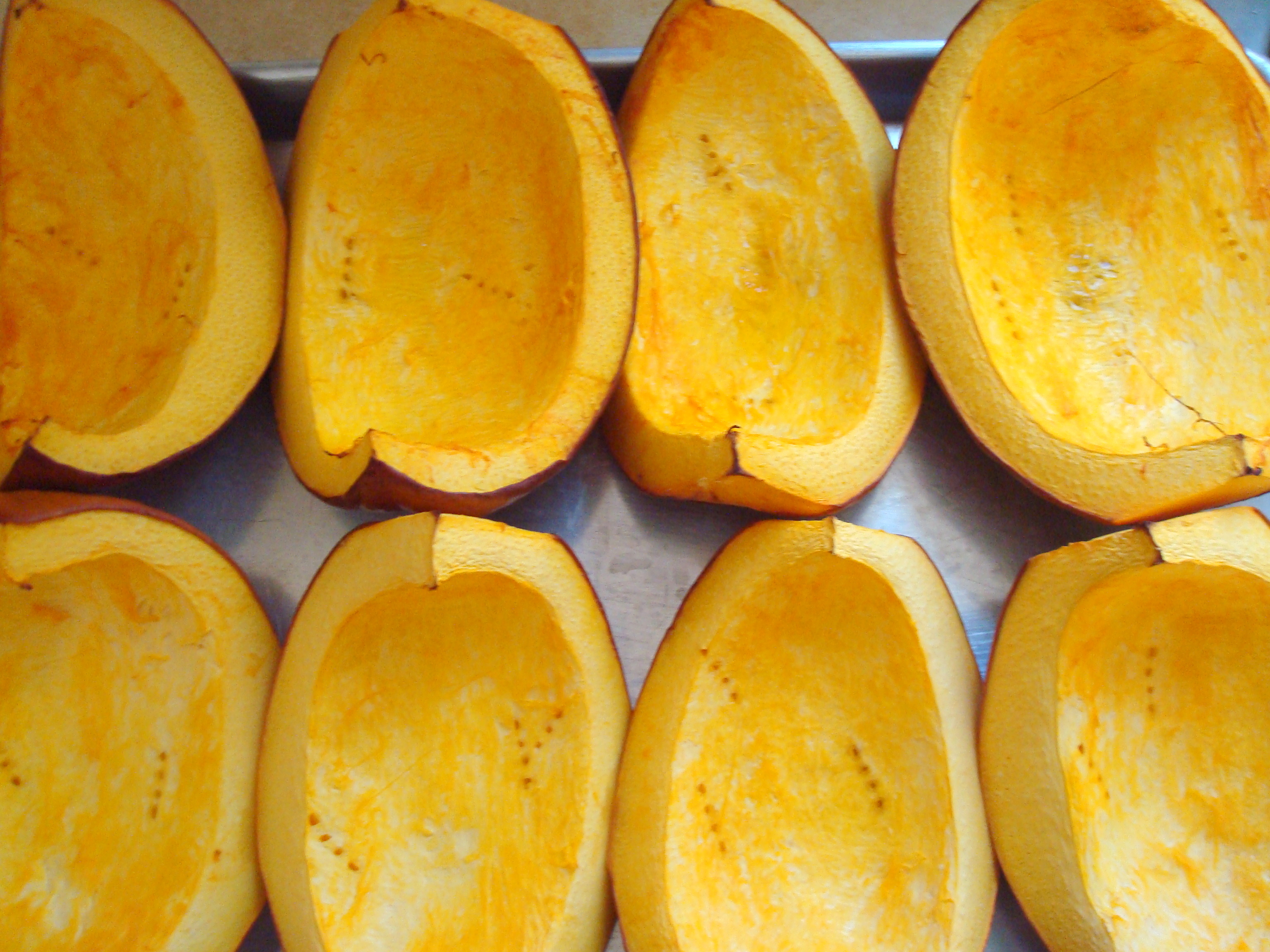
First you cut off the top of the pumpkin, and then slice it in half down the center. Next you scoop out the seeds (don’t throw them away though! We’re going to need them in a minute.) Then you cut the pumpkin halves in half and place on a baking sheet. Bake in the oven for about 45 minutes (mine were kind of large so it took closer to an hour). Then walk away and go catch up on your magazine reading or DVR shows while it bakes.

After the pumpkin has finished baking, let it cool until you can handle it and remove the pumpkin flesh from skin using a knife. Place pumpkin pieces in a food processor or use an immersion blender (regular blender with a little water also works as does a potato ricer or potato masher) and pulse until no large chunks remain.

I then bagged it up in one-cup portions in small freezer bags so that I can use it whenever I want throughout the year. Two small pumpkins yields about 8 cups worth.
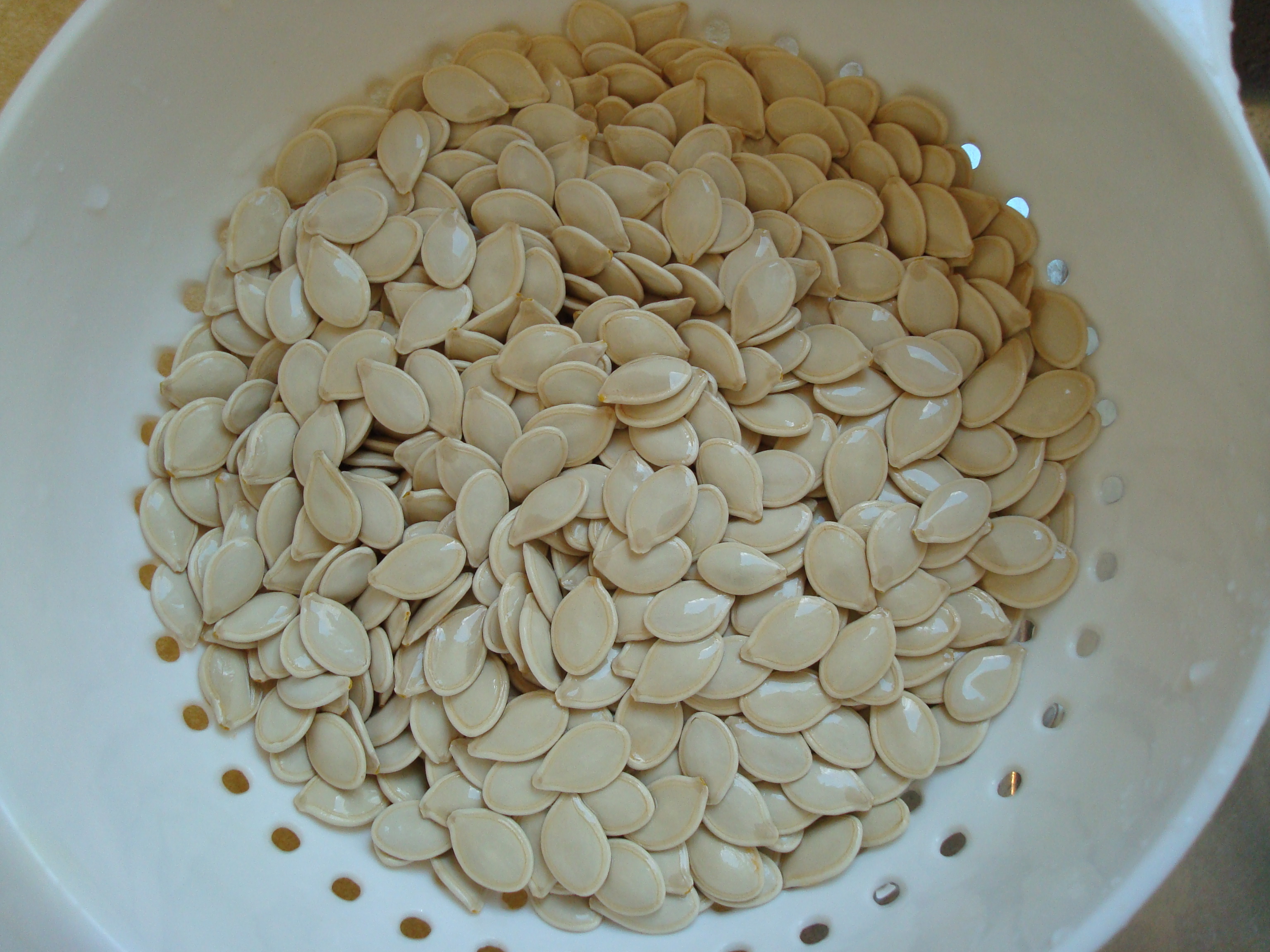
Now, the seeds! Rinse those beautiful things off to get as much stringy pumpkin removed as possible. Then spread out on a baking sheet to dry for several hours or overnight. (Word to the wise: do not attempt drying with paper towels as I did last year. Pumpkin seeds are very sticky and slimy and will stick to the paper towel like superglue. Not cool.)

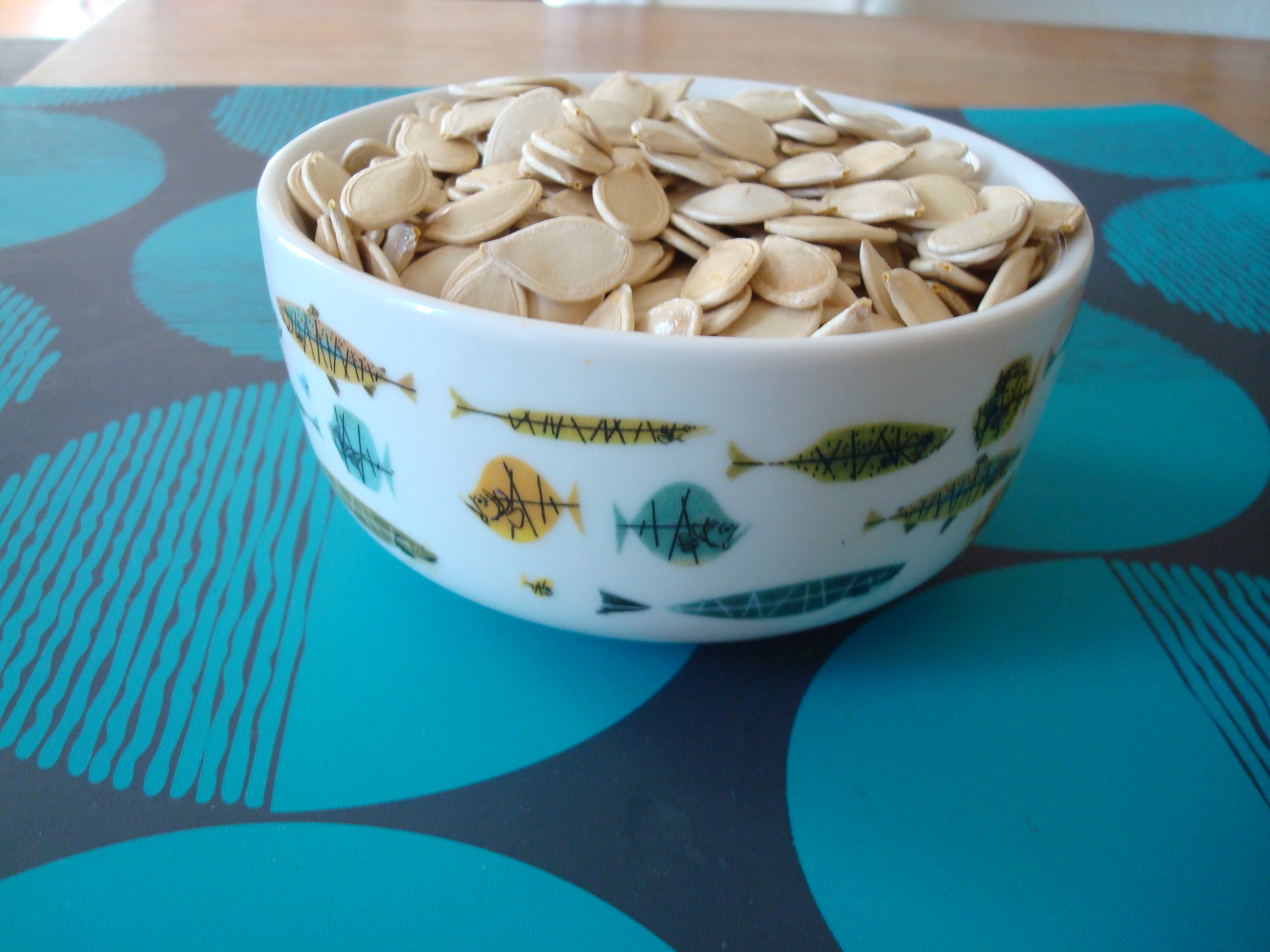
Once the pumpkin seeds are dry, toss with a little olive oil and salt and any seasonings you so desire. (I’m a purist and keep it simple with just the olive oil and sea salt.) Then bake for about an hour until they are a nice toasty-shade of light brown and enjoy. Happy Halloween everyone!
Pumpkin Puree (from www.thepioneerwoman.com)

  • 2 whole small pumpkins

Select a couple of small-ish pumpkins. Cut the pumpkin in half. With a spoon or a scoop, scrape out the seeds and pulp from the center. You don’t have to be too thorough with this.

Place all the seeds into a bowl (you can roast them later and make pepitas—see recipe below). Repeat until all the pumpkin pieces are largely free of seeds and pulp.

Place pumpkin pieces on a baking sheet (face up or face down, does not matter) and roast in a 350-degree oven for 45 minutes, or until pumpkin is fork-tender. They should be nice and light golden brown when done.

Peel off the skin from the pumpkin pieces until you have a big pile of the stuff. If you have a food processor, throw in a few chunks at a time. A blender will work, too, if you add a little water. Or you can simply mash it up with a potato masher, or move it through a potato ricer, or process it through a food mill. Or you can use an immersion blender if you have one of those.

Pulse the pumpkin until smooth. If it looks too dry, add in a few tablespoons of water during the pulsing to give it the needed moisture. (Note, if the puree is overly watery, you should strain it on cheesecloth or over a fine mesh strainer to get rid of some of the liquid.)

Dump the pureed goodness into a bowl, and continue pureeing until all the pumpkin is done.

You can either use this immediately in whatever pumpkin recipe you’d like, store it in the freezer for later use.

To store in the freezer, spoon about 1 cupful of pumpkin into each plastic storage bag. Seal the bag with just a tiny bit of an opening remaining, then use your hands to flatten out the pumpkin inside the bag and push out the air. Store them in the freezer until you need them.

Toasted Pumpkin Seeds (Pepitas) (from www.thepioneerwoman.com)

  • 1 whole pumpkin, gutted
  • Olive oil
  • Salt
  • Any seasonings you want, such as cayenne, curry powder, etc. (optional)

As you gut the pumpkins, keep all the seeds—and guts—in a bowl. Throw them into a colander and rinse them under cold water, pulling away the chunks of pulp as you go.

Spread the rinsed seeds out on a baking sheet and allow the seeds to dry several hours or overnight. And beware: they’re quite sticky/slimy, so don’t place them on paper towels! Just leave them on the baking sheet and they’ll be fine.

When they’re dry preheat the oven to 250 degrees.

Drizzle the seeds with a couple teaspoons of olive oil. Use your fingers to toss the seeds around to coat. Then salt and season the seeds to taste.

Bake them for an hour or so, until the seeds are light golden brown.

Pepitas need to be stored in an airtight container if they last beyond the first day.

gratineed baked acorn squash

I love picking up fresh produce at the farmer’s market on Saturday mornings but I have to say there is something that happens this time of year that I don’t love: the produce gets REALLY heavy thus making it difficult to lug around for very long.  Potatoes, pumpkins, beets, and the myriad varieties of squash.  I of course love squash so I don’t so much mind, but I am thinking of investing in one of those granny-esque wheeled basket-numbers to save my back.  But I digress.  Today we are working with one of my favorite kinds of squash.

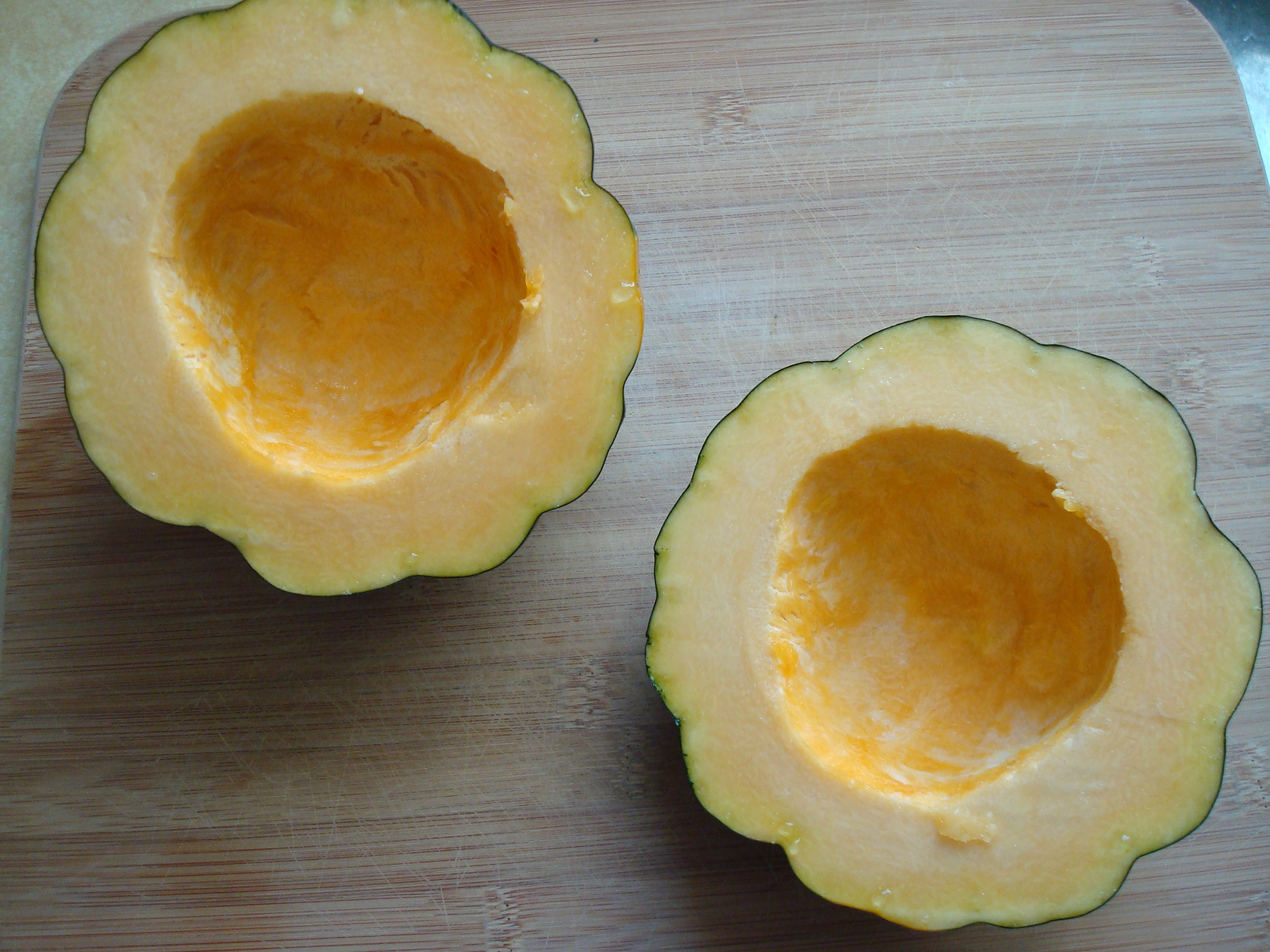
Acorn squash is thus named because it is shaped like acorns, only a lot bigger and green on the outside with a lovely orange flesh on the inside.  The shell is quite thick on acorn squash so please be careful when cutting them down the middle and keep your digits out of the way of the knife.  Then scoop out the seeds and you are halfway done with the hands-on portion of this recipe.  Place the squash halves (cut-sides facing up) in a baking pan with half a cup of water in the base of the pan, then season the squash halves with salt and pepper.

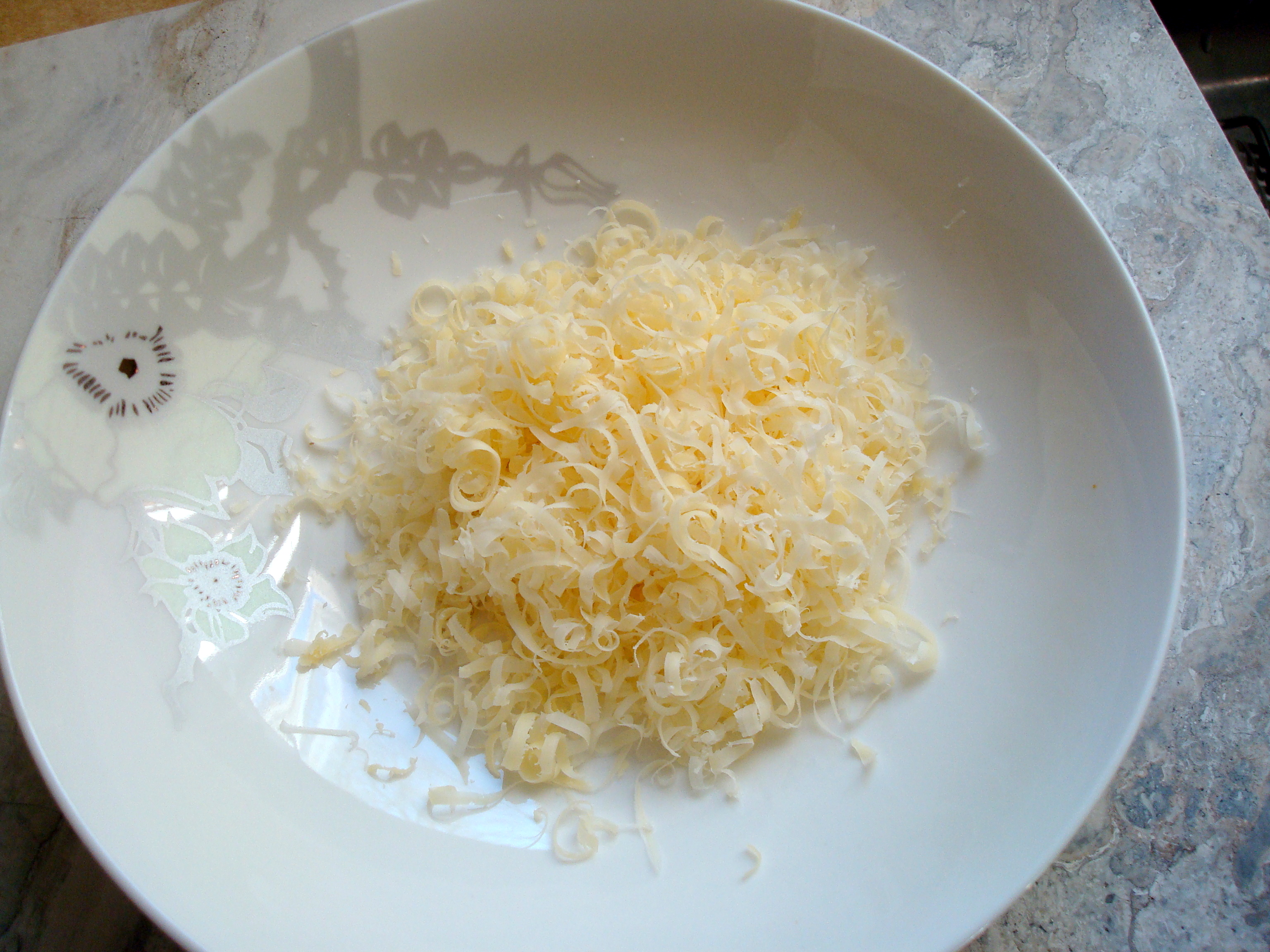
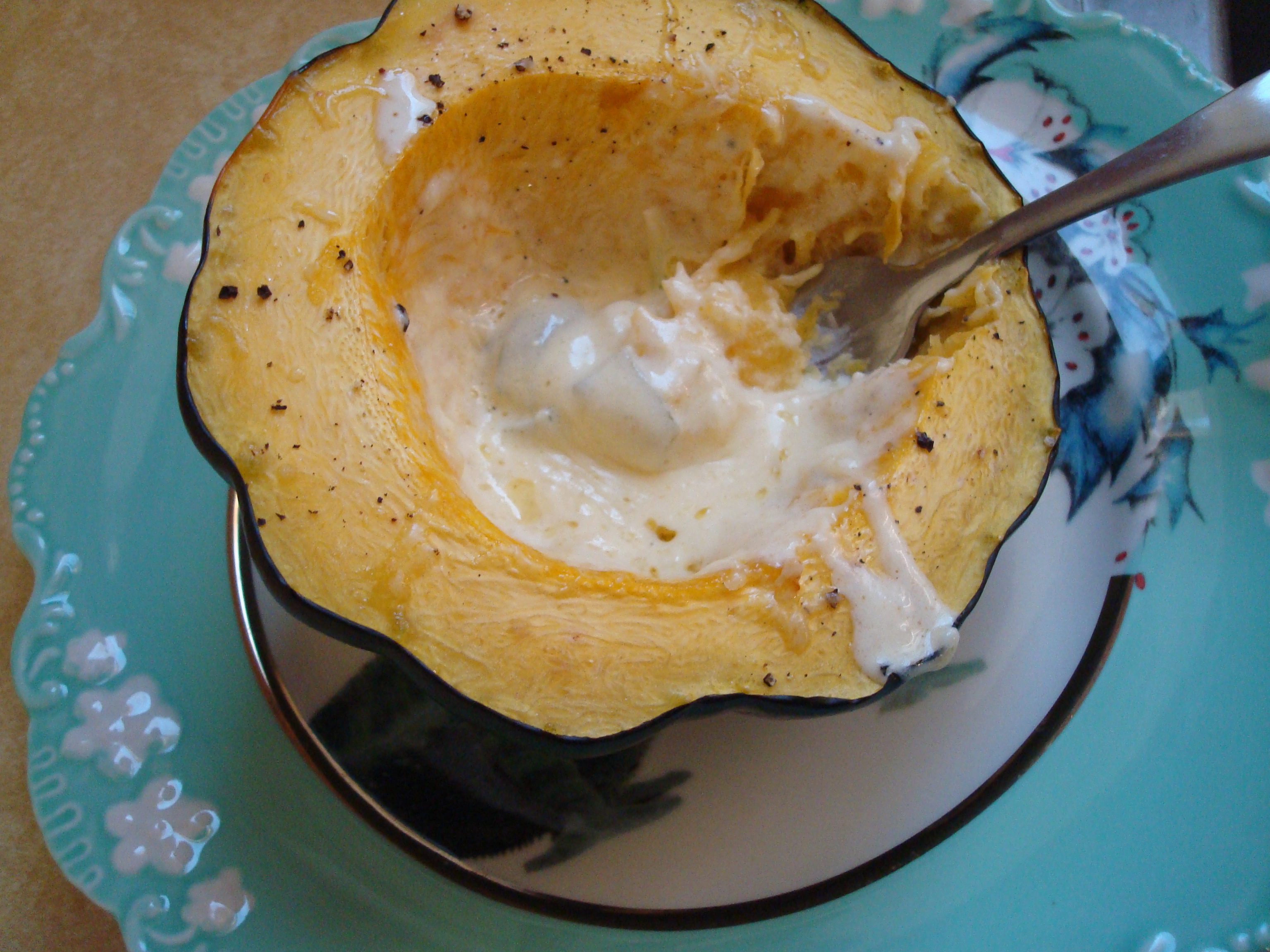
Next you heat up some heavy cream with torn sage leaves and thin slices of garlic over medium heat until it simmers.  Pour the cream sauce evenly in each of the squash halves (recipe below is for two whole acorn squash or four halves) and bake in 375 oven for 30 to 40 minutes.  In the meantime grate some Gruyère cheese in preparation for the final step.  After the squash has baked for the 30 to 40 minutes remove it from the oven and sprinkle the cheese evenly amongst the halves and bake for an addtional 10 minutes or until the cheese melts.  Then remove from the oven and enjoy.

Gratineed Baked Squash Halves (recipe from Reader’s Digest magazine)

  • 2 acorn squash, halved crosswise, seeds removed
  • Coarse salt and freshly ground pepper
  • ½ cup heavy cream
  • 8 fresh sage leaves, torn in half
  • 2 garlic cloves, thinly sliced
  • ½ cup grated Gruyère cheese (about 2 ounces)

Preheat oven to 375 degrees F.  Place squash halves, cut sides up, in 9-inch baking dish.  Season with salt and pepper.  Pour about ½ cup water into baking dish around squash.

Combine cream with sage and garlic in small saucepan.  Bring to a simmer over medium-high heat, then pour into squash halves, dividing evenly.

Bake until squash are tender when pierced with tip of sharp knife, 30 to 40 minutes.  Remove from oven; sprinkle with cheese, dividing evenly.  Continue baking until cheese is melted and golden, about 10 minutes.  Serve hot.

chai apple pie

I love pie. A lot. I also love that others love pie so much that there are entire bakeries, blogs, and cookbooks devoted to just it without cupcakes or cookies or other filler. One can do a lot with pie.

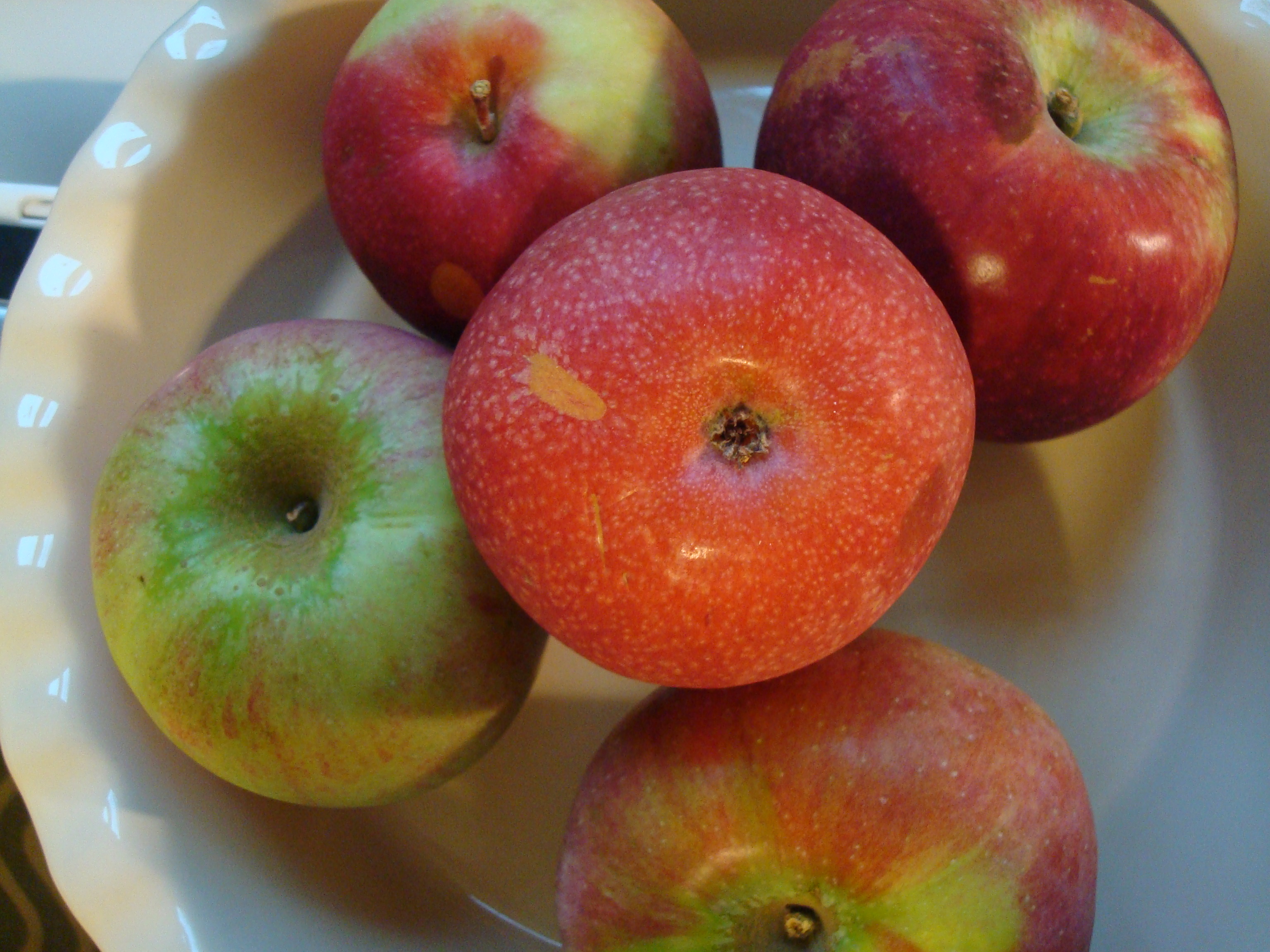
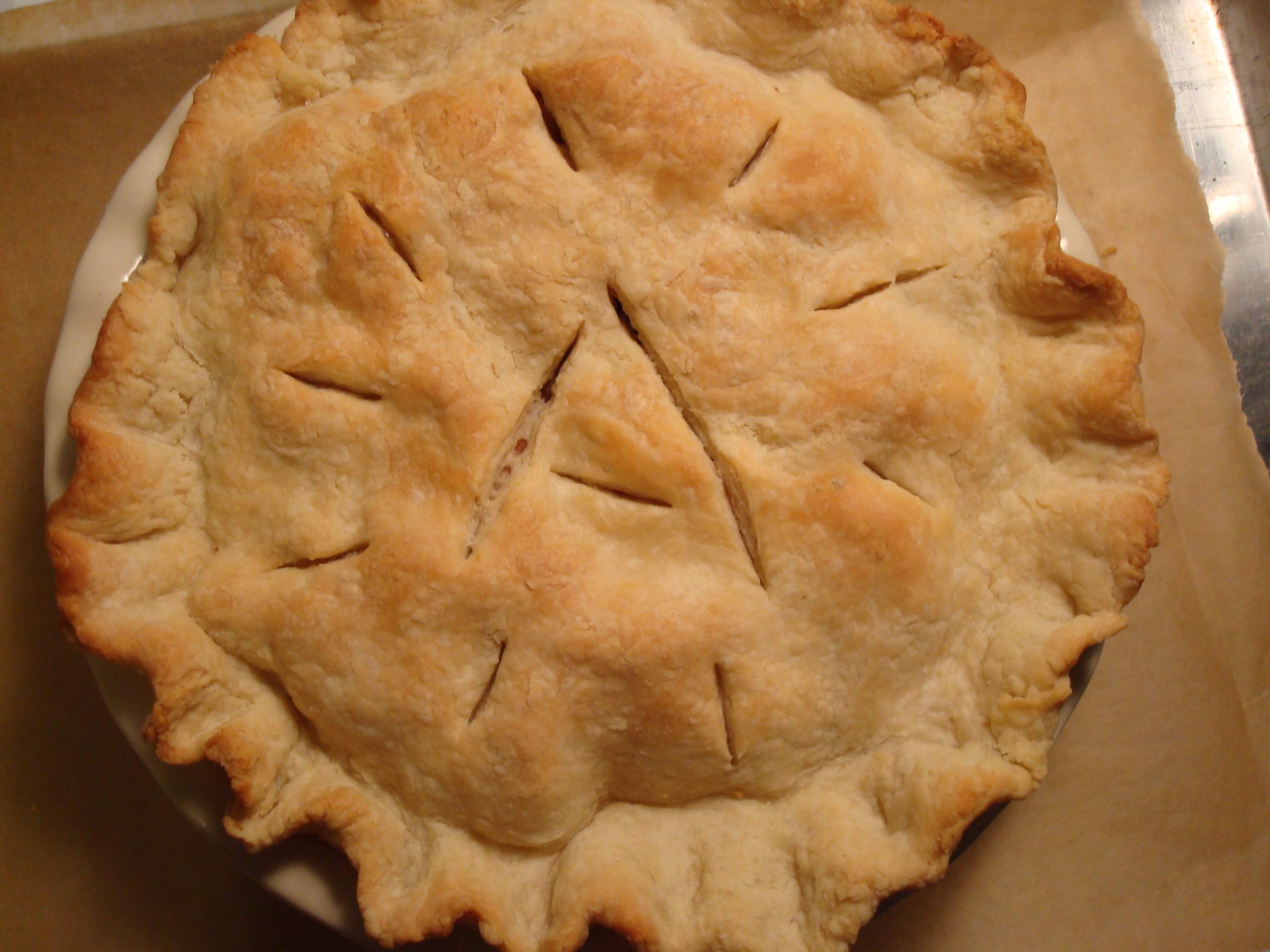
Recently I purchased one of the aforementioned pie-only cookbooks, “A Year of Pies” by Ashley English, and have tried out a few of the recipes including the star of this post, an apple pie made with chai tea spices. Now I love me some chai tea and it totally sounded like a very clever and logical thing to do to pair it with apples, and boy was it.

The cinnamon, nutmeg, cloves, cardamom, and black pepper (yes, black pepper!) turn it up a notch and add a little excitement to the classic apple pie recipe. I brought it in to work and one coworker who had a piece told me it was so good she dreamt about it that night. High praise!

Some people have told me they are intimidated about making pies but I really think they are one of the easiest things to make as long as you have an ounce of patience when it comes to making your own crust. It’s really not that hard, I promise! The crust recipe below calls for half shortening, half butter, though you could make it with entirely one or the other if you like. In general I avoid shortening like the plague as it is usually so processed that a tub of it would outlive us all and then some, but I have found an organic, 100% palm oil version from Spectrum that I really like and feel better about using. It does add a nice flakiness to the crust.

Chai Spice Apple Pie (adapted slightly from “A Year of Pies: A Seasonal Tour of Home Baked Pies” by Ashley English)

  • 1 recipe Basic Pie Dough

Chai Spice Blend

  • 1 teaspoon cardamom seeds or ground cardamom
  • ½ teaspoon black tea
  • ¼ teaspoon whole cloves
  • ¼ teaspoon black peppercorns
  • 1 teaspoon ground cinnamon
  • ¼ teaspoon ground ginger

Filling:

  • 3 pounds apples, peeled, cored, quartered, and cut into ½-inch-thick slices
  • 4 tablespoons all-purpose flour
  • ¼ cup granulated sugar
  • 2 tablespoons lemon juice
  • ½ teaspoon sea salt
  • 2 tablespoons unsalted butter, diced, for dotting the filling

Remove one dough disk from the refrigerator. Roll out the dough on a lightly floured surface and fit it into a 9-inch pie pan. Trim the crust overhang to 1 inch, then place the crust in the refrigerator while you prepare the filling.

Using either a mortar and pestle or a spice or coffee grinder, grind the cardamom seeds (if using), black tea, while cloves, and peppercorns to a powder.

Pour the ground spices into a fine-mesh sieve placed over a small bowl. Gently shake the sieve so all but the larger pieces fall through. Discard the larger pieces left in the sieve.

To the freshly ground spices in the bowl, add the ground cardamom (if using), cinnamon, and ginger. Whisk well to combine.

Combine all of the filling ingredients, including the chai spice blend, in a medium-sized mixing bowl. Using either clean hands or a large spoon, toss until all of the ingredients are fully combined and the apple slices are evenly coated.

Pour the apple mixture into the prepared crust, mounding in the center. Dot the surface with diced butter.

Roll the remaining dough disk into a 12-inch circle. Use a small pastry cutter to cut decorative images in the dough, if desired.

Roll the top crust loosely over your rolling pin and unroll it over the filling in the pie pan, making sure it’s centered. Trim the top crust overhang to 1 inch and tuck the edges under the bottom crust overhang. Crimp the edges decoratively.

Place the pie in the refrigerator for 15 minutes.

Meanwhile, preheat the oven to 425 degrees F.

Place the pie on a baking sheet lined with parchment paper or aluminum foil to catch overflow juices and bake at 20 minutes. Reduce the oven temperatures to 375 F and continue baking for 30 to 35 minutes longer, until the crust is golden and juices are bubbling in the center of the pie.

Cool at least 1 hour before serving.

Basic Pie Dough (from “A Year of Pies: A Seasonal Tour of Home Baked Pies” by Ashley English)

  • 2 ½ cups all-purpose flour
  • 1 ¼ teaspoon sea salt
  • 6 tablespoons (3/4 stick) unsalted butter, chilled and cubed
  • ¾ vegetable shortening, chilled and cubed
  • ¾ cup ice water

Mix the flour and salt together in a medium-large bowl.

Using a pastry blender or two forks, cut in the butter and shortening until the mixture resembles coarse meal (you should still have some rather large bits of butter and shortening when you’re done.)

Slowly drizzle in the ice water and stir with a large spoon until the dough begins to clump.

Transfer the dough to a floured work surface and, using your hands, fold it into itself until the flour is fully incorporated into the fats. The dough should come together easily but should not feel overly sticky.

Divide the dough in half, shape it into two balls, and pat each ball into a ½-inch thick disk. Wrap each in plastic wrap and refrigerate for at least an hour.

easy as pie

This past weekend was a very gray and rainy one.  I happen to love that kind of weather because it allows me to not feel guilty for staying in and being a bit of a bum– sweatpants, movies on the couch, the whole nine yards.  It also, on occasion, puts me in the mood to bake up a storm which is exactly what I did on Sunday.  I bake three (THREE) pies and am going to share one of them with you now.

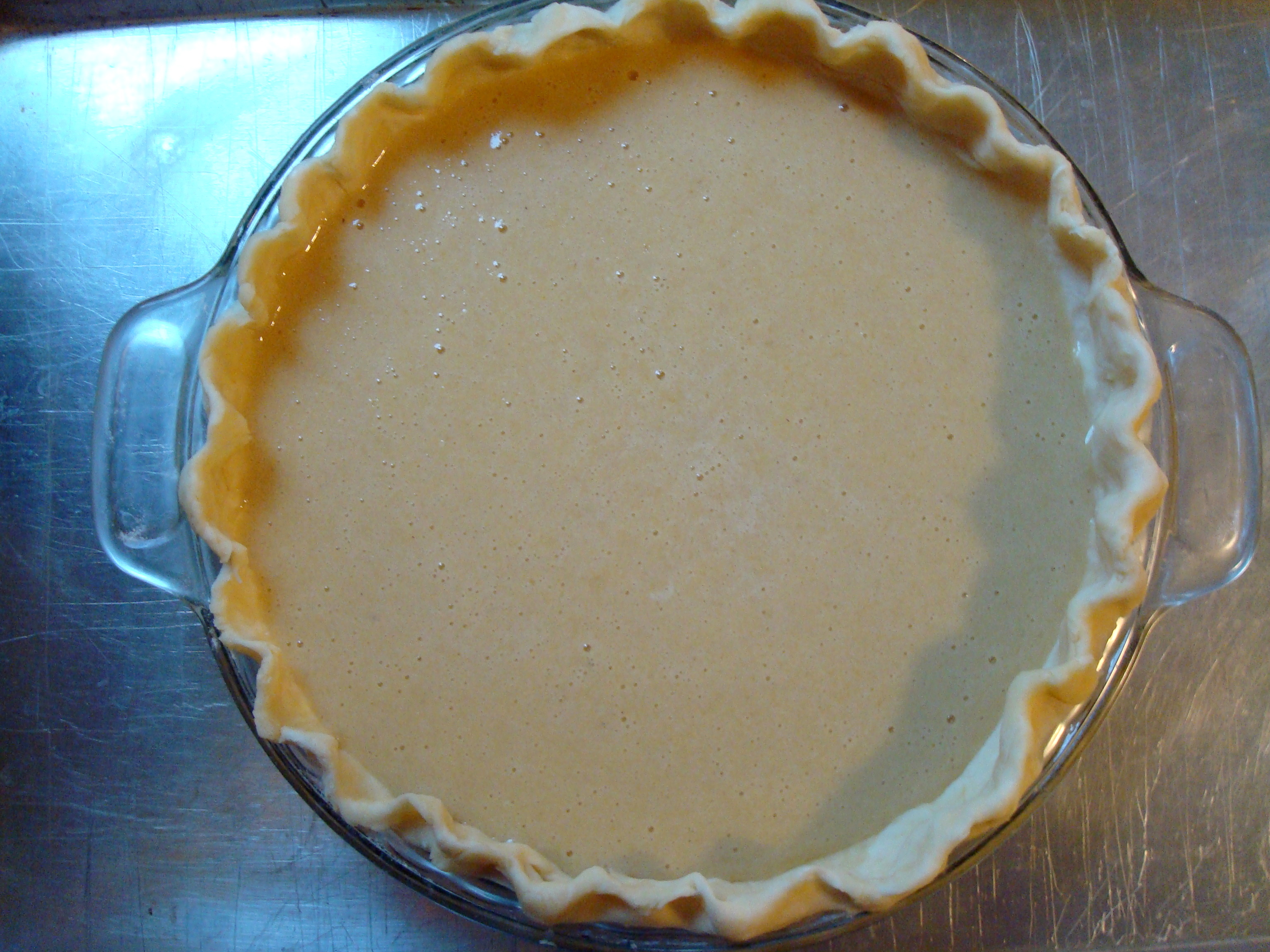
A buttermilk pie appears to be a cousin to chess pie which I happen to love and have now made three different versions of.  The main difference is that you add the titular ingredient.  Clearly.

The most difficult part of the whole ordeal is making the crust look pretty.  I’m quite pleased with how the double knuckle crimping action turned out.

After whisking up the buttermilk with some eggs, melted butter, sugar, a little flour, vanilla, nutmeg, and pinch of salt you pour it into the crust.  And then you bake.  And then you get one of the simplest and most delicious pies known to man.

This would definitely make a nice addition to your Thanksgiving menu and so I have tagged it as such.  Note that I try to tag all recipes that I deem worthy of a Thanksgiving spread so that you can easily search for ideas.  I will be cooking/baking plenty more things that fall into this category over the next month since Thanksgiving is my favorite.

Brown Sugar Buttermilk Pie (by Tim Mazurek of www.lottieanddoof.com found in the book “A Year of Pies: A Seasonal Tour of Home Baked Pies” by Ashley English)

  • 1/2 recipe Basic Pie Dough (see below)
  • 3 large eggs
  • 1/3 cup granulated sugar
  • 1/2 cup (packed) light brown sugar
  • 2 tablespoons all-purpose flour
  • 6 tablespoons (3/4 stick) unsalted butter, melted and cooled
  • 1 cup buttermilk
  • 1 teaspoon pure vanilla extract
  • 1/2 teaspoon freshly grated nutmeg
  • pinch of salt

Preheat the oven to 375 F.

Roll out the dough on a lightly floured surface and fit it into the 9-inch pie pan.  Trim the crust overhang to 1 inch and crimp the edges decoratively.  Refrigerate while you prepare the filling.

In a large bowl, whisk the 3 eggs with both sugars and the flour, making sure there are no lumps.  Add the melted butter, buttermilk, vanilla, nutmeg, and salt.  Whisk to combine.

Pour the filling into the prepared crust and place in the preheated oven.

Turn down to 325 F and bake for 45 to 60 minutes, or until the edges are set and the center is still a little wobbly.

Remove the pie from the oven and let it cool for at least 30 minutes before serving warm or at room temperature.

Basic Pie Dough (from “A Year of Pies: A Seasonal Tour of Home Baked Pies” by Ashley English)

  • 2 1/2 cups all-purpose flour
  • 1 1/4 teaspoon sea salt
  • 6 tablespoons (3/4 stick) unsalted butter, chilled and cubed
  • 3/4 cup vegetable shortening, chilled and cubed
  • 3/4 cup ice water

Mix the flour and salt together in a medium-large bowl.

Using a pastry blender or two forks, cut in the butter and shortening until the mixture resembles coarse meal (you should still have some rather large bits of butter and shortening when you’re done.)

Slowly drizzle in the ice water and stir with a large spoon until the dough begins to clump.

Transfer the dough to a floured work surface and, using your hands, fold it into itself until the flour is fully incorporated into the fats.  The dough should come together easily but should not feel overly sticky.

Divide the dough in half, shape it into two balls, and pat each ball into a 1/2-inch thick disk.  Wrap each in plastic wrap and refrigerate for at least an hour.

sage advice: make this pumpkin bread now

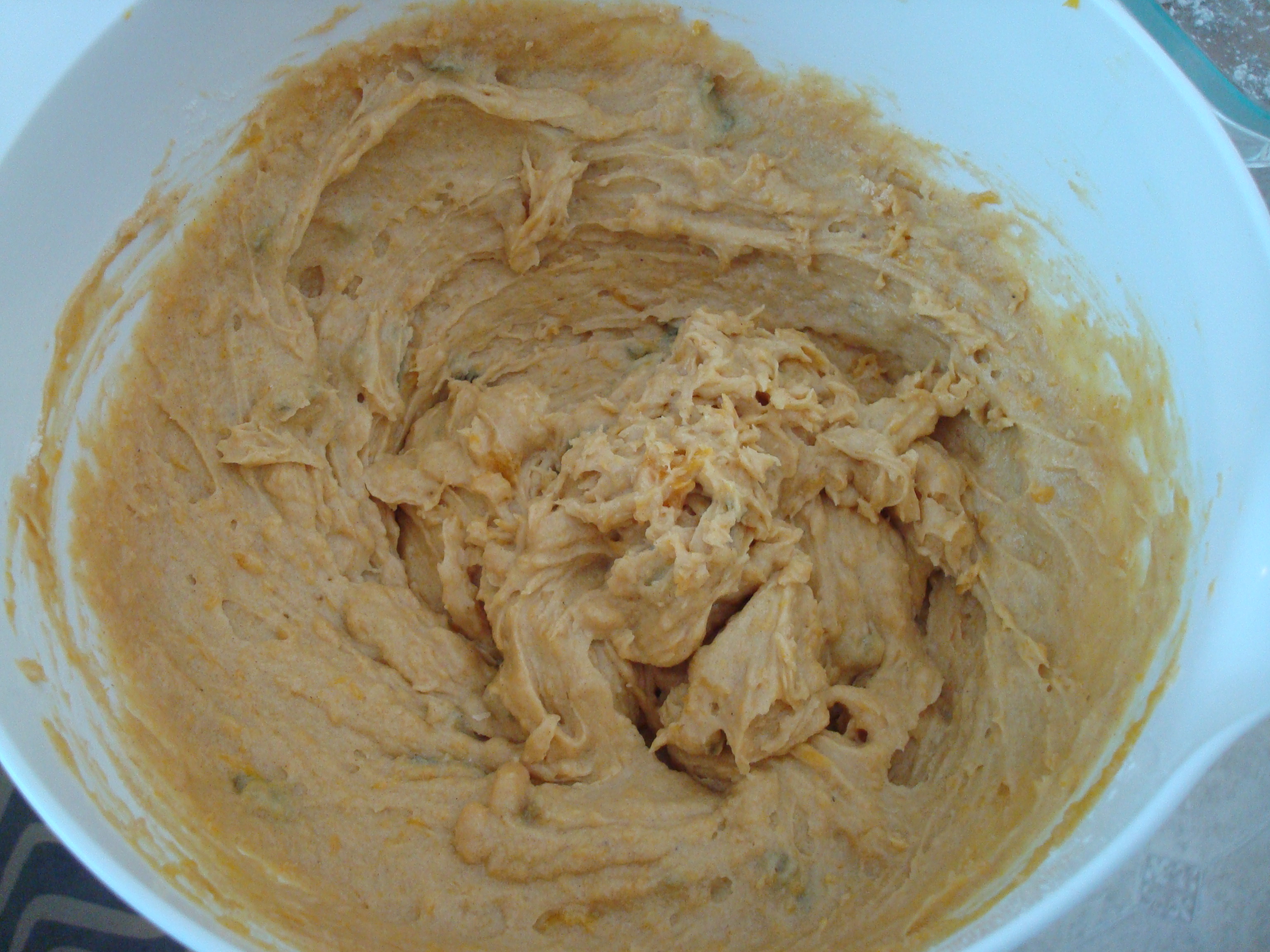
I know I’ve made pumpkin bread for you before but I promise you there is room in your recipe book for this version too.  The difference here is I left out chocolate chips and added sage.  The addition of sage made my kitchen smell like Thanksgiving which was an added bonus.

The bread is moist and sweet but the sage gives it a hint of a savory vibe, which in this case is a good thing.  The recipe was meant to be baked into small loaves so that you can have one for yourself and give the rest away to friends.  What lucky friends!

Pumpkin, Sage, and Browned Butter Quick Breads (from “Martha Stewart Living” magazine, also found at www.marthastewart.com)

  • 6 ounces (1 1/2 sticks) unsalted butter, plus more for pans
  • 1/4 cup fresh sage, cut into thin strips, plus more, whole, for garnish
  • 1 2/3 cups all-purpose flour, plus more for pans
  • 2 teaspoons baking powder
  • 1/2 teaspoon ground cinnamon
  • 1/4 teaspoon freshly grated nutmeg
  • 1/8 teaspoon ground cloves
  • 1 teaspoon salt
  • 1 cup solid-pack pumpkin (from one 15-ounce can
  • 1 cup packed light-brown sugar
  • 2 large eggs

Preheat oven to 350 degrees. Butter and flour eight 2 1/2-by-4-inch loaf pans. (The smallest pans I had were 3 1/4-by-5 3/4-inch loaf pans so I buttered and floured four of them and they worked just fine.) Melt butter in a medium saucepan over medium-low heat. Add sage strips, and cook until butter turns golden brown, 5 to 8 minutes. Transfer mixture to a bowl, and let cool slightly.

Meanwhile, whisk together flour, baking powder, cinnamon, nutmeg, cloves, and salt.

Whisk together pumpkin, sugar, eggs, and browned butter with sage. Add flour mixture, and whisk until incorporated. Divide mixture evenly among 8 pans. Smooth tops gently using an offset spatula.

Place pans on a rimmed baking sheet, and bake until a tester inserted into centers comes out clean, about 30 minutes. Transfer pans to a wire rack, and let cool for 15 minutes. Invert pans to remove breads, transfer to wire rack, top sides up, and let cool completely. Garnish with whole sage leaves before serving.