gratineed baked acorn squash

I love picking up fresh produce at the farmer’s market on Saturday mornings but I have to say there is something that happens this time of year that I don’t love: the produce gets REALLY heavy thus making it difficult to lug around for very long.  Potatoes, pumpkins, beets, and the myriad varieties of squash.  I of course love squash so I don’t so much mind, but I am thinking of investing in one of those granny-esque wheeled basket-numbers to save my back.  But I digress.  Today we are working with one of my favorite kinds of squash.
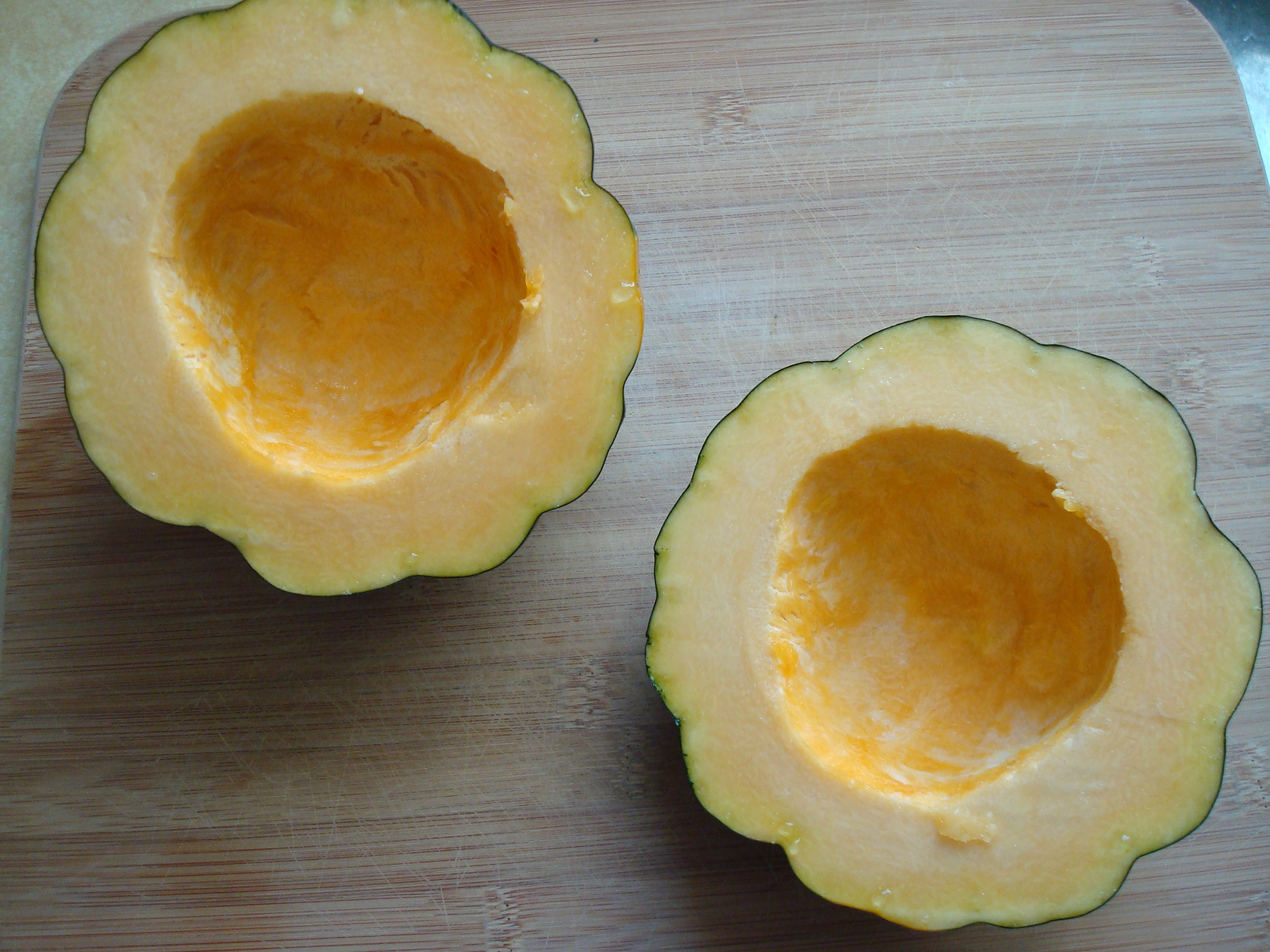
Acorn squash is thus named because it is shaped like acorns, only a lot bigger and green on the outside with a lovely orange flesh on the inside.  The shell is quite thick on acorn squash so please be careful when cutting them down the middle and keep your digits out of the way of the knife.  Then scoop out the seeds and you are halfway done with the hands-on portion of this recipe.  Place the squash halves (cut-sides facing up) in a baking pan with half a cup of water in the base of the pan, then season the squash halves with salt and pepper.
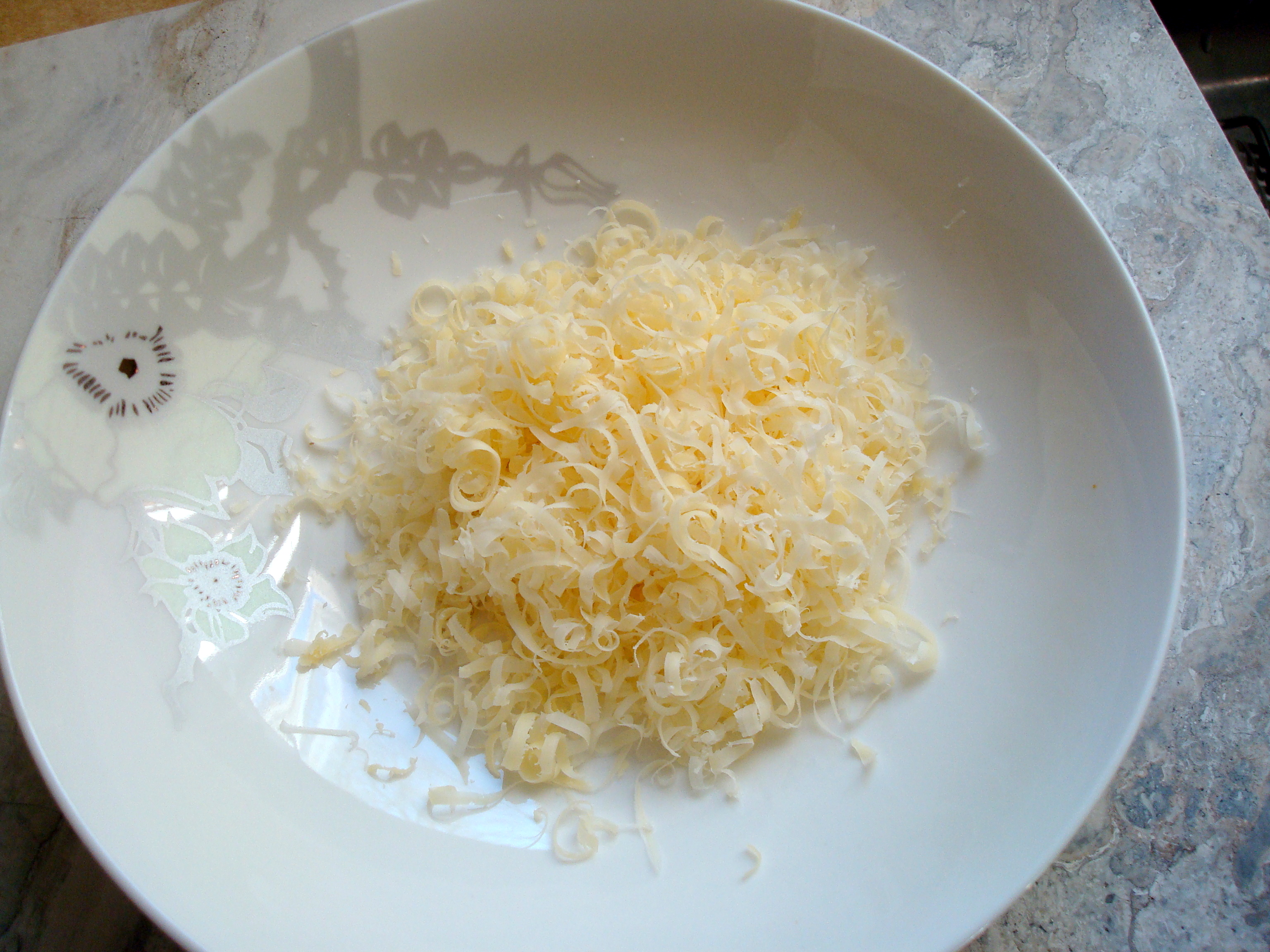
Next you heat up some heavy cream with torn sage leaves and thin slices of garlic over medium heat until it simmers.  Pour the cream sauce evenly in each of the squash halves (recipe below is for two whole acorn squash or four halves) and bake in 375 oven for 30 to 40 minutes.  In the meantime grate some Gruyère cheese in preparation for the final step.  After the squash has baked for the 30 to 40 minutes remove it from the oven and sprinkle the cheese evenly amongst the halves and bake for an addtional 10 minutes or until the cheese melts.  Then remove from the oven and enjoy.
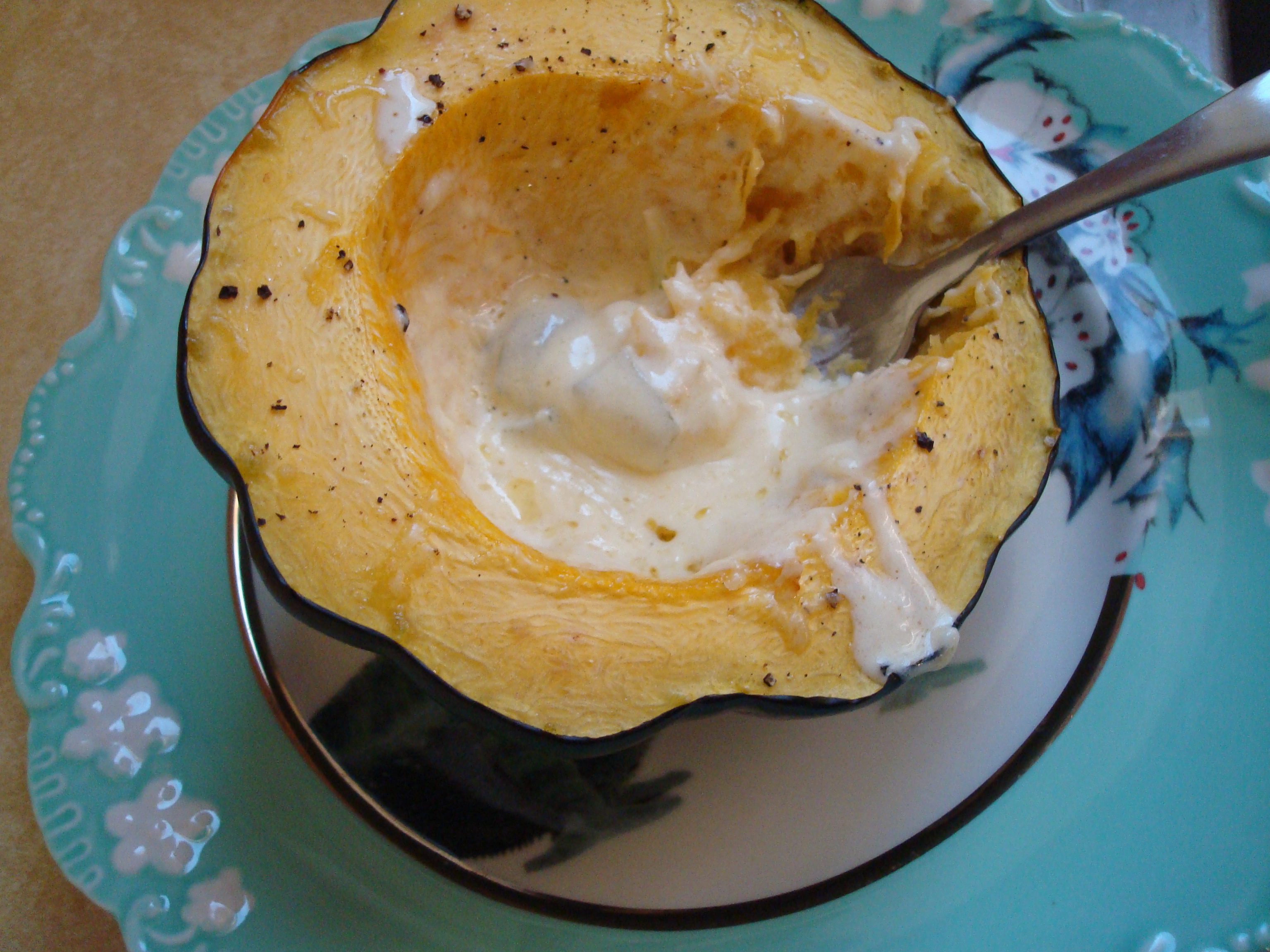
Gratineed Baked Squash Halves (recipe from Reader’s Digest magazine)

  • 2 acorn squash, halved crosswise, seeds removed
  • Coarse salt and freshly ground pepper
  • ½ cup heavy cream
  • 8 fresh sage leaves, torn in half
  • 2 garlic cloves, thinly sliced
  • ½ cup grated Gruyère cheese (about 2 ounces)

Preheat oven to 375 degrees F.  Place squash halves, cut sides up, in 9-inch baking dish.  Season with salt and pepper.  Pour about ½ cup water into baking dish around squash.

Combine cream with sage and garlic in small saucepan.  Bring to a simmer over medium-high heat, then pour into squash halves, dividing evenly.

Bake until squash are tender when pierced with tip of sharp knife, 30 to 40 minutes.  Remove from oven; sprinkle with cheese, dividing evenly.  Continue baking until cheese is melted and golden, about 10 minutes.  Serve hot.
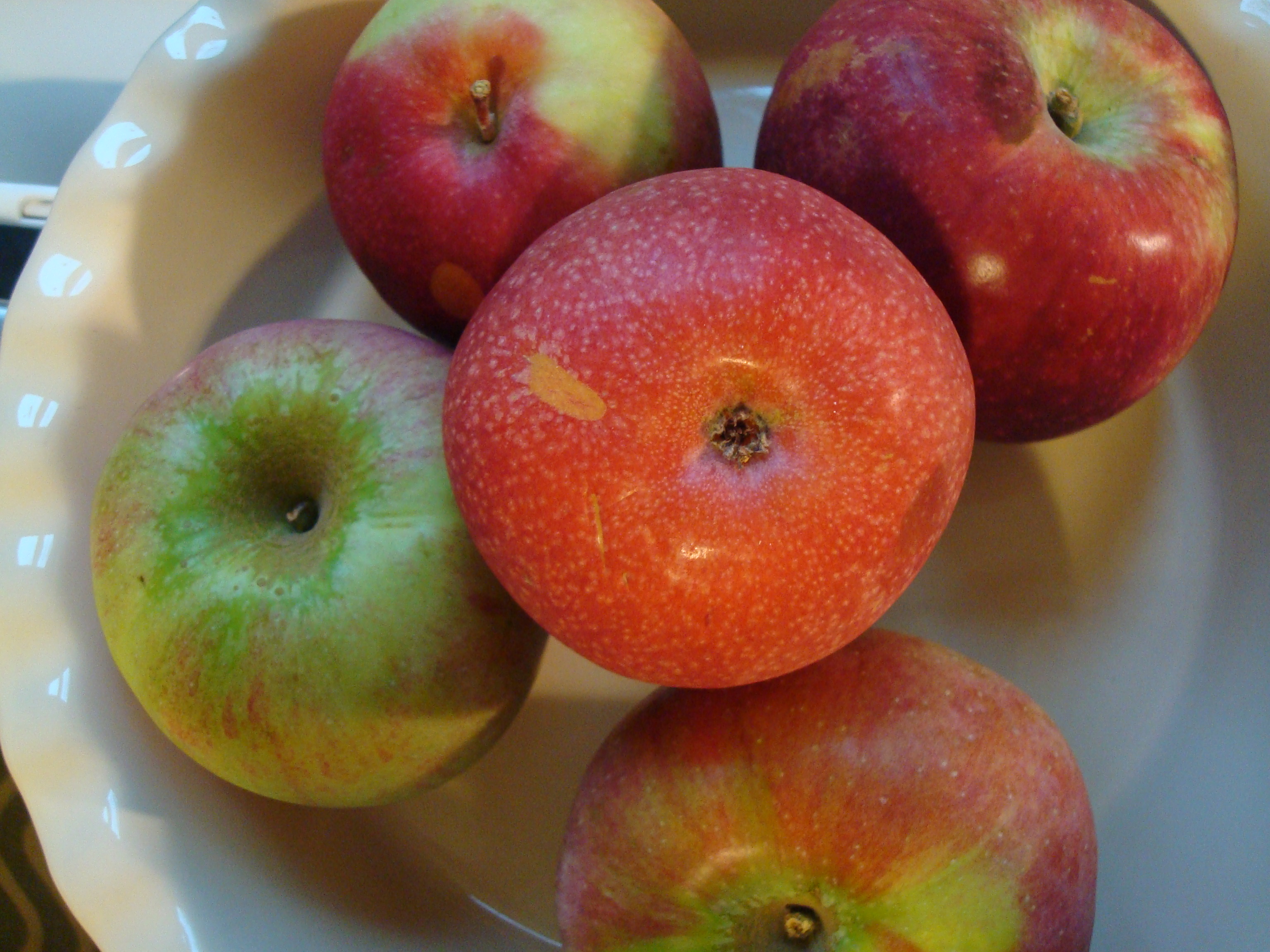
chai apple pie

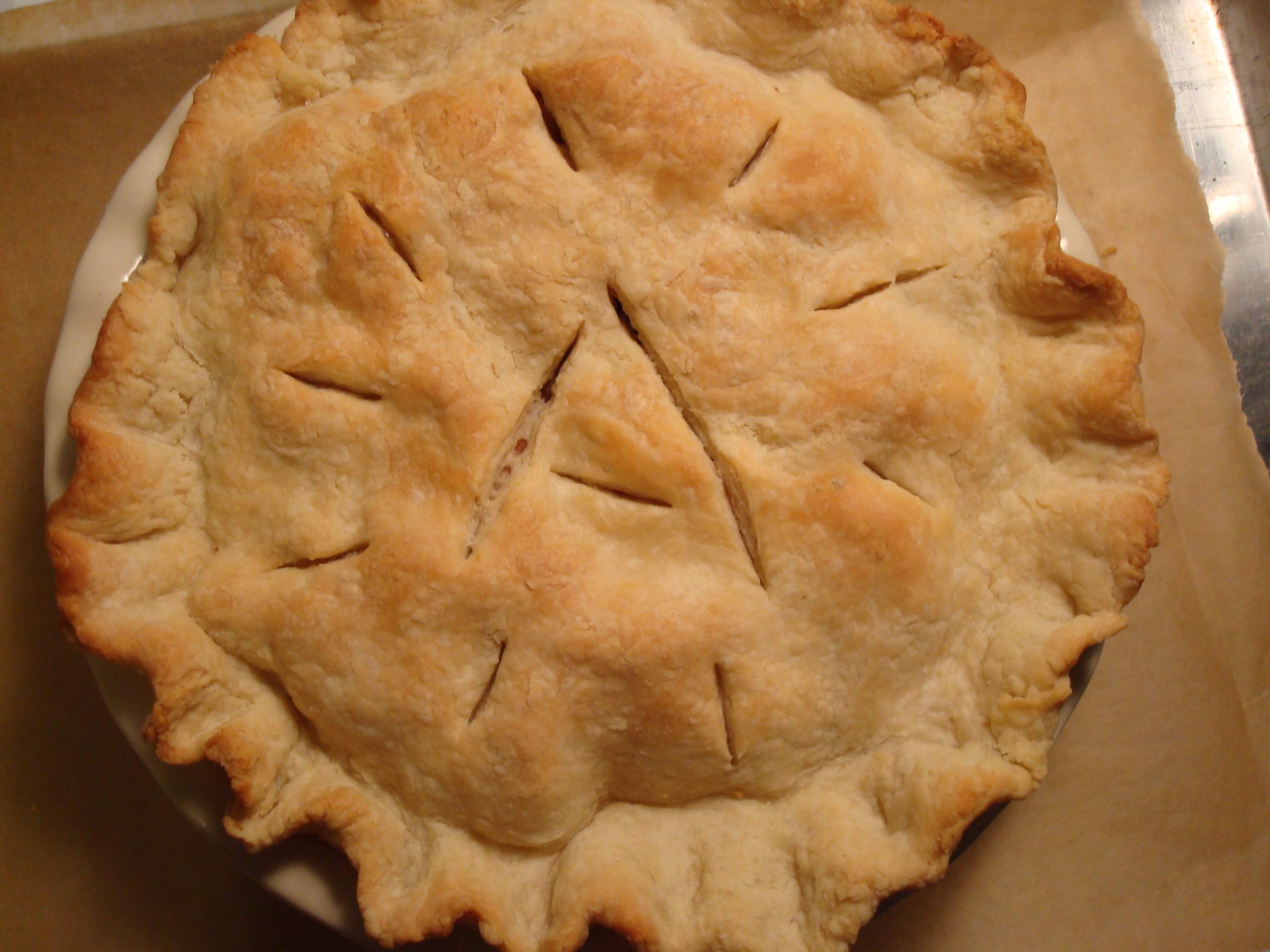
I love pie. A lot. I also love that others love pie so much that there are entire bakeries, blogs, and cookbooks devoted to just it without cupcakes or cookies or other filler. One can do a lot with pie.

Recently I purchased one of the aforementioned pie-only cookbooks, “A Year of Pies” by Ashley English, and have tried out a few of the recipes including the star of this post, an apple pie made with chai tea spices. Now I love me some chai tea and it totally sounded like a very clever and logical thing to do to pair it with apples, and boy was it.

The cinnamon, nutmeg, cloves, cardamom, and black pepper (yes, black pepper!) turn it up a notch and add a little excitement to the classic apple pie recipe. I brought it in to work and one coworker who had a piece told me it was so good she dreamt about it that night. High praise!

Some people have told me they are intimidated about making pies but I really think they are one of the easiest things to make as long as you have an ounce of patience when it comes to making your own crust. It’s really not that hard, I promise! The crust recipe below calls for half shortening, half butter, though you could make it with entirely one or the other if you like. In general I avoid shortening like the plague as it is usually so processed that a tub of it would outlive us all and then some, but I have found an organic, 100% palm oil version from Spectrum that I really like and feel better about using. It does add a nice flakiness to the crust.

Chai Spice Apple Pie (adapted slightly from “A Year of Pies: A Seasonal Tour of Home Baked Pies” by Ashley English)

  • 1 recipe Basic Pie Dough

Chai Spice Blend

  • 1 teaspoon cardamom seeds or ground cardamom
  • ½ teaspoon black tea
  • ¼ teaspoon whole cloves
  • ¼ teaspoon black peppercorns
  • 1 teaspoon ground cinnamon
  • ¼ teaspoon ground ginger

Filling:

  • 3 pounds apples, peeled, cored, quartered, and cut into ½-inch-thick slices
  • 4 tablespoons all-purpose flour
  • ¼ cup granulated sugar
  • 2 tablespoons lemon juice
  • ½ teaspoon sea salt
  • 2 tablespoons unsalted butter, diced, for dotting the filling

Remove one dough disk from the refrigerator. Roll out the dough on a lightly floured surface and fit it into a 9-inch pie pan. Trim the crust overhang to 1 inch, then place the crust in the refrigerator while you prepare the filling.

Using either a mortar and pestle or a spice or coffee grinder, grind the cardamom seeds (if using), black tea, while cloves, and peppercorns to a powder.

Pour the ground spices into a fine-mesh sieve placed over a small bowl. Gently shake the sieve so all but the larger pieces fall through. Discard the larger pieces left in the sieve.

To the freshly ground spices in the bowl, add the ground cardamom (if using), cinnamon, and ginger. Whisk well to combine.

Combine all of the filling ingredients, including the chai spice blend, in a medium-sized mixing bowl. Using either clean hands or a large spoon, toss until all of the ingredients are fully combined and the apple slices are evenly coated.

Pour the apple mixture into the prepared crust, mounding in the center. Dot the surface with diced butter.

Roll the remaining dough disk into a 12-inch circle. Use a small pastry cutter to cut decorative images in the dough, if desired.

Roll the top crust loosely over your rolling pin and unroll it over the filling in the pie pan, making sure it’s centered. Trim the top crust overhang to 1 inch and tuck the edges under the bottom crust overhang. Crimp the edges decoratively.

Place the pie in the refrigerator for 15 minutes.

Meanwhile, preheat the oven to 425 degrees F.

Place the pie on a baking sheet lined with parchment paper or aluminum foil to catch overflow juices and bake at 20 minutes. Reduce the oven temperatures to 375 F and continue baking for 30 to 35 minutes longer, until the crust is golden and juices are bubbling in the center of the pie.

Cool at least 1 hour before serving.

Basic Pie Dough (from “A Year of Pies: A Seasonal Tour of Home Baked Pies” by Ashley English)

  • 2 ½ cups all-purpose flour
  • 1 ¼ teaspoon sea salt
  • 6 tablespoons (3/4 stick) unsalted butter, chilled and cubed
  • ¾ vegetable shortening, chilled and cubed
  • ¾ cup ice water

Mix the flour and salt together in a medium-large bowl.

Using a pastry blender or two forks, cut in the butter and shortening until the mixture resembles coarse meal (you should still have some rather large bits of butter and shortening when you’re done.)

Slowly drizzle in the ice water and stir with a large spoon until the dough begins to clump.

Transfer the dough to a floured work surface and, using your hands, fold it into itself until the flour is fully incorporated into the fats. The dough should come together easily but should not feel overly sticky.

Divide the dough in half, shape it into two balls, and pat each ball into a ½-inch thick disk. Wrap each in plastic wrap and refrigerate for at least an hour.

slow cooker beef stew

It’s that time again.  Time to bust my slow cooker out of the high-up shelf where I put things I don’t use super often.  (I should use it more often though as it’s a great way to cook in the summer without heating up your kitchen the way turning your oven tends to do.)  This time I decided to make one of my all-time favorite fall comfort foods: beef stew.

My grandma used to make a really good beef stew when I was growing up and this recipe reminded me a lot of hers.  I’m pretty sure my grandma didn’t drop a garlic/ginger skewer into her stew, but it really did add nice flavor to it, so much so that I am thinking I might start dropping garlic/ginger skewers into all soups and stews going forward!

As with many slow cooker recipes the most time-consuming part is chopping up vegetables and meat but the beauty here is that if you use baby carrots and pearl onions there isn’t a whole lot left for you to chop up.  Genius!  I froze a couple of single-serve containers full of the stew so that I can heat up comfort-in-food-form deeper into fall/winter when I don’t feel like cooking.  I’m a big fan of freezing in single servings as evidenced by my very full freezer… gotta get myself a larger freezer one of these days…

Baby Vegetable Beef Stew (from Slow Cooker magazine)

  • 2 cloves garlic
  • 1 piece fresh ginger (about 1 inch)
  • 1/3 cup all-purpose flour
  • 1 teaspoon salt
  • 1 teaspoon paprika
  • ¼ teaspoon freshly ground black pepper
  • 2 ½ lb lean boneless beef stew meat or chuck, cut into 1” chunks and patted dry
  • 2 tablespoons extra virgin olive oil
  • 1 package (1 lb) frozen whole pearl onions, thawed
  • 1 bag (1 lb) baby carrots
  • 1 ¾ cups low-sodium beef broth
  • ¾ cup dry red wine
  • 3 tablespoons tomato paste
  • 1 bay leaf
  • 8 oz white or cremini mushrooms, chopped

Coat 4-quart or larger slow cooker with cooking spray.  Place garlic and ginger on skewer or wooden pick.  Set aside.

Combine flour, salt, paprika, and pepper in large ziplock bag.  Shake well.  Toss half of the beef gently in bag to coat.  Remove meat, shaking off excess, and then repeat with remaining beef.

Heat oil in large skillet over medium-high heat.  Brown beef on all sides, 5 to 7 minutes.  Transfer to cooker and top with onions and carrots.  Mix broth, wine, and tomato paste in bowl and pour into cooker.  Drop in bay leaf and ginger-garlic skewer.

Cover.  Cook on low 4 to 6 hours.  Add mushrooms and cook 1 to 2 more hours, or until meat is tender.  Discard skewer and bay leaf before serving.

easy as pie

This past weekend was a very gray and rainy one.  I happen to love that kind of weather because it allows me to not feel guilty for staying in and being a bit of a bum– sweatpants, movies on the couch, the whole nine yards.  It also, on occasion, puts me in the mood to bake up a storm which is exactly what I did on Sunday.  I bake three (THREE) pies and am going to share one of them with you now.

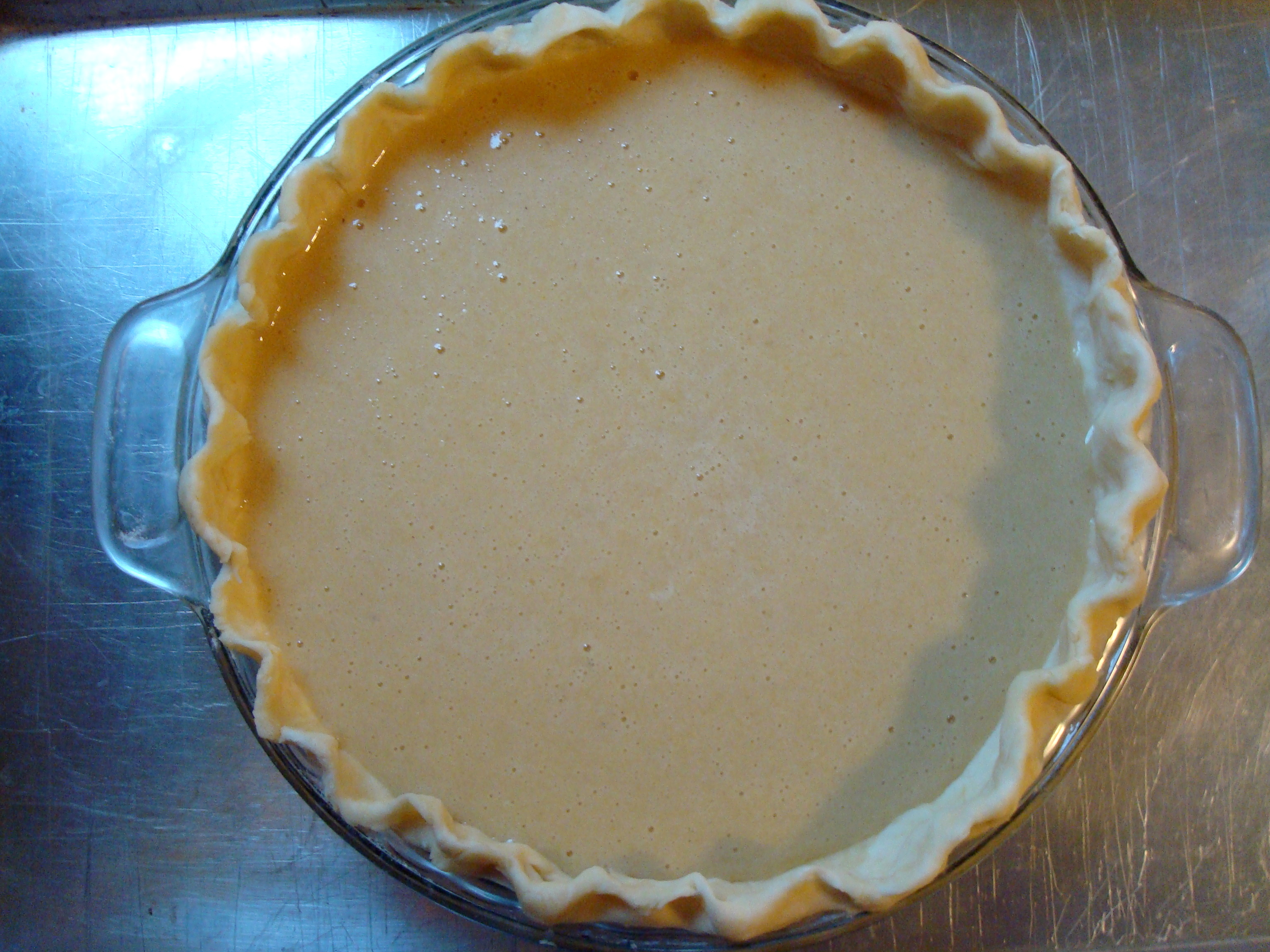
A buttermilk pie appears to be a cousin to chess pie which I happen to love and have now made three different versions of.  The main difference is that you add the titular ingredient.  Clearly.

The most difficult part of the whole ordeal is making the crust look pretty.  I’m quite pleased with how the double knuckle crimping action turned out.

After whisking up the buttermilk with some eggs, melted butter, sugar, a little flour, vanilla, nutmeg, and pinch of salt you pour it into the crust.  And then you bake.  And then you get one of the simplest and most delicious pies known to man.

This would definitely make a nice addition to your Thanksgiving menu and so I have tagged it as such.  Note that I try to tag all recipes that I deem worthy of a Thanksgiving spread so that you can easily search for ideas.  I will be cooking/baking plenty more things that fall into this category over the next month since Thanksgiving is my favorite.

Brown Sugar Buttermilk Pie (by Tim Mazurek of www.lottieanddoof.com found in the book “A Year of Pies: A Seasonal Tour of Home Baked Pies” by Ashley English)

  • 1/2 recipe Basic Pie Dough (see below)
  • 3 large eggs
  • 1/3 cup granulated sugar
  • 1/2 cup (packed) light brown sugar
  • 2 tablespoons all-purpose flour
  • 6 tablespoons (3/4 stick) unsalted butter, melted and cooled
  • 1 cup buttermilk
  • 1 teaspoon pure vanilla extract
  • 1/2 teaspoon freshly grated nutmeg
  • pinch of salt

Preheat the oven to 375 F.

Roll out the dough on a lightly floured surface and fit it into the 9-inch pie pan.  Trim the crust overhang to 1 inch and crimp the edges decoratively.  Refrigerate while you prepare the filling.

In a large bowl, whisk the 3 eggs with both sugars and the flour, making sure there are no lumps.  Add the melted butter, buttermilk, vanilla, nutmeg, and salt.  Whisk to combine.

Pour the filling into the prepared crust and place in the preheated oven.

Turn down to 325 F and bake for 45 to 60 minutes, or until the edges are set and the center is still a little wobbly.

Remove the pie from the oven and let it cool for at least 30 minutes before serving warm or at room temperature.

Basic Pie Dough (from “A Year of Pies: A Seasonal Tour of Home Baked Pies” by Ashley English)

  • 2 1/2 cups all-purpose flour
  • 1 1/4 teaspoon sea salt
  • 6 tablespoons (3/4 stick) unsalted butter, chilled and cubed
  • 3/4 cup vegetable shortening, chilled and cubed
  • 3/4 cup ice water

Mix the flour and salt together in a medium-large bowl.

Using a pastry blender or two forks, cut in the butter and shortening until the mixture resembles coarse meal (you should still have some rather large bits of butter and shortening when you’re done.)

Slowly drizzle in the ice water and stir with a large spoon until the dough begins to clump.

Transfer the dough to a floured work surface and, using your hands, fold it into itself until the flour is fully incorporated into the fats.  The dough should come together easily but should not feel overly sticky.

Divide the dough in half, shape it into two balls, and pat each ball into a 1/2-inch thick disk.  Wrap each in plastic wrap and refrigerate for at least an hour.

penang vegetable curry

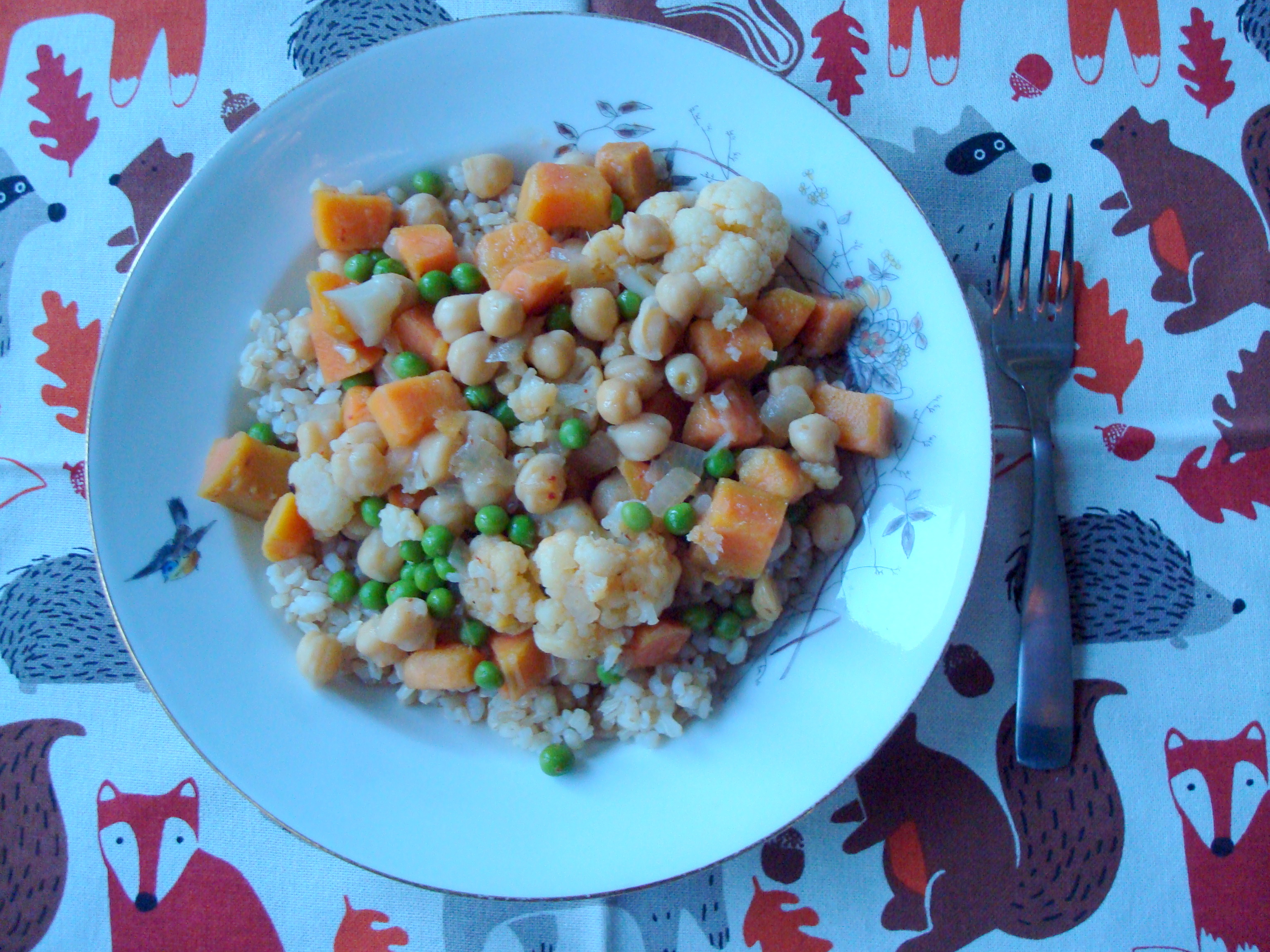
When I was new to Thai food I was a Pad Thai girl all the way.  Pad Thai seems to be the gateway food for many who are new to Thai cuisine, though I eventually did venture away from the noodle dish and experimented with Massaman curry and satay and various peanut-based curries.  Lately I’ve been really into Penang curry.

I’m not so well-versed in Thai food as to be able to tell you what makes Penang curry different from other curries, I just know that I like it and also that a local Asian grocer conveniently carries Penang curry paste.  Score.

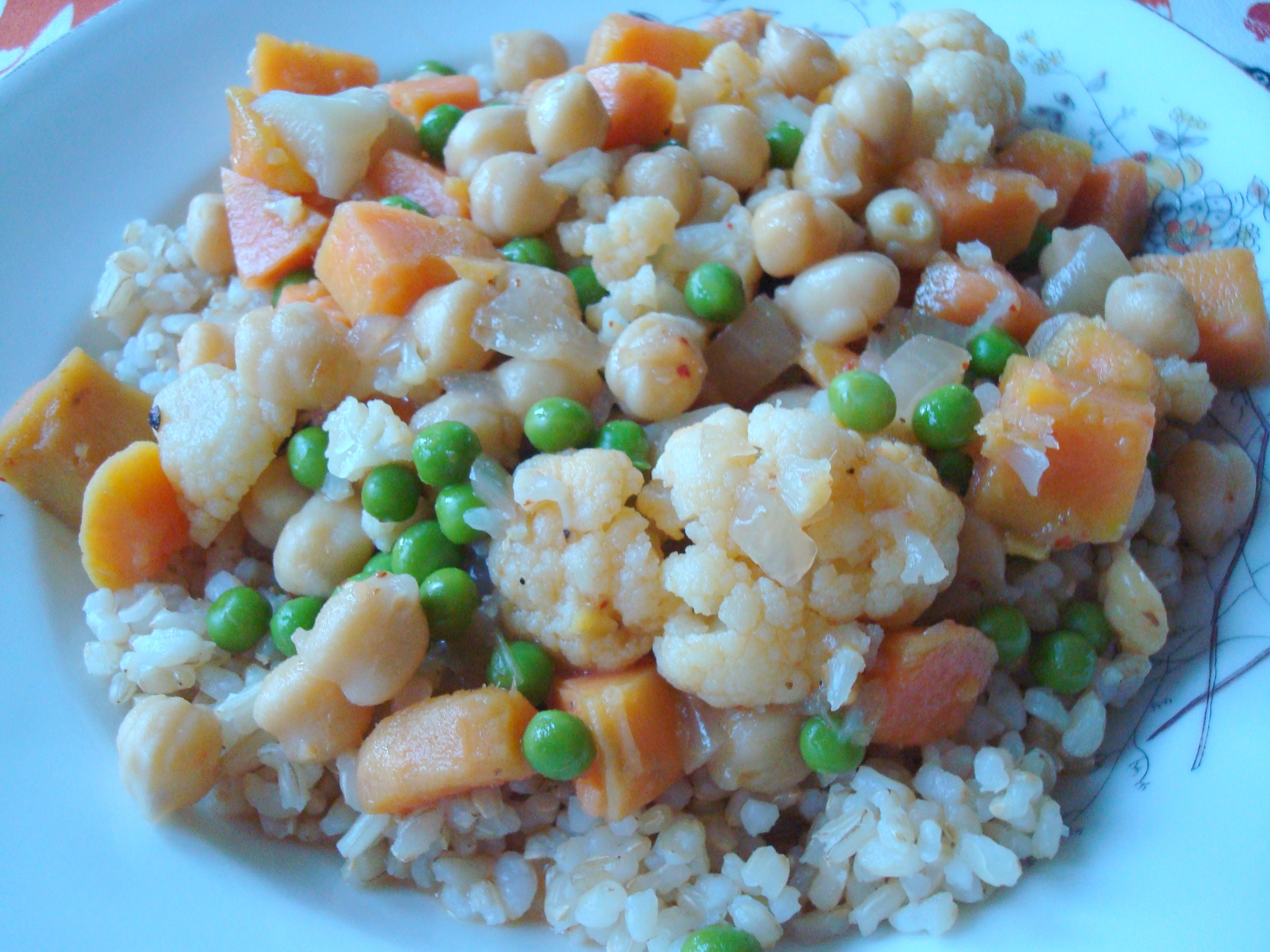
I found a recipe for a simple vegetable curry to use as a guide and went from there.  The recipe called for sweet potatoes (love), cauliflower, and chickpeas (which I had cooked up myself from dried beans and stored in my freezer for later use a few months back).

I wanted to add a little more color to the curry so threw some frozen peas into the mix.

A little tip that I sort of feel like a genius for thinking up, though by no means do I think that I am the first one to have this thought: the recipe called for coconut milk and a cup of water so I emptied my can of coconut milk and then filled the can up with water and added that to the pot.  It made broth richer by getting a little more coconut milk in there and also cleaned out the can for recycling at the same time: two birds, one stone.  So simple, and yet I’d never thought to do this before.

The resulting curry tasted pretty much exactly like the Penang curry I often get at a local Thai restaurant so on nights I don’t feel like making the half hour drive for carry-out I can recreate it myself at home.  It would be especially excellent with a little Thai iced tea.

Penang Vegetable Curry (loosely adapted from “Simple Vegetable Curry” from Everyday Food magazine)

  • 1 tablespoon olive oil
  • 1 medium yellow onion, diced small
  • coarse salt and ground pepper
  • 2 tablespoons Penang curry paste
  • 13.5 oz. can of unsweetened coconut milk
  • 1 sweet potato (about  3/4 pound), peeled and cut into 1-inch pieces
  • 1 small cauliflower, cut into florets
  • 1 can (15.5 ounces) chickpeas, rinsed and drained
  • 1/2 bag of frozen peas

In a large Dutch oven or heavy pot, heat oil over medium-high heat. Add onion and cook, stirring often, until soft, 3 minutes. Add curry paste and stir until fragrant, about 1 minute. Stir in coconut milk and 1 cup water and bring to a boil. Add sweet potato and cauliflower and season with salt and pepper. Reduce heat to medium, cover, and simmer until vegetables are tender, 10 to 15 minutes.

Stir chickpeas into curry and increase heat to high. Simmer rapidly until liquid reduces slightly, 2 minutes. Serve curry over rice.