recipe exchange: dijon pork loin

The recipe I am sharing with you tonight is one of the simplest you’ll ever make.  It only involves five ingredients.  That’s it, just five.  Pork tenderloin.  Dijon mustard.  Herbs de Provence.  Salt.  Freshly ground black pepper.
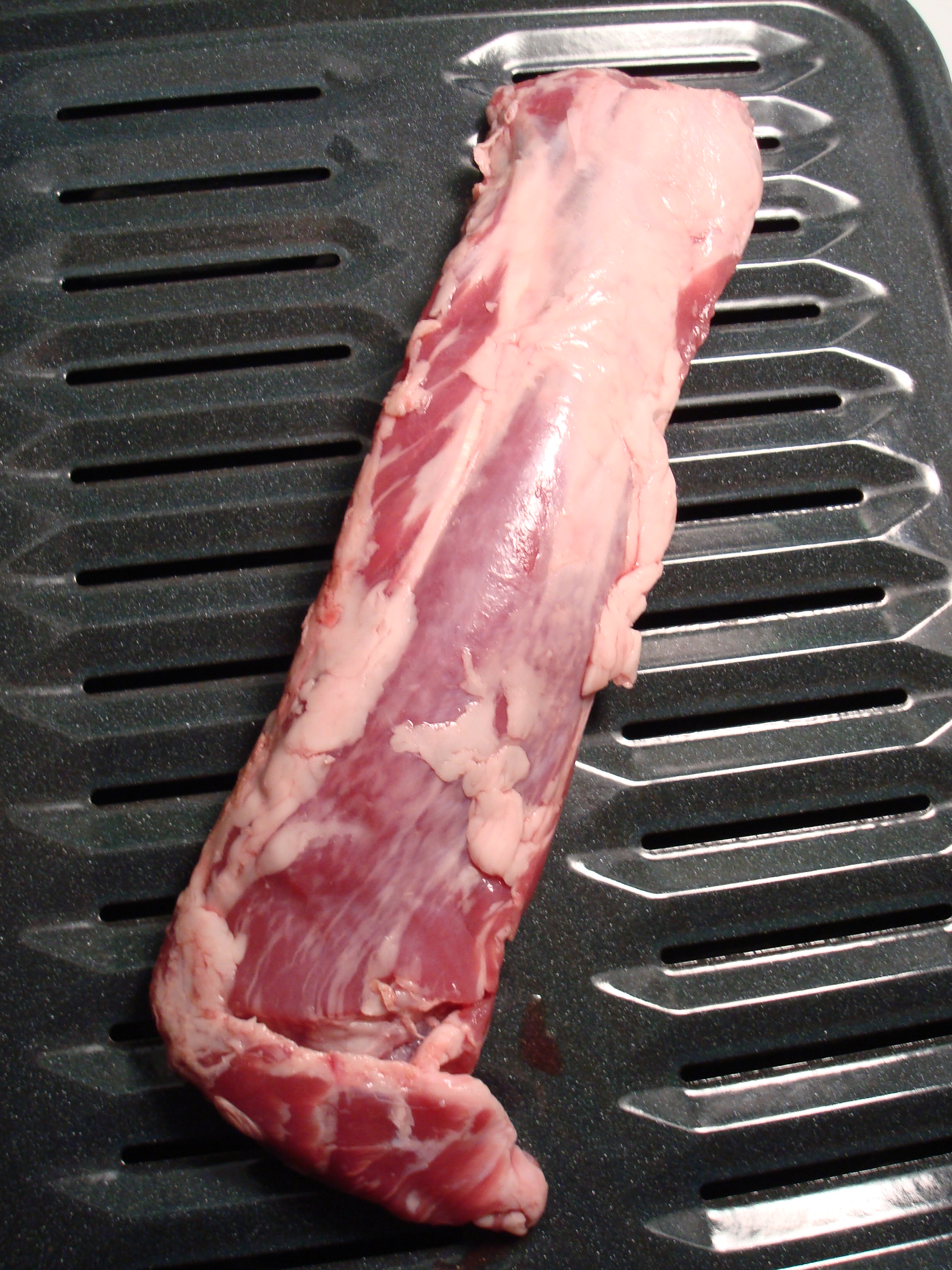
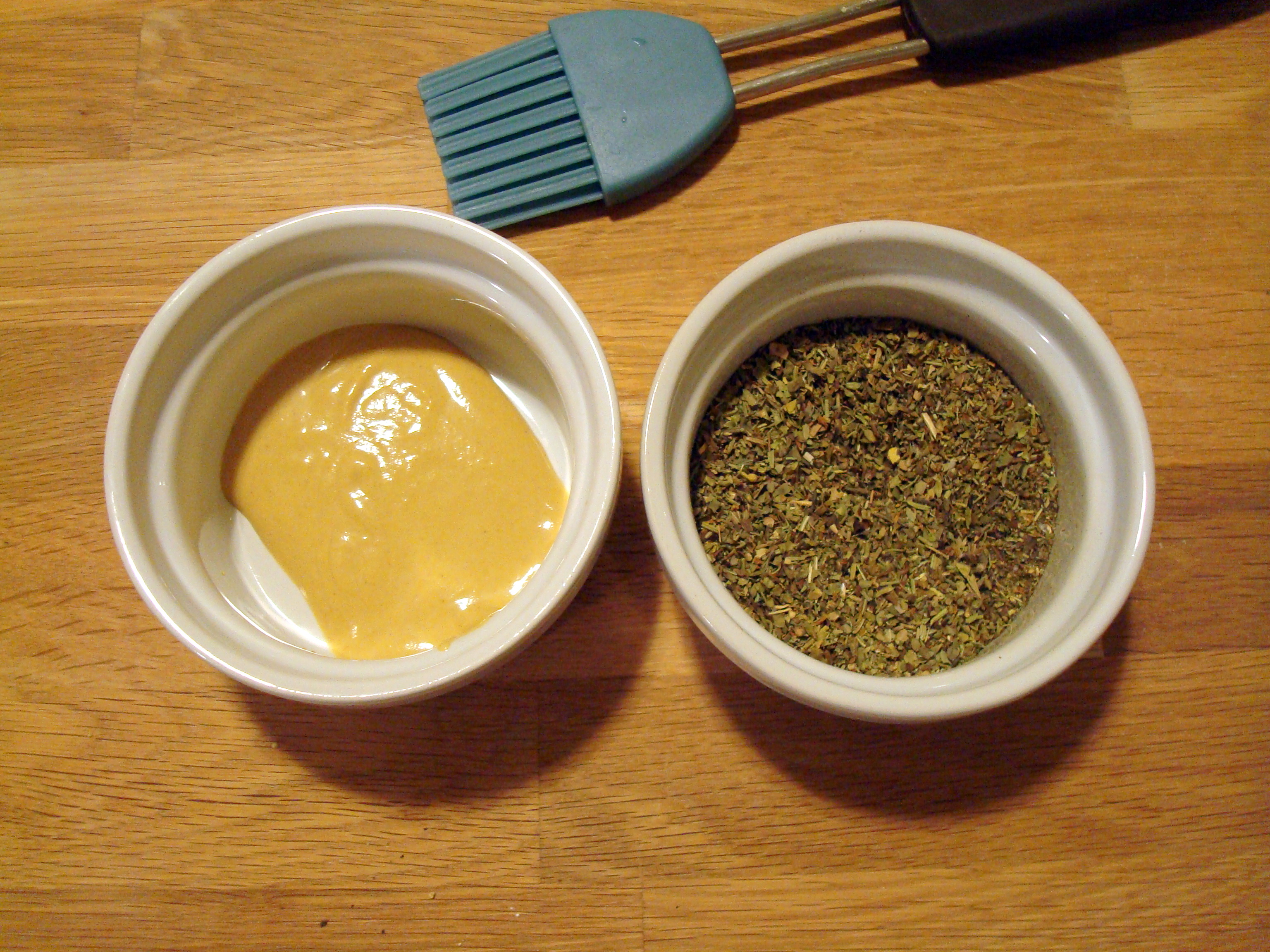
This is the meat you make when you are planning more complicated or time-consuming side dishes.  The only steps are 1) combine the herbs and salt and pepper, 2) brush the tenderloin with Dijon mustard, 3) roll the brushed tenderloin in the herb/salt/pepper mixture, and 4) place in 400 degree oven for approximately 30 to 40 minutes or until meat thermometer placed in thickest part of tenderloin reads 160 degrees.

Have many of you received numerous emails asking you to be part of a recipe exchange like I have?  The one that says the best recipes are the ones you know by heart?  Well this is the recipe I know by heart.  And sorry for not responding to those emails… I got like a thousand!  I’ll just email everyone a link to this post instead.
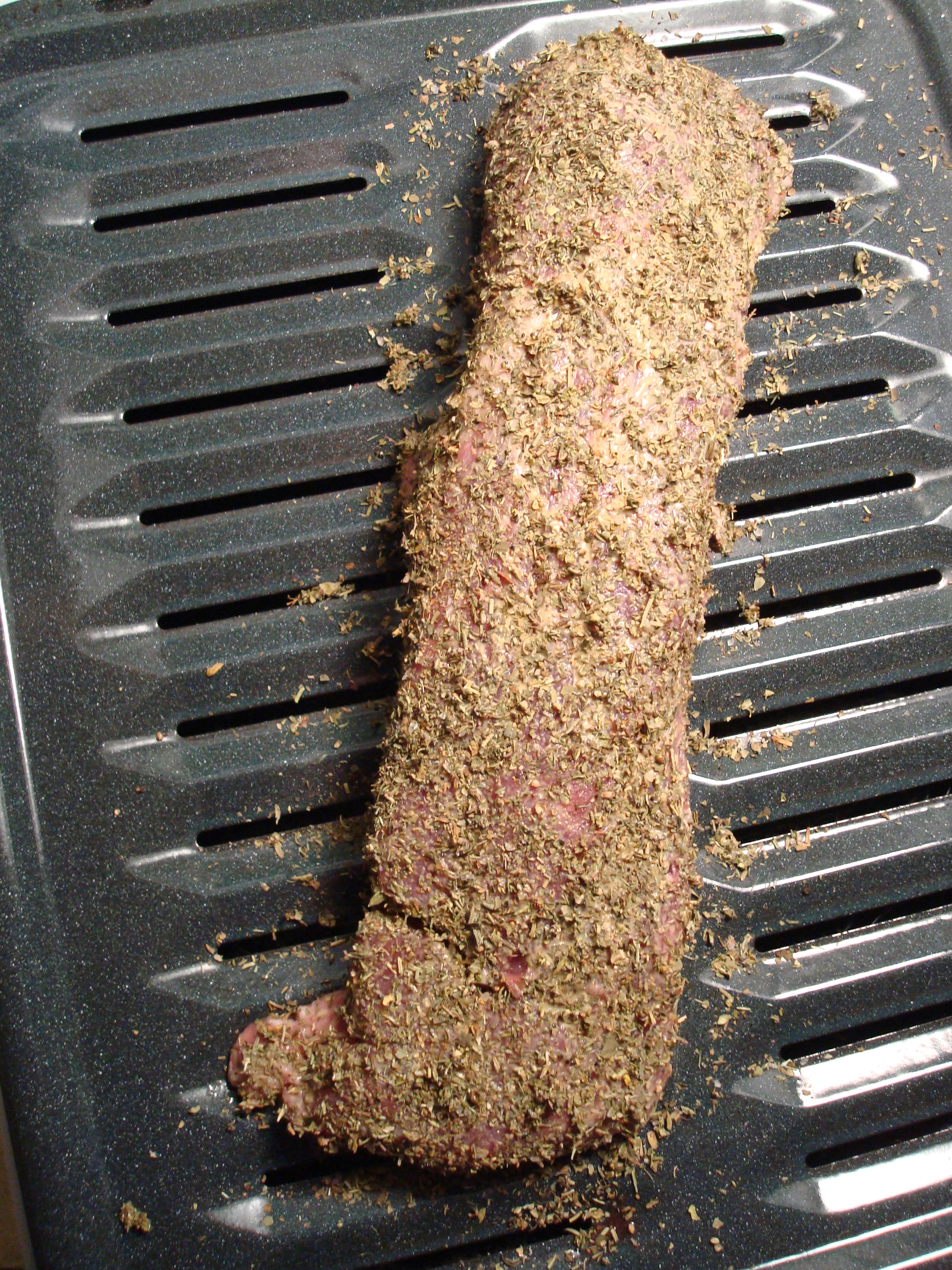
You will surely impress your dining guests with this dish, I guarantee it.  The pork is flavorful and moist and really what more can you ask of meat?  (Note to my non-meat-eating readers: I will balance this out with a vegetarian recipe in the near future.  Another note to my non-meat-eating readers: if you ever decide to take up meat again I highly recommend starting with pork.  Bacon, in particular.)

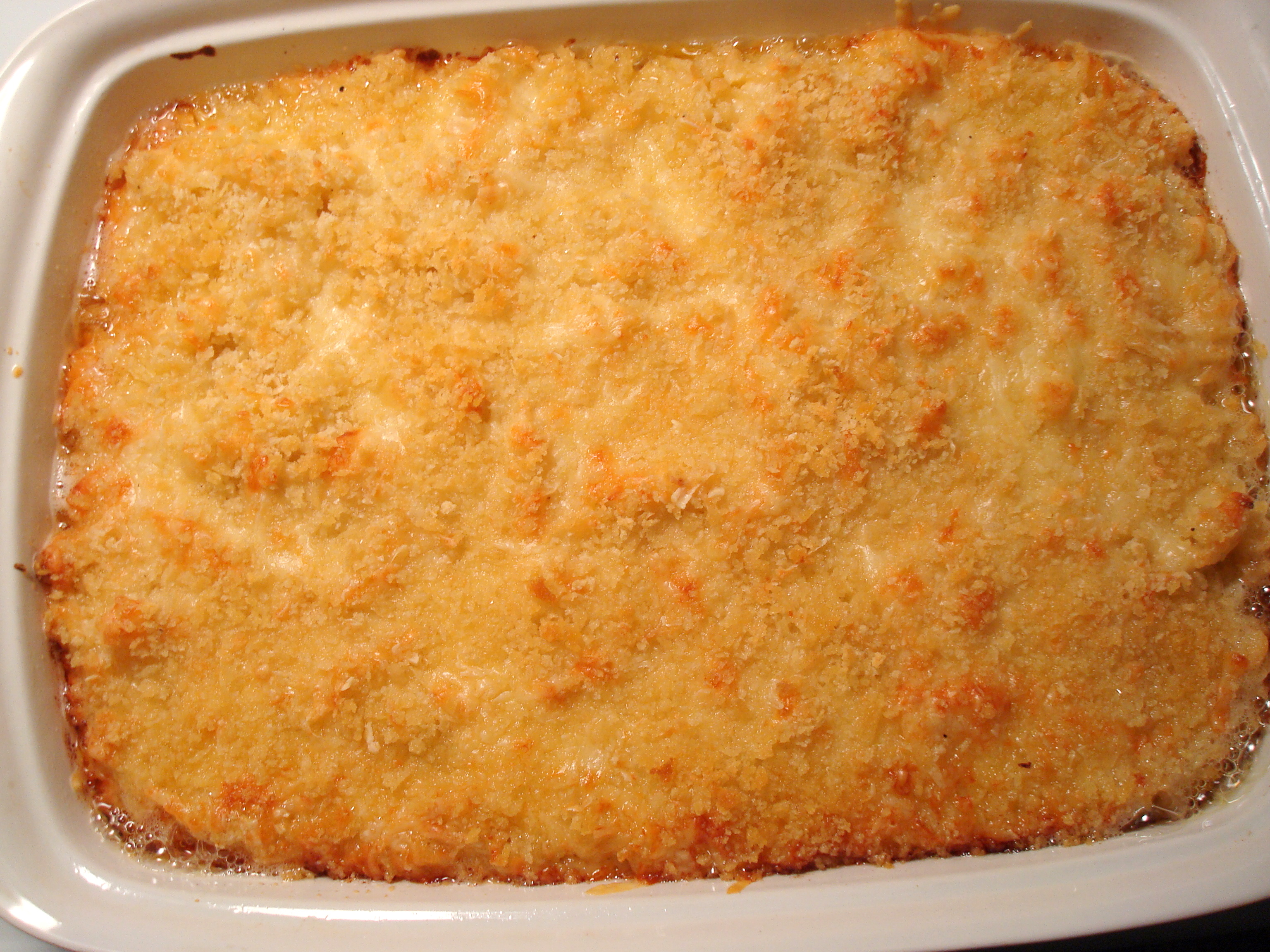
Above, Dijon Pork Loin served with DuMac and Cheese.

Dijon Pork Loin

  • 1 lb pork tenderloin
  • 1 tablespoon Dijon mustard
  • 3 tablespoons herbs de Provence
  • ½ teaspoon salt
  • ½ teaspoon pepper

Preheat oven to 400 degrees.  Brush pork with mustard.  Combine seasonings in separate bowl and then rub into pork until entire tenderloin is covered with herb mixture.  Place in roasting pan on rack.  Roast until meat thermometer reads 160 degrees (approximately 30 to 40 minutes).  Remove from oven and let rest for five minutes before serving.

comfort food

Almost exactly six years ago I moved from the Upper East Side of Manhattan to the Williamsburg section of Brooklyn.  I was still relatively new to New York and hadn’t spent a whole lot of time in Brooklyn prior to moving there but I knew that even though the rent was still exorbitant you got more space for your money so it seemed like a great idea.  But I digress.

My roommate and I happened to move in the midst of a snowstorm that produced what was then one of the largest amounts of snowfall on record.  Awesome.  I remember packing and moving from 6 in the morning until 8 at night and then crashing hard at 9pm which made that the first time I had gone to bed that early without being sick since I was about eight years old.  I still remember it being one of the hardest sleeps I’ve ever experienced.  I was cold out.

The next morning my roommate and I ventured out in search of sustenance and came across a cute little hipster pub that seemed like it had a decent menu.  I ordered mac and cheese.  It was the best dang mac and cheese I’ve ever had in my entire life.  And I have eaten some mac and cheese, let me tell you.  This heavenly mac and cheese had bacon in it.  And it had a crisp topping.  Yes, please.

The name of this restaurant?  DuMont Burger.  I lived in that neighborhood for two-and-a-half years and whenever I had been really good about going to the gym, or whenever I had worked a sixty-hour week, or whenever someone gave me the stink eye on the subway I would reward/comfort myself with mac and cheese takeout from DuMont Burger.  It was simply too easy to call on my walk home from the subway and swing in to pick it up.  Instant comfort.

Now that I no longer live (anywhere near) there I decided that I must recreate it for myself at home.  I couldn’t find radiatore pasta at my local grocery store, but fusilli worked just fine.  I had panko (Japanese bread crumbs) on hand instead of standard bread crumbs so subbed those.  I served pork with the mac and cheese so opted not to include bacon in my version (though I certainly will next time) because that just seemed like pig overkill.  Even still, it turned out pretty great.

If it’s as grey and cold elsewhere in the country as it is in my neck of the woods right now this would be a great week to make yourself a big ol’ pan of it.  Get to it!

DuMac and Cheese (from “The New Brooklyn Cookbook” by Melissa and Brendan Vaughan)

  • 1 pound radiatore, elbow macaroni, or fusilli
  • 2 tablespoons extra-virgin olive oil
  • 2 cups whole milk
  • 2 1/2 cups heavy cream
  • 8 tablespoons (1 stick) unsalted butter
  • 1/2 cup all-purpose flour
  • 1/2 pound Gruyère, grated, divided
  • 1/2 pound sharp white cheddar, grated, divided
  • Coarse salt and freshly ground black pepper
  • 1/4 cup unseasoned bread crumbs

Preheat the oven to 400° F.

Bring a large pot of salted water to a boil and cook the pasta al dente, according to the package directions. Drain, toss with the olive oil in a large bowl, and set aside to cool.

Meanwhile, combine the milk and cream in a medium saucepan over medium-low heat; bring to a gentle simmer.

Melt the butter in a large, heavy-bottomed pot over medium heat. Add the flour and whisk until the flour is fully incorporated and the mixture is smooth. Continue mixing with a wooden spoon until the mixture is a pale golden color, about 4 minutes. Slowly add the hot milk and cream mixture to the flour mixture, whisking constantly to incorporate. Bring to a simmer, whisking occasionally to keep the mixture from burning. Add half the Gruyère and half the cheddar and whisk until the cheese has melted and the sauce is smooth. Season to taste with salt and pepper.

Add the cooked pasta and toss well to combine. Pour the pasta into a buttered 9 x 13-inch baking dish or a 3-quart gratin dish. Top with the remaining Gruyère and cheddar and sprinkle with the bread crumbs. Bake for 20 to 25 minutes, or until golden and bubbly. Allow the mac and cheese to rest for 5 minutes before serving.

milk & honey (and raisins too)

Last week I had a request for a bread recipe so this past weekend I leafed through a bread cookbook I was given for Christmas to make good on the request.  I was feeling for a slightly sweet bread so decided to make a loaf that involved milk, honey, and raisins.

The cookbook emphasizes whole grains and the vast majority of the recipes call for a mix of whole wheat flour and all-purpose flour.  (There is an entire gluten-free section which I plan to experiment with over Lent as I have already decided to give up wheat this year.  Oh boy…)

The recipe is very simple, though not something you can whip up in a half hour because the dough has to rise several times throughout the process.  Which makes it a perfect weekend baking project!

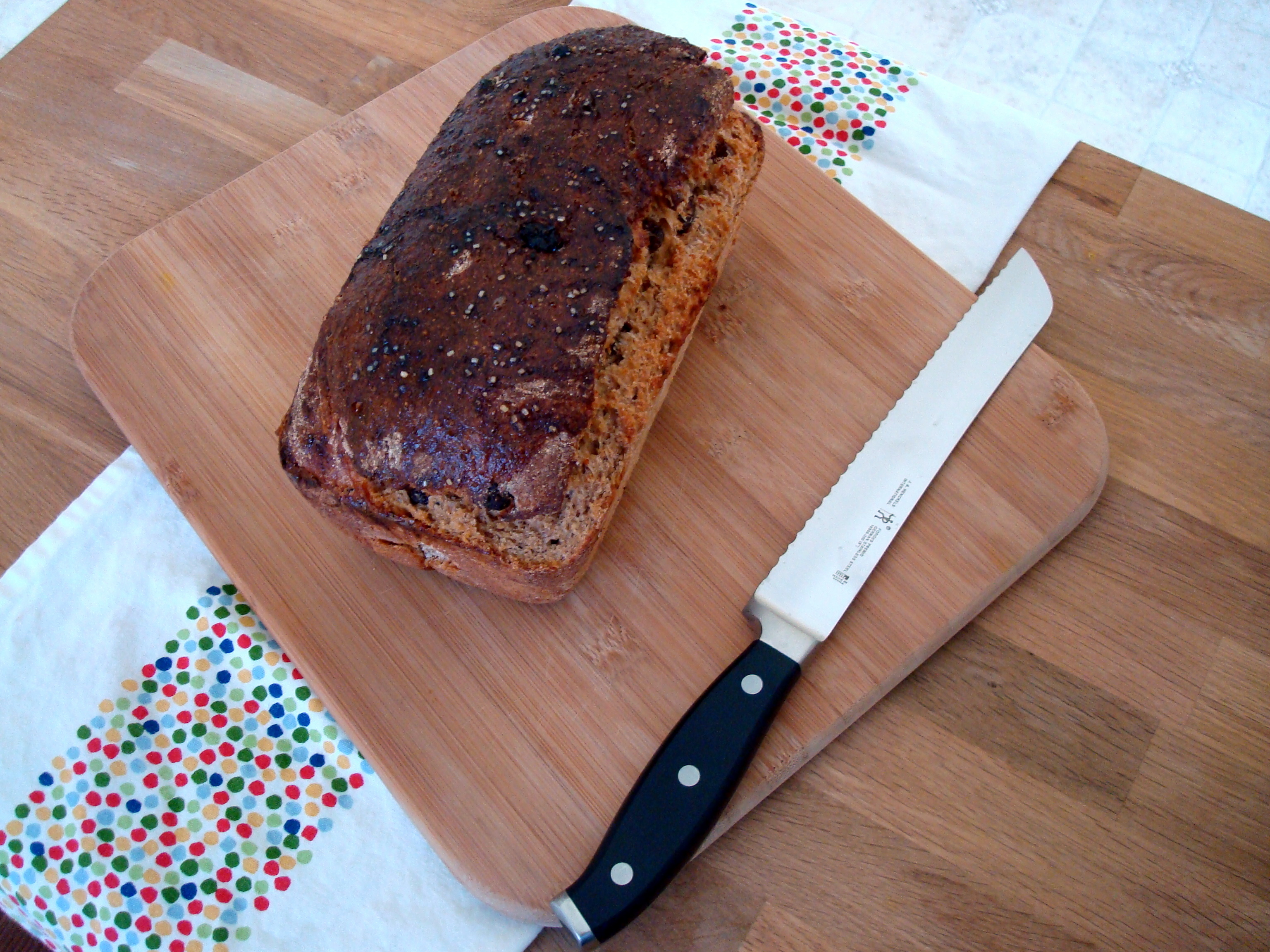
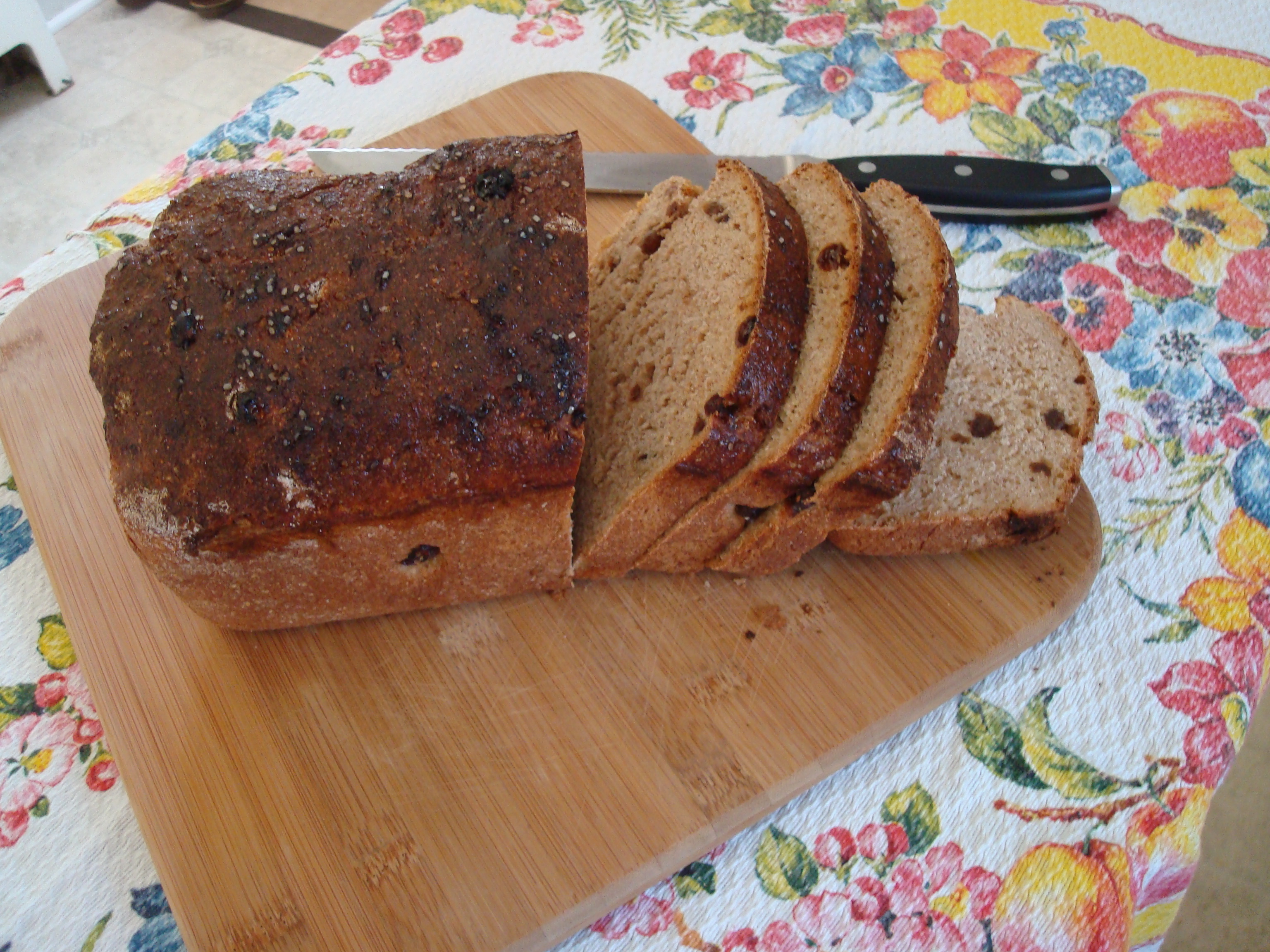
The result is a dense loaf that is only mildly sweet which I quite enjoyed.  It is wonderful still warm with butter (as is all bread I’ve ever encountered) and coffee.  If you are a fan of light and airy bread then this is not the recipe for you as the whole wheat does make it a bit heavy (see use of the word “dense” above.)

And I discovered this morning that this loaf also makes a beautiful French toast.  Bake away!

Milk and Honey Raisin Bread (from “Healthy Bread in Five Minutes a Day” by Jeff Hertzberg and Zoe Francois)

Makes enough dough for at least two 2-pound loaves.  The recipe is easily doubled or halved.  (I recommend halving it unless you have VERY large mixing bowls.)

  • 4 ¾ cups whole wheat flour
  • 4 ½ cups unbleached all-purpose flour
  • 1 ½ tablespoons granulated yeast, or 2 packets
  • 1 tablespoon kosher salt
  • ¼ cup vital wheat gluten
  • 2 cups milk
  • 2 cups lukewarm water
  • 1/3 cup honey or agave syrup
  • 2 large eggs
  • ¾ cup raisins
  • Egg wash (1 egg beaten with 1 tablespoon water) for brushing on the top
  • Raw sugar for sprinkling on top

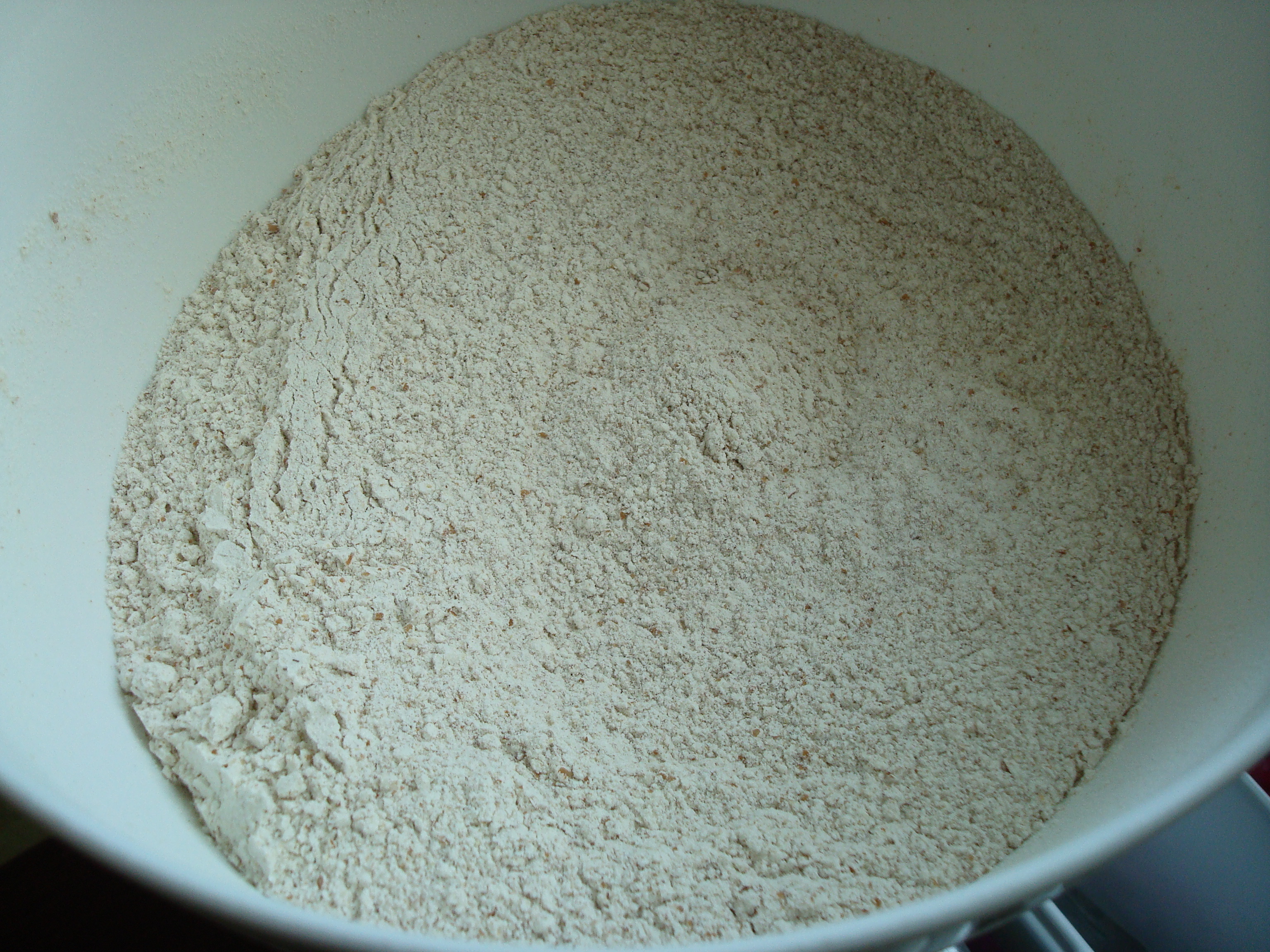
Whisk together the flours, yeast, salt, and vital wheat gluten.

Combine the remaining ingredients and mix them with the dry ingredients without kneading, using a spoon, a food processor (with dough attachment), or a heavy-duty stand mixer (with paddle).  You might need to use wet hands to get the last bit of flour to incorporate if you’re not using a machine.

Cover (not airtight), and allow the dough to rest at room temperature until it rises and collapses (or flattens on top), approximately 2 hours.

The dough can be used immediately after its initial rise, though it is easier to handle when cold.  Refrigerate it in a lidded (not airtight) container and use over the next 10 days.

On baking day, grease an 8 ½ x 4 ½ -inch bread pan.  Dust the surface of the refrigerated dough with flour and cut off a 2-pound (cantaloupe-size) piece.  Dust the piece with more flour and quickly shape it into a ball by stretching the surface of the dough around to the bottom on all four sides, rotating the ball a quarter-turn as you go.

Elongate the ball into an oval and place it in the loaf pan; your goal is to fill the pan about three-quarters full.  Allow the loaf to rest, loosely covered with plastic wrap, for 90 minutes (or 40 minutes if you’re using fresh, unrefrigerated dough).

Thirty minutes before baking time, preheat the oven to 375 degrees, with a rack placed in the center of the oven.

Just before baking, use a pastry brush to paint the top crust with egg wash, and then sprinkle with raw sugar.

Bake for about 45 minutes, until richly browned and firm.  Smaller or larger loaves will require adjustments in resting and baking time.

Remove the bread from the pan and allow to cool on a rack before slicing and eating.

like clouds from heaven

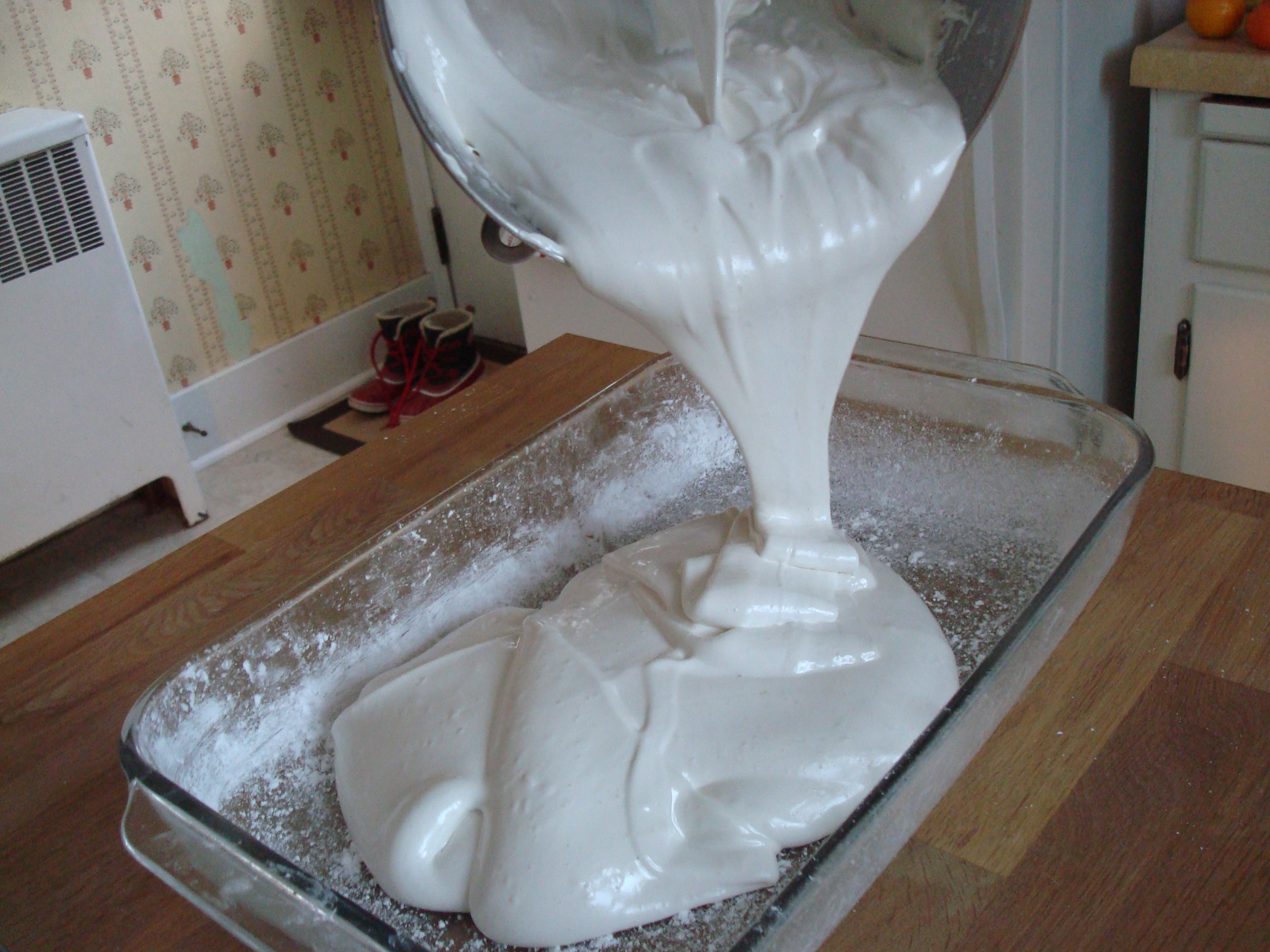
Last week when I made marshmallow brownies I got lots of comments from people saying how easy it is to make marshmallows at home so I decided to try it, and boy were they right!  Why hadn’t I tried this sooner?

I’m very glad I read about smitten kitchen’s early experiments making marshmallows and so followed her advice about how sticky the process is and how one should not try to get every last drop of batter out of the bowl at the risk of knitting their fingers and spatula to the bowl, cause otherwise I totally would have done that.  I don’t like to waste food.  It pained me afterwards to have some batter still stuck in the bowl that I had to rinse out with hot water and watch go down the drain but let me tell you, this stuff is stick-y.  No joke.

The batter was light and fluffy and smelled and tasted like marshmallow cream (of course I had to have a sample before the batter set, just to make sure it tasted okay, and it sure did.)

A few hours later I turned the marshmallow block out onto my cutting board and used an oiled pizza slicer to cut up the marshmallows into lovely little blocks.  I strongly recomment putting some confectioner’s sugar down on the cutting board prior to this step.  It was incredibly sticky and cleaning up my cutting board countertop was not the easiest.

Now, I will admit that my marshmallows are not as pretty as City Bakery’s and not quite as tasty but they are pretty darn close.  And since Wisconsin is not so close to 18th St and 5th Ave in NYC, I’ll take it.

Marshmallows (recipe found at www.smittenkitchen.com, adapted from recipe from Gourmet magazine, December 1998)

  • About 1 cup confectioners’ sugar
  • 3 1/2 envelopes (2 tablespoons plus 2 1/2 teaspoons) unflavored gelatin
  • 1 cup cold water, divided
  • 2 cups granulated sugar (cane sugar worked just fine)
  • 1/2 cup light corn syrup
  • 1/4 teaspoon salt
  • 2 large egg whites or reconstituted powdered egg whites
  • 1 tablespoon vanilla (alternately: 1/2 of a scraped vanilla bean, 2 teaspoons almond or mint extract or maybe even some food coloring for tinting)

Oil bottom and sides of a 13- by 9- by 2-inch rectangular metal baking pan and dust bottom and sides with some confectioners’ sugar.

In bowl of a standing electric mixer or in a large bowl sprinkle gelatin over 1/2 cup cold cold water, and let stand to soften.

In a 3-quart heavy saucepan cook granulated sugar, corn syrup, second 1/2 cup of cold water, and salt over low heat, stirring with a wooden spoon, until sugar is dissolved. Increase heat to moderate and boil mixture, without stirring, until a candy or digital thermometer registers 240°F, about 12 minutes. Remove pan from heat and pour sugar mixture over gelatin mixture, stirring until gelatin is dissolved.

With standing or a hand-held electric mixer beat mixture on high speed until white, thick, and nearly tripled in volume, about six minutes if using standing mixer or about 10 minutes if using hand-held mixer. (Some reviewers felt this took even longer with a hand mixer, but still eventually whipped up nicely.)

In separate medium bowl with cleaned beaters beat egg whites (or reconstituted powdered whites) until they just hold stiff peaks. Beat whites and vanilla (or your choice of flavoring) into sugar mixture until just combined. Pour mixture into baking pan and don’t fret if you don’t get it all out (learning from my mess of a first round). Sift 1/4 cup confectioners sugar evenly over top. Chill marshmallow, uncovered, until firm, at least three hours, and up to one day.

Run a thin knife around edges of pan and invert pan onto a large cutting board. Lifting up one corner of inverted pan, with fingers loosen marshmallow and ease onto cutting board. With a large knife trim edges of marshmallow and cut marshmallow into roughly one-inch cubes. (An oiled pizza cutter works well here too.) Sift remaining confectioners’ sugar back into your now-empty baking pan, and roll the marshmallows through it, on all six sides, before shaking off the excess and packing them away.

Do ahead: Marshmallows keep in an airtight container at cool room temperature 1 week.

sunday night curry

I like to cook a proper meal on Sundays.  It’s the one day a week I’m not running around like a crazy person trying to get things done so I take advantage by preparing a full-on feast.

My favorite kind of feast is one that involves just one pot.  You can do a lot in one pot.  A roast with veggies, a soup or stew, or in this case a curry.

I’ve made Indian and Thai curries in the past so when I found a recipe for a South African curry I was intrigued.

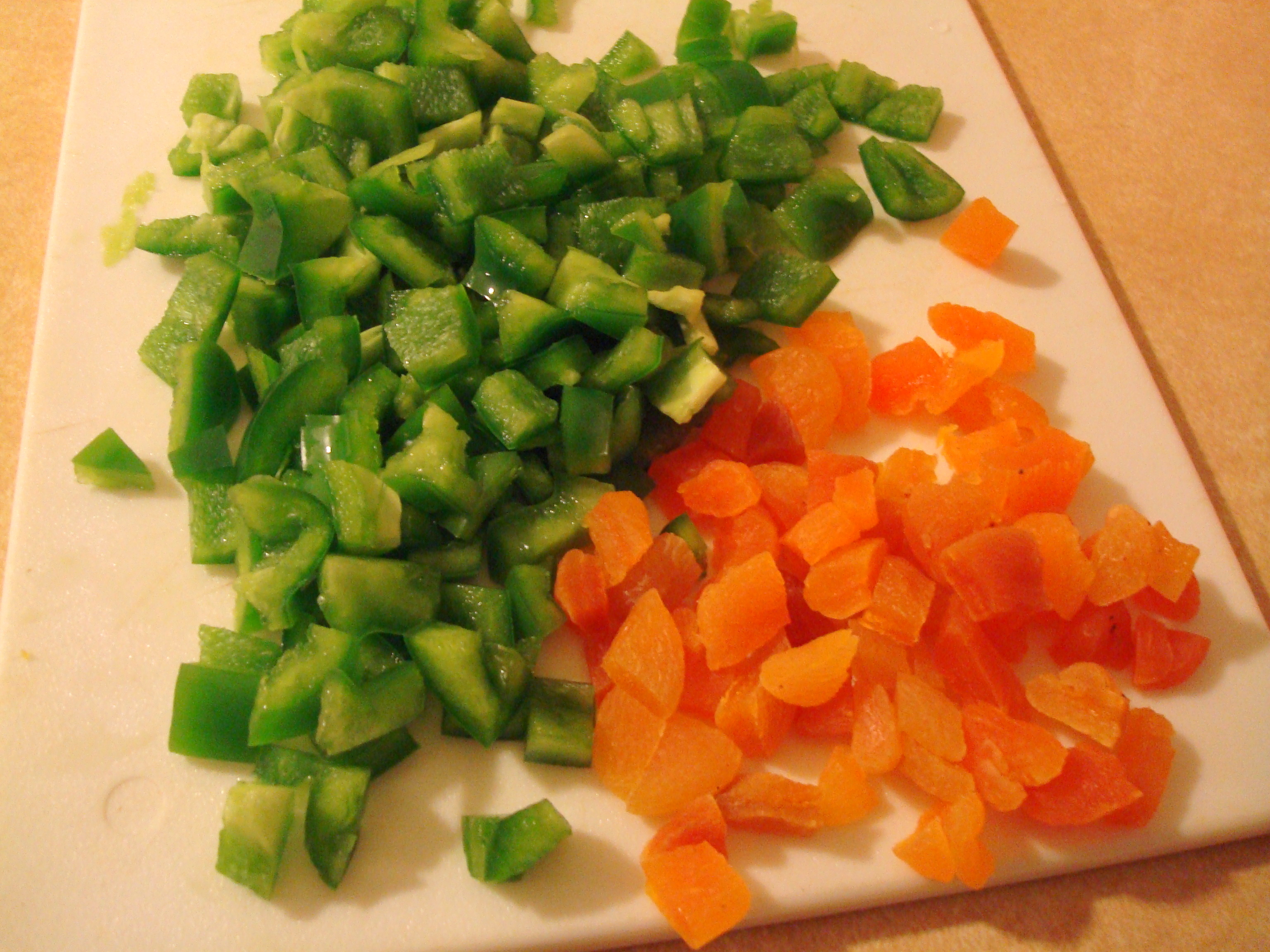
The recipe called for a combination of foods I had never seen before: green peppers and… dried apricots.  I was totally skeptical but it worked.  And the two colors looked nice together on my cutting board.  Bonus.

The prep time for this dish takes about a half hour and then you just let it stew for an hour and change and it’s good to go.  Serve it over rice, noodles, or mashed potatoes and enjoy.  And enjoy having fewer dishes to clean afterward!

Cape Malay Curry (from Cooking Light magazine)

  • 1 ½ teaspoons ground turmeric
  • 1 ½ teaspoons ground cumin
  • 1 ½ teaspoons ground coriander
  • 1 ½ teaspoons chili powder
  • ¾ teaspoon ground cinnamon
  • ½ teaspoon salt
  • 2 teaspoons canola oil
  • 2 cups chopped onion
  • 1 ½ tablespoons minced peeled fresh ginger
  • 2 bay leaves
  • 1 garlic clove, minced
  • 1 pound beef stew meat, cut into bite-sized pieces
  • 1 cup less-sodium beef broth
  • 1/2 cup water
  • 1 cup chopped green bell pepper (about 1 medium)
  • 1/3 cup chopped dried apricots
  • 1/3 cup apricot spread
  • 2 teaspoons red wine vinegar
  • ¼ cup low-fat buttermilk

Combine turmeric, cumin, coriander, chili powder, cinnamon, and salt in a small bowl, stirring well.

Heat oil in a Dutch oven over medium-high heat. Add spice mixture; cook 15 seconds, stirring constantly. Add onion; sauté 2 minutes. Add ginger, bay leaves, and garlic; sauté 15 seconds. Add beef; sauté 3 minutes. Add broth and next 5 ingredients (through vinegar); bring to a boil. Cover, reduce heat, and simmer 1 1/2 hours. Uncover; discard bay leaves. Simmer 30 minutes or until beef is very tender. Remove from heat; stir in buttermilk.

Serve over rice, mashed potatoes, or egg noodles.