rhubarb, lemon, and vanilla pie

This time of year I’m usually gifted with large bags of rhubarb by assorted friends and family.  I love the stuff but sometimes feel like I’m running out of things to do with it.  Not so.  Though I’ve made several different kinds of rhubarb pie seen here and here and here, I still managed to find another rhubarb pie recipe that intrigued me.

5.27.13 002

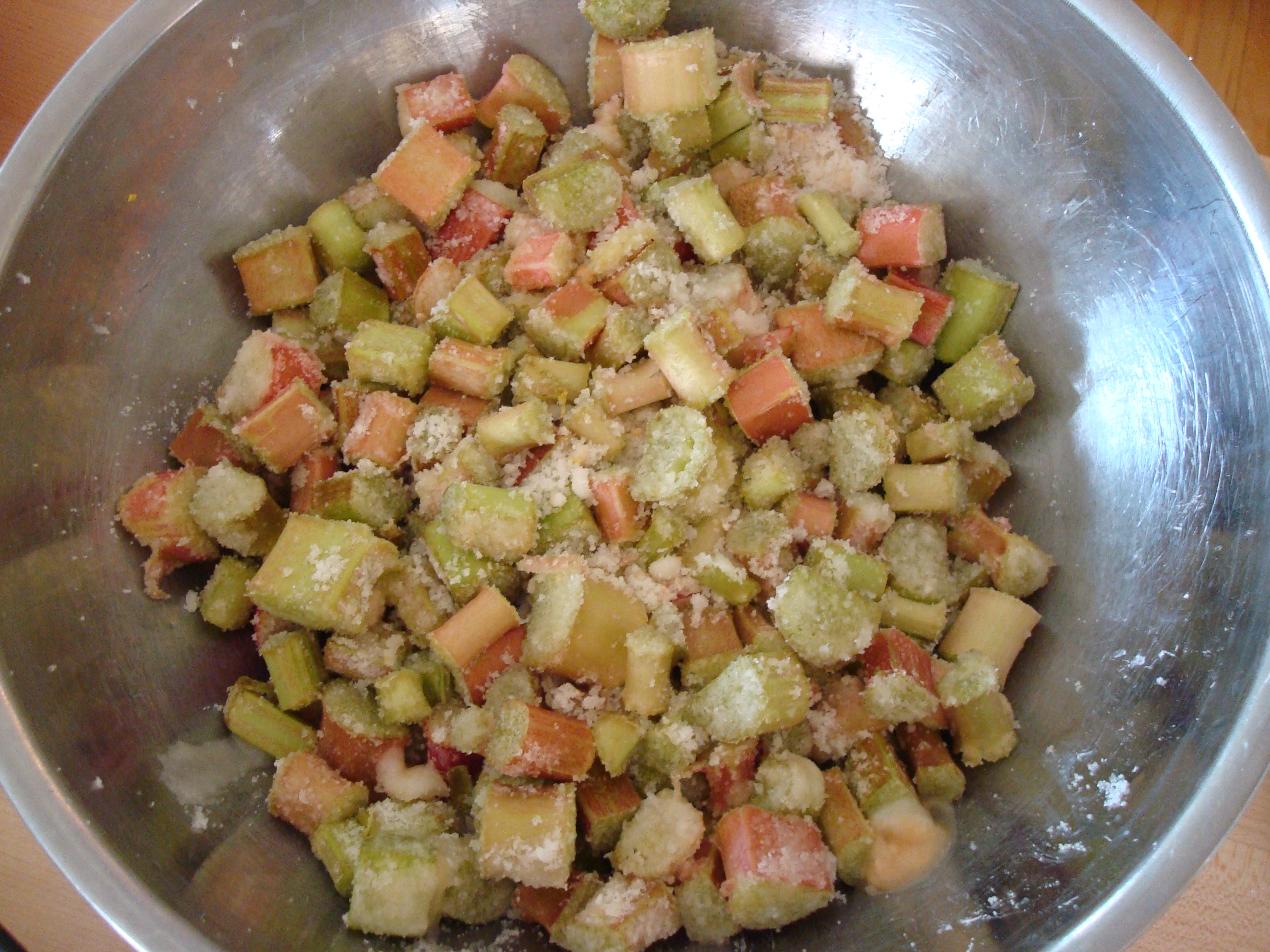
Lemon zest and juice and vanilla extract along with a bit of freshly grated nutmeg get added to the otherwise typical rhubarb filling.  Genius!  So simple, but so good.  Next time I may actually add a little fresh vanilla bean along with the extract just to deepen the vanilla flavor.
5.27.13 004

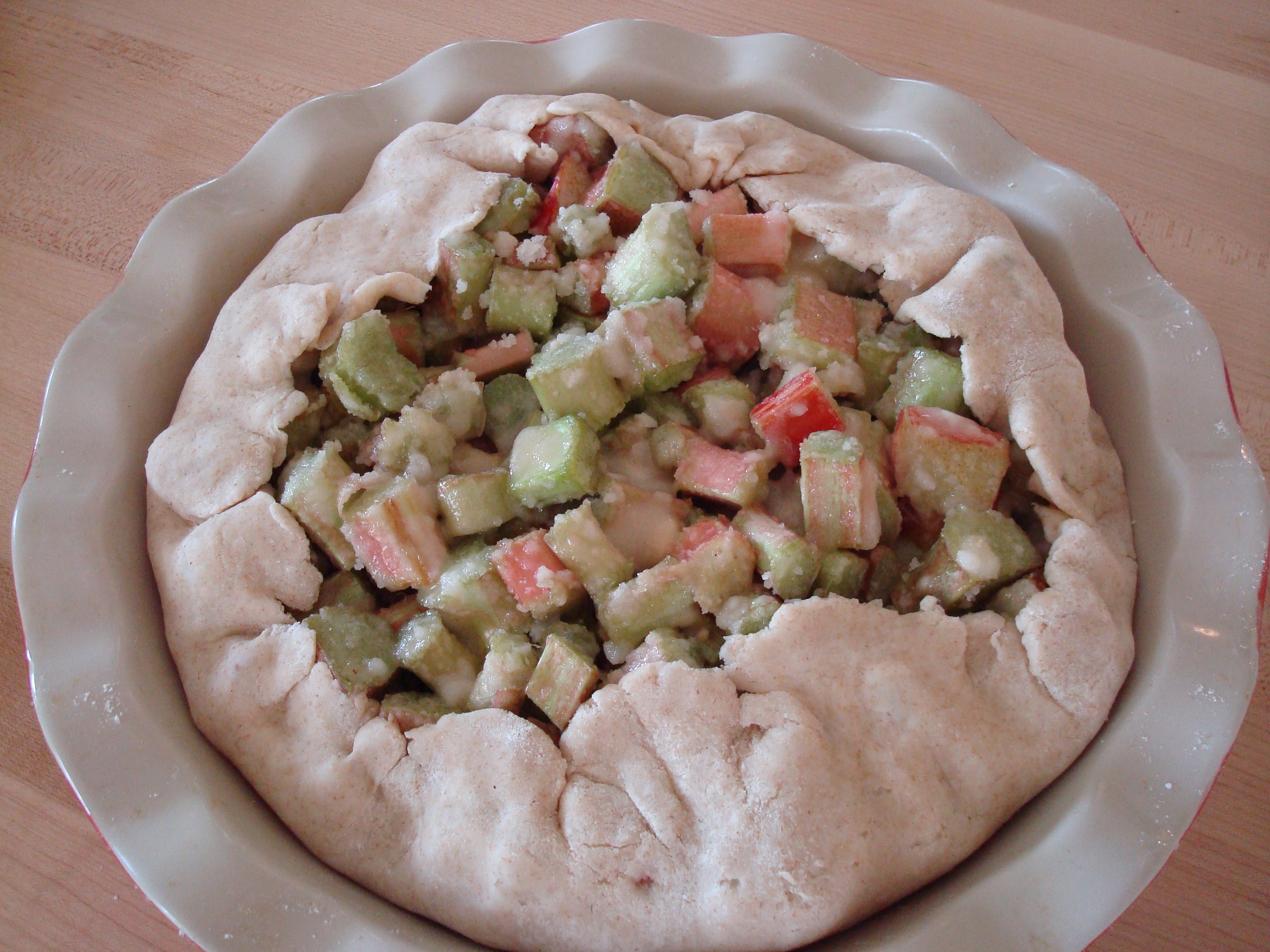
I had big plan for doing a fancy lattice top to this pie but was short on time so did what my mom calls a “flopover” pie.  You simply fold the edges of the crust over the top of the filling.  I’ve brought this style of pie to dinner parties before and people are always impressed and refer to it as a galette, which sounds much nicer than flopover.  Those French and their fancy words.
5.27.13 008

The lemon zest and juice pair so nicely with the rhubarb and the vanilla adds a little extra sweetness.  And it would’ve been so great with the mascarpone ice cream I made last week!  If only there were any left by the time I made the pie…

5.27.13 010

Rhubarb, Lemon, and Vanilla “Flopover” Pie (filling recipe from “A Year of Pies” by Ashley English)

  • 1 1/2 pounds rhubarb (4 1/2 cups), trimmed and chopped into 1/2-inch pieces
  • 1 1/2 cups granulated sugar
  • 1/2 cup arrowroot powder or cornstarch
  • Grated zest and juice of 1 lemon
  • 2 teaspoons vanilla extract
  • 1/2 teaspoon freshly ground nutmeg

Preheat oven to 425.

Place the chopped rhubarb, sugar, arrowroot or cornstarch, lemon zest and juice, vanilla extract, and nutmeg in a medium-size bowl.  Stir together with a large spoon until well combined.

Pour the rhubarb filling into the prepared crust (see below).  Fold crust over the top of the pie.  Cover crust with aluminum foil to prevent it from browning too quickly.  Remove foil for last 15 minutes of baking.  Bake for about an hour, until the crust is golden and juices are bubbling in the center of the pie.

One Crust Pie Pastry (from Betty Crocker’s Cookbook)

  • 1 cup all-purpose or unbleached flour
  • ½ teaspoon salt
  • 1/3 cup plus 1 tablespoon shortening
  • 2 to 3 tablespoons cold water

Mix flour and salt in medium bowl.  Cut in shortening, using pastry blender or crisscrossing 2 knives, until particles are size of small peas.  Sprinkle with cold water, 1 tablespoon at a time, tossing with fork until all flour is moistened and pastry almost leaves side of bowl (1 to 2 teaspoons more water can be added if necessary).

Gather pastry into a ball.  Shape into flattened round.  If desired, wrap flattened round of pastry in plastic wrap and refrigerate about 30 minutes to firm up the shortening slightly, which helps make the baked pastry more flaky and lets the water absorb evenly throughout the dough.

Roll pastry on lightly floured surface, using floured rolling pin, into circle 3 inches larger than upside-down pie plate.  Fold pastry into fourths and place in pie plate; or roll pastry loosely around rolling pin and transfer to pie plate.  Unfold or unroll pastry and ease into plate, pressing firmly against bottom and side and being careful not to stretch pastry, which will cause it to shrink when baked.

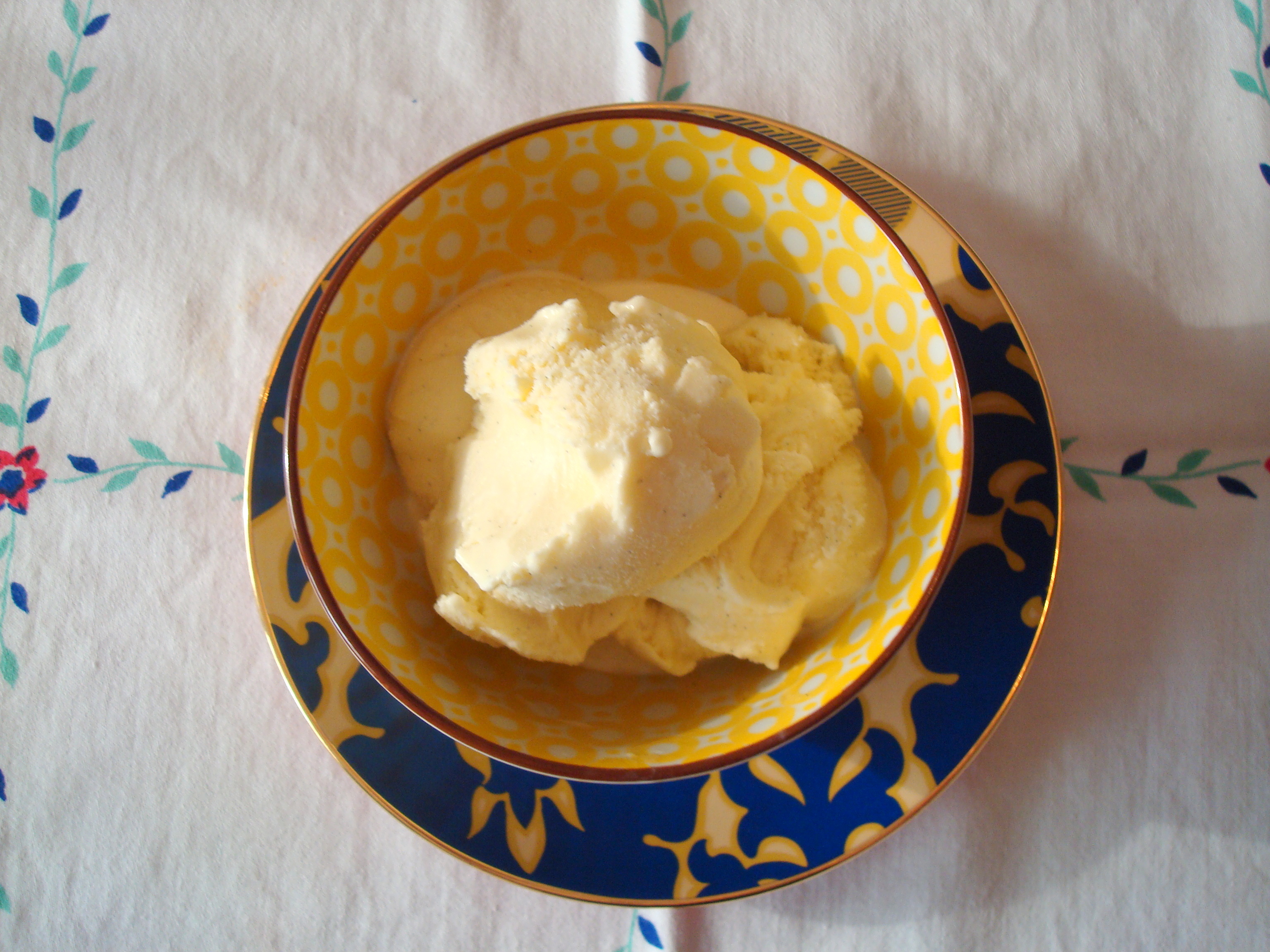
mascarpone gelato, like vanilla, only creamier

It’s been in the upper 80’s for the past few days which prompted me to bust out my ice cream maker– hot weather = ice cream time. So many flavors to choose from, so many mix-in options, but I was wanting something simple and straightforward, something that might go well with pie. I found a recipe I had cut out from a 1994 issue of Martha Stewart Living magazine (apparently even as a young teen I was a Martha fan) for mascarpone gelato. Winner!

11.22.12 008

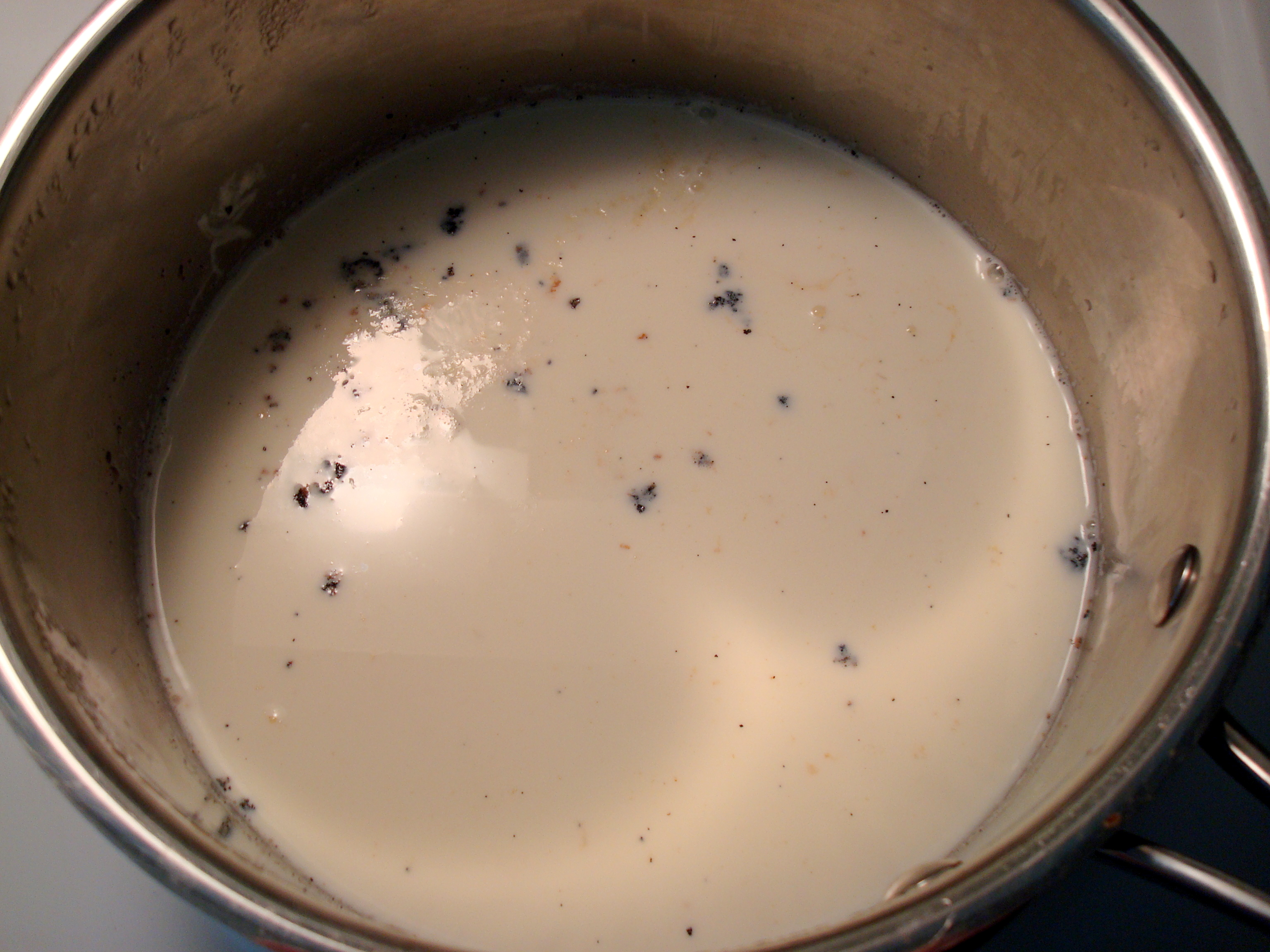
Mascarpone is a soft Italian style cheese that is similar to cream cheese, though smoother and more fresh tasting. The rest of the ingredients for the custard base were exactly what they would be for vanilla gelato (vanilla bean, whole milk, heavy cream, egg yolks, and sugar) and the mascarpone is added at the very end when you chill the custard to prepare it for your ice cream maker.

11.22.12 001

The resulting gelato tastes like the best vanilla ice cream you’ve ever had, except creamier and richer. Ah-mazing. Will definitely pair nicely with the rhubarb pie I’m planning to make this weekend!

5.19.13 022

Mascarpone Gelato (from 1994 issue of Martha Stewart Living magazine)

  • 2 cups whole milk
  • 1 vanilla bean, split lengthwise and scraped
  • 5 large egg yolks
  • 1/2 cup sugar
  • 1 cup heavy cream
  • 1 cup mascarpone

In a medium saucepan, heat milk and vanilla bean and scrapings. Bring to a gentle boil, cover, and remove from heat. Steep for 30 minutes.

Combine egg yolks and sugar in the bowl of an electric mixer. Beat at medium-high speed until very thick and pale yellow, 3 to 5 minutes. Meanwhile, return milk to a simmer.

Remove vanilla bean. Add half the milk to egg-yolk mixture and whisk until blended. Stir into remaining milk and cook over low heat, stirring constantly, until mixture is thick enough to coat a spoon.

Remove from heat and immediately stir in cream. Pass mixture through a strainer into a medium bowl set over an ice bath to chill. Whisk in mascarpone until completely blended, then freeze in an ice-cream maker according to manufacturer’s instructions. Store in a plastic container.

chocolate flecked layer cake with milk chocolate frosting

From the moment I saw a photo of this cake in the February issue of Martha Stewart Living I knew I had to make it.  The combination of bittersweet chocolate chunks in the cake and sweet milk chocolate in the frosting spoke to me in a way that only chocolate can.

4.27.13 073

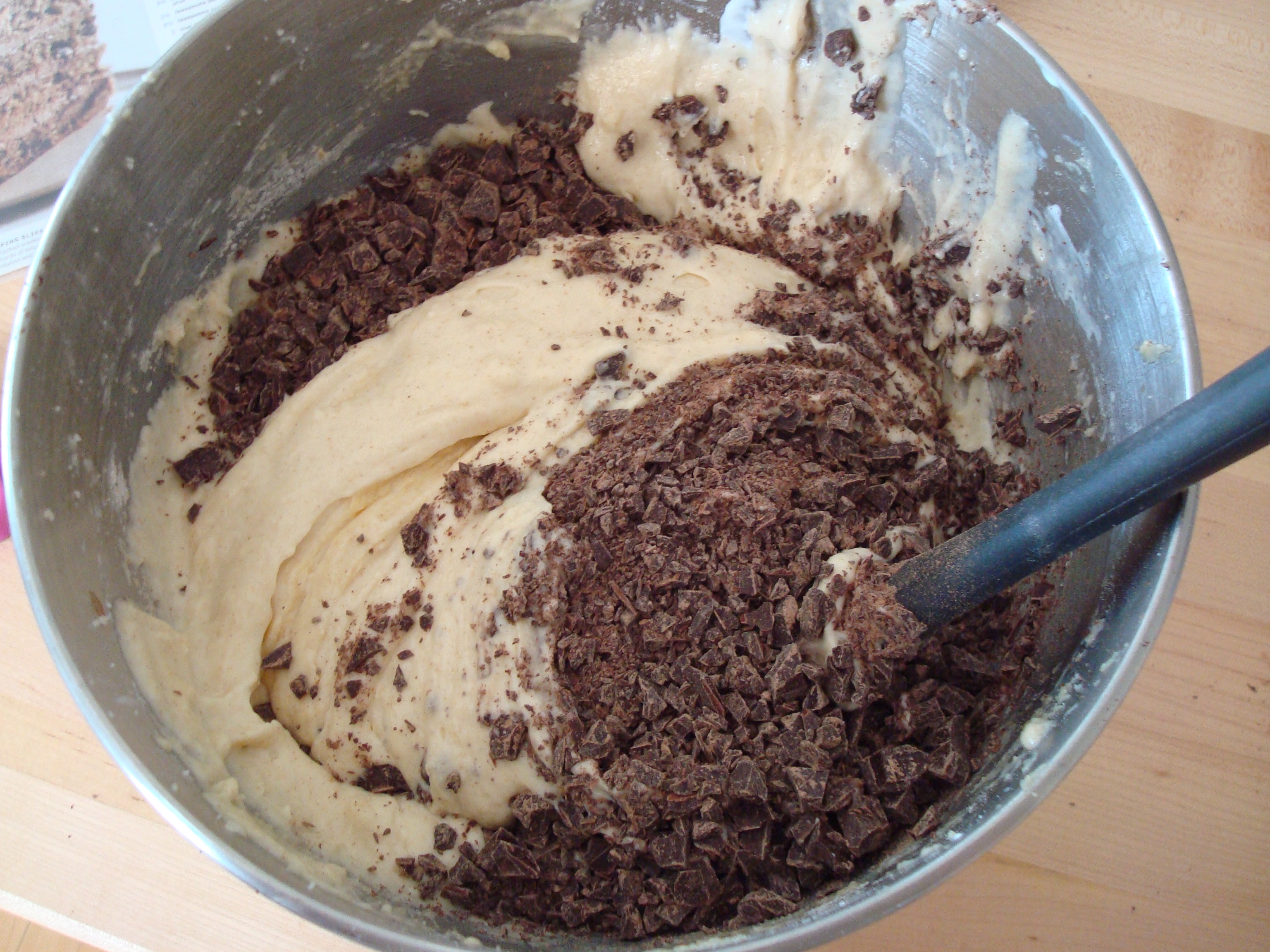
The cake is a beautiful mixture of chopped up bittersweet chocolate and many of the usual cake batter suspects (flour, butter, eggs) along with sour cream which adds an unexpected tang and makes the cake extra moist.

4.27.13 075

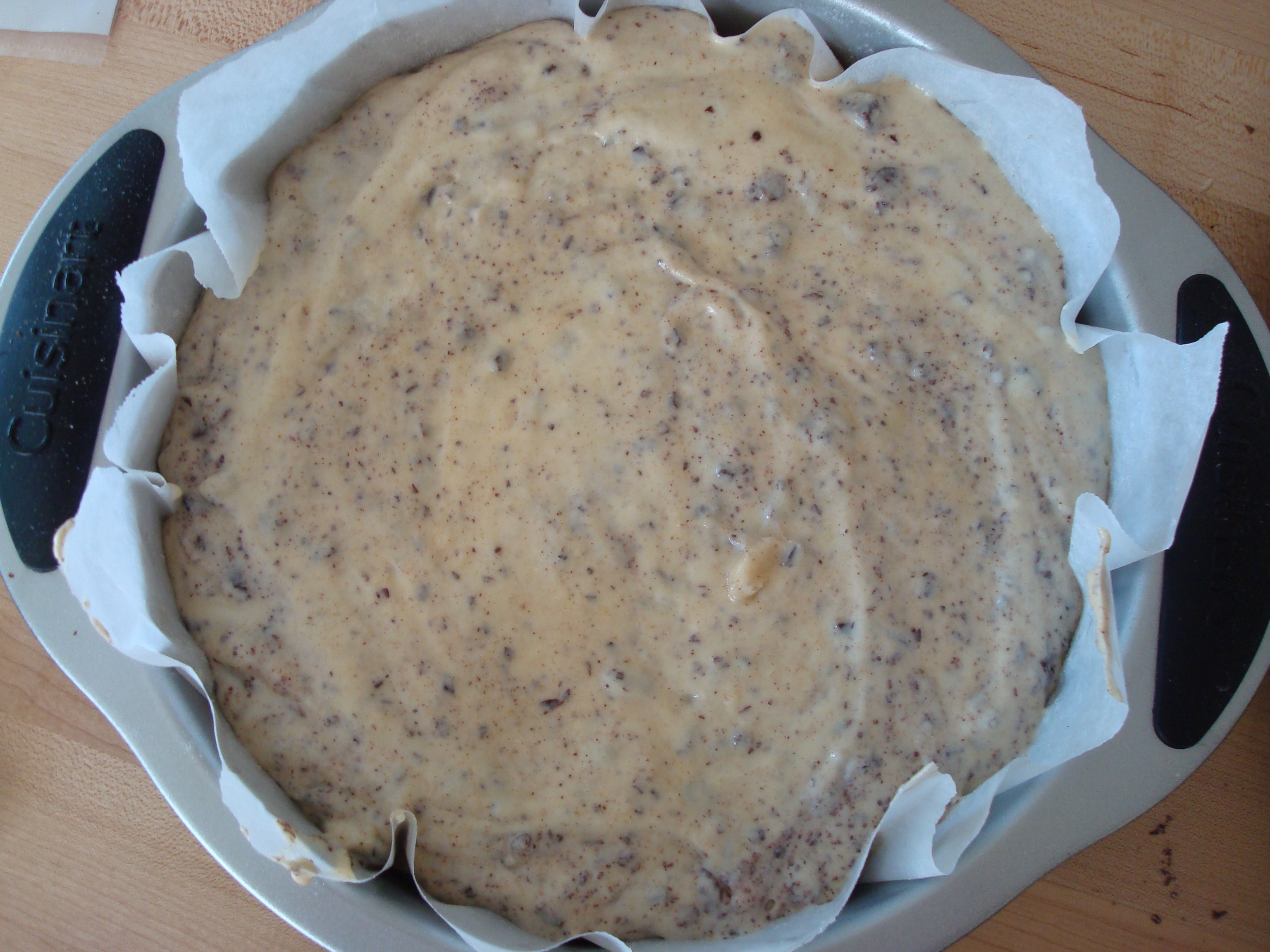
After folding the chocolate chunks into the batter you pour the results evenly in two cake pans that have been buttered and lined with parchment paper that has been buttered and lightly floured.
4.27.13 079

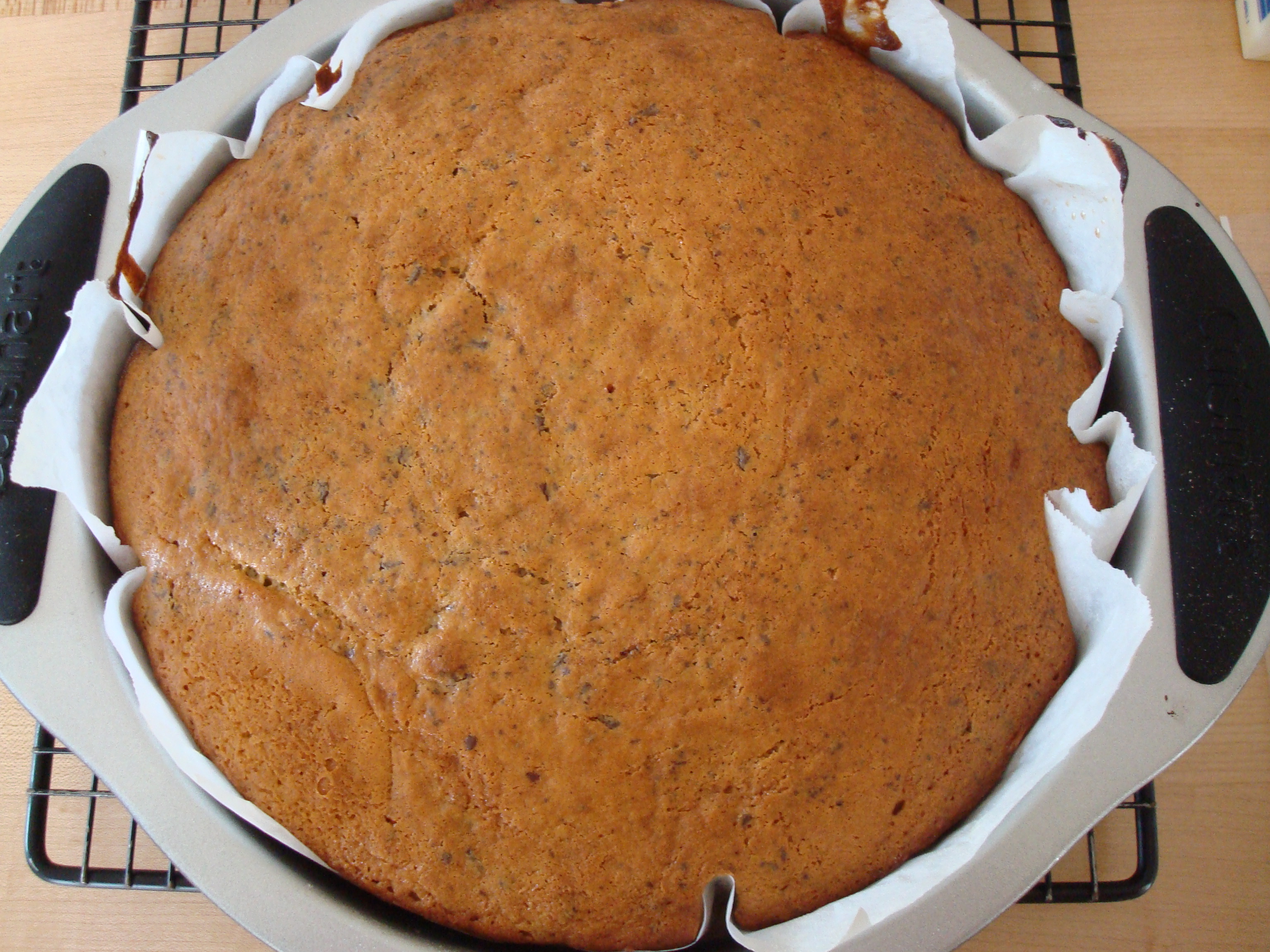
It bakes into a beautiful golden cake with flecks of chocolate dotting it throughout.
4.27.13 081

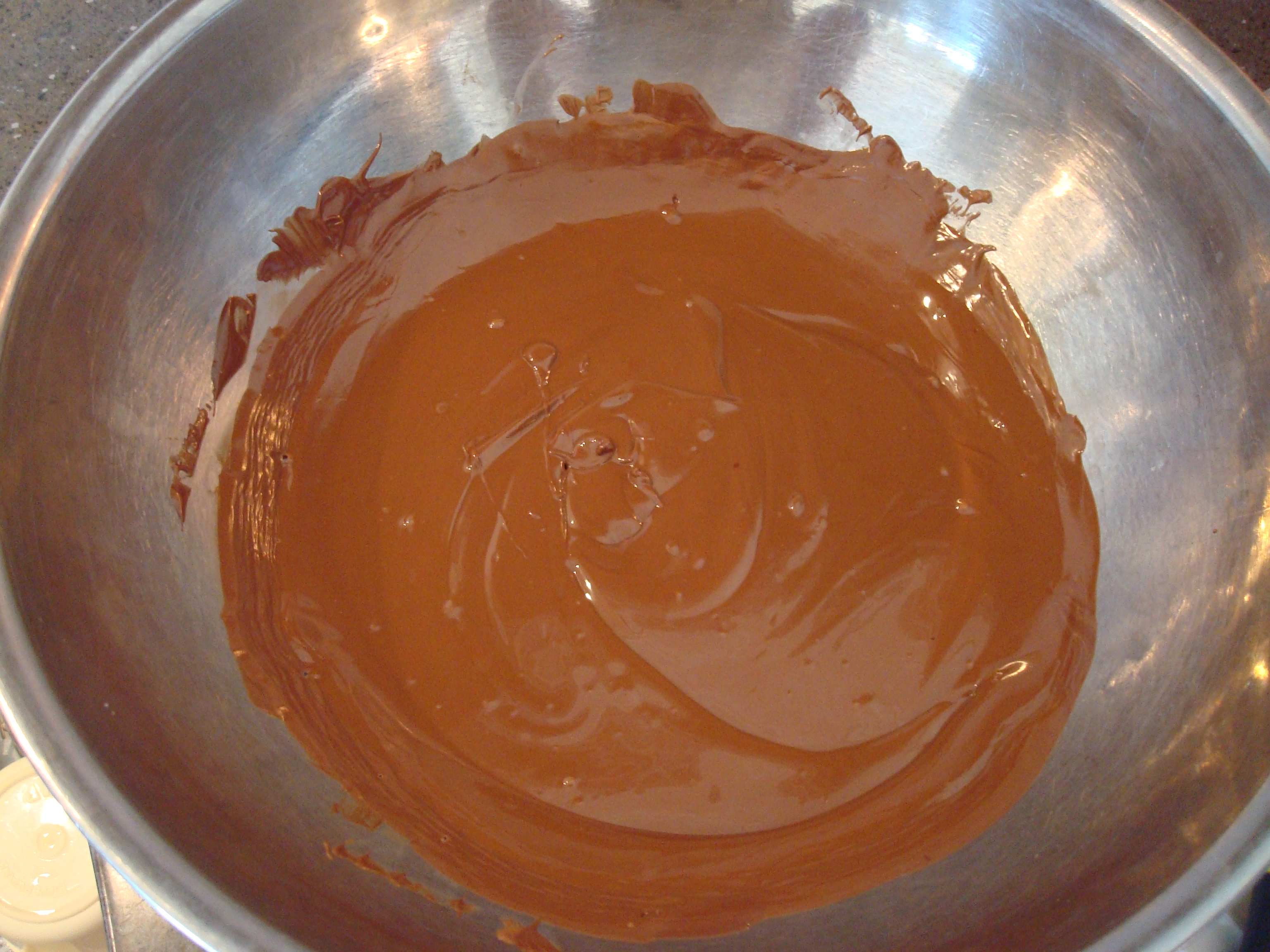
While the cakes cool you melt milk chocolate in a bowl over simmering water (I didn’t mess around in the chocolate department and used Milka chocolate bars.  The German I made the cake for was especially appreciative.)  After the chocolate has cooled slightly, mix it with softened butter, confectioners’ sugar, a pinch of salt, and more of that gloriously tangy sour cream.

4.27.13 084

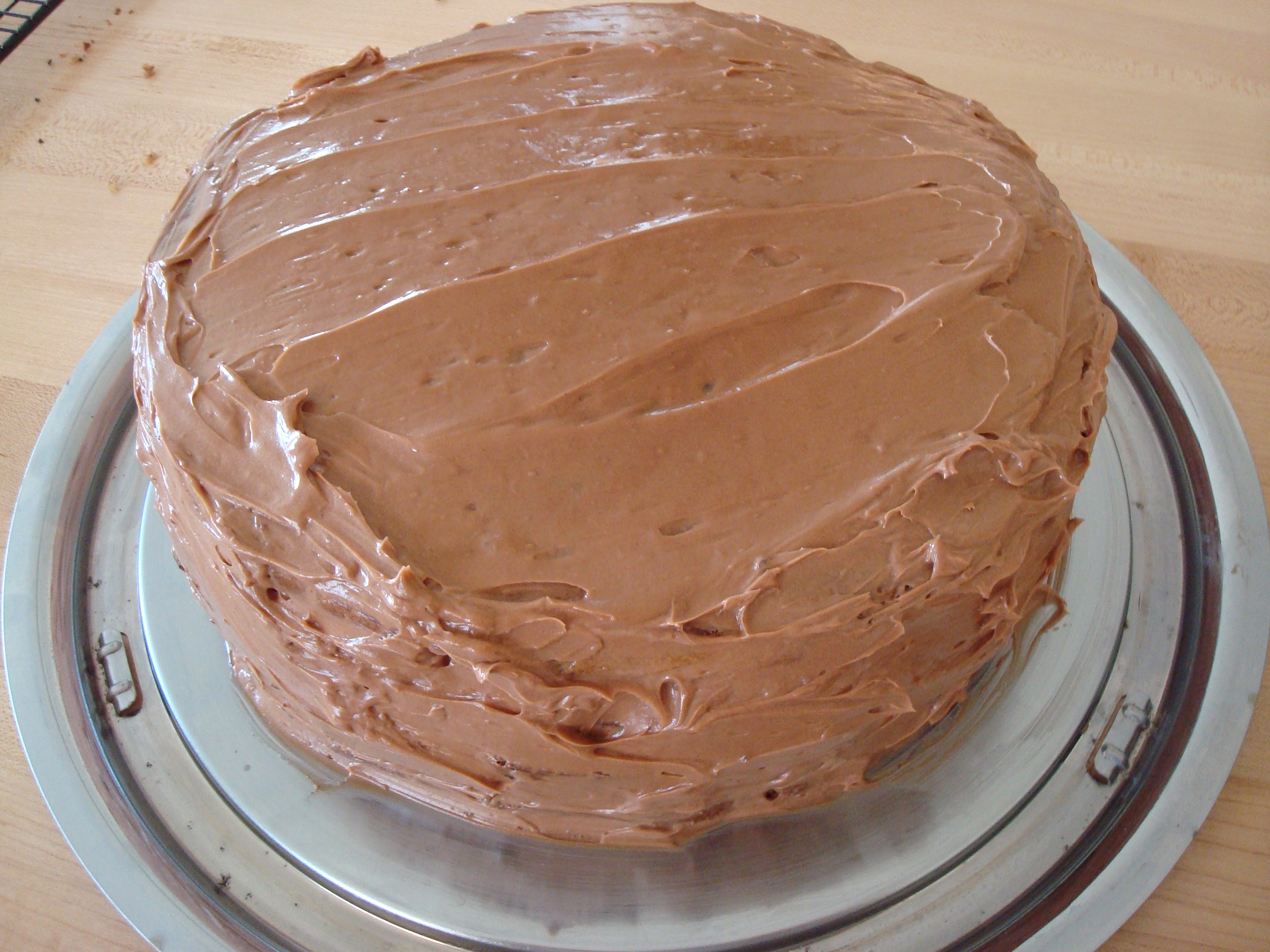
Though you only use two pans for this cake, it is actually a four-layer cake which means you have to divide the two cakes in half lengthwise with either a bread knife or I have also heard of people using non-flavored dental floss though have never tried it myself.  Frost between layers with the frosting and then around the outside of the cake as best you can.  NOTE: the frosting recipe easily makes enough for two layer cakes.  I put my leftover frosting in the freezer for use at a later date.

4.27.13 086

It was a hit with all who sampled it and there were many Europeans in attendance who don’t like things too sweet so were pleased with the tangy/sweet/bittersweet thing going on within this majesty of a cake.  The pieces went in such a hurry I never managed to take a photo of one!  Such a problem to have.

Chocolate Flecked Layer Cake with Milk Chocolate Frosting (from http://www.marthastewart.com)

Cake:

  • 1 1/2 sticks unsalted butter, softened, plus more for pans
  • 2 1/4 cups all-purpose flour, plus more for pans
  • 1 1/2 teaspoons baking soda
  • 2 1/2 teaspoons coarse salt
  • 1 cup plus 2 tablespoons granulated sugar
  • 1/3 cup packed light-brown sugar
  • 1 large egg yolk plus 2 large eggs
  • 1 tablespoon pure vanilla extract
  • 1 1/2 cups sour cream
  • 3/4 cup whole milk
  • 8 ounces bittersweet chocolate (61 to 70 percent cacao), finely chopped

Preheat oven to 350 degrees. Butter two 8-inch round cake pans, and line with parchment. Butter paper, and flour pans. Whisk together flour, baking soda, and salt in a medium bowl.

Beat together butter and sugars with a mixer until light and fluffy, about 5 minutes. Beat in yolk and eggs, 1 at a time, beating well after each addition. Beat in vanilla. Gradually add flour mixture to butter mixture in 3 additions, alternating with sour cream and milk, beginning and ending with flour. Fold in chocolate.

Divide batter between pans, and spread evenly with an offset spatula. Bake until deep golden brown and a toothpick inserted in centers comes out clean, about 40 minutes. Let cakes cool in pans 20 minutes. Invert cakes, remove pans and parchment, and let cool completely, right side up, on wire racks.

Cut each cake in half horizontally with a serrated knife. Place 1 bottom layer on a platter or cake stand, and spread evenly with 3/4 cup frosting. Repeat with a second layer and another 3/4 cup frosting. Place third layer on top, and spread with another 3/4 cup frosting. Place fourth layer on top. Spread entire cake with remaining frosting (about 2 3/4 cups), smoothing top and sides. Serve immediately, or refrigerate, uncovered, up to 2 days; if refrigerated, let cake come to room temperature before serving.

Frosting:

  • 1 pound milk chocolate, finely chopped
  • 4 sticks unsalted butter, softened
  • 1 cup confectioners’ sugar
  • Pinch of coarse salt
  • 1 cup sour cream

Melt chocolate in a bowl set over a saucepan of simmering water. Let cool slightly. Beat together butter, sugar, and salt with a mixer until pale and fluffy, about 5 minutes. Gradually beat in chocolate, then sour cream, and beat until thoroughly incorporated. Frosting should be spreadable. If too loose, refrigerate, stirring occasionally, until thickened. Use immediately, or transfer to an airtight container and refrigerate up to 3 days. Before using, bring to room temperature, and beat until smooth.

spring risotto

5.4.13 001

This is such a gret time of year– things are blooming and turning green outdoors and after a winter of nothing but root vegetables at the farmer’s market you start to see fresh green things.   This risotto uses some of those fresh farmer’s market ingredients and truly tastes like spring.

5.4.13 002

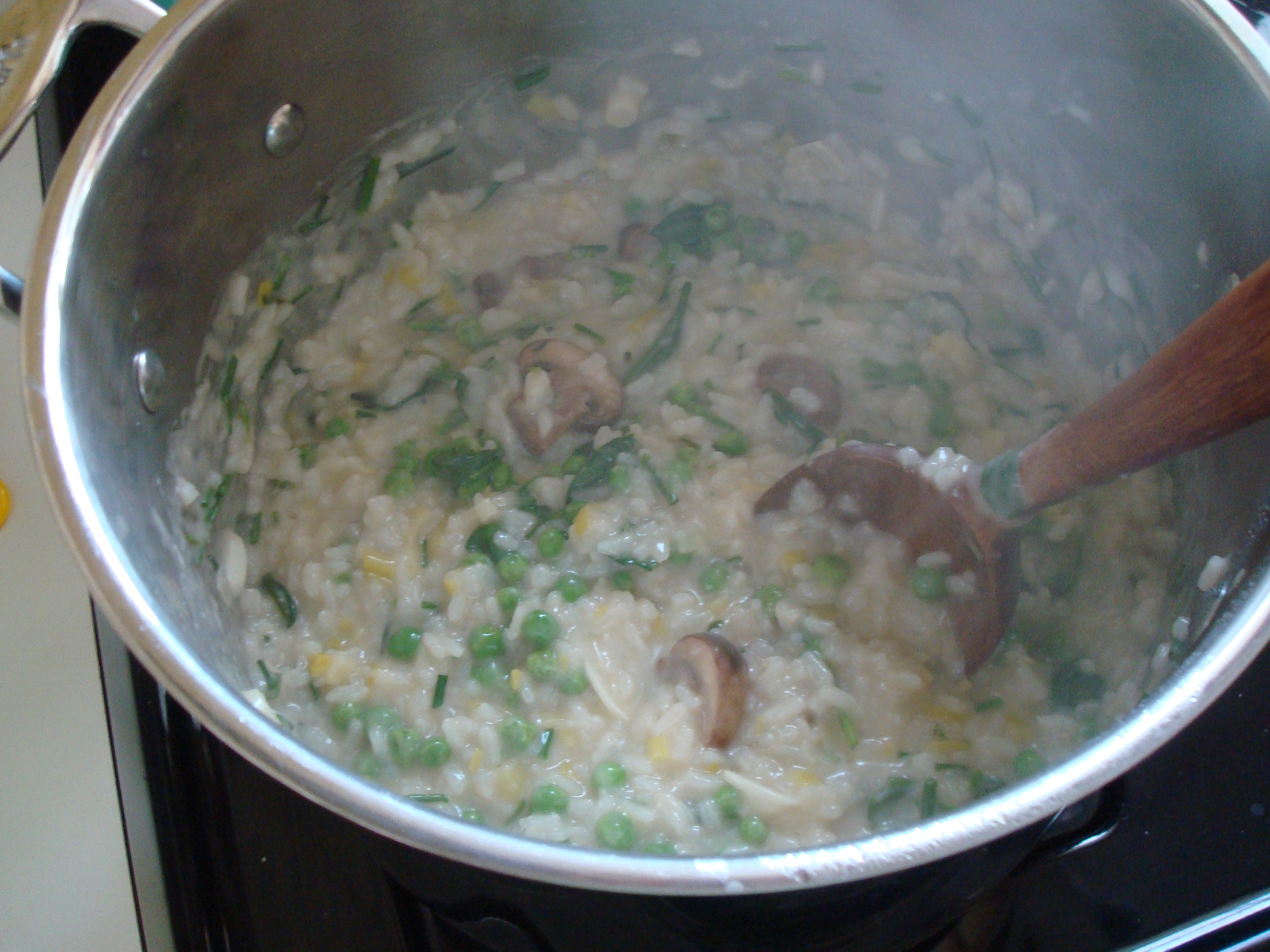
Peas, leeks, chives, (okay, not exactly from the farmer’s market, but still fresh!) and crimini mushrooms are where it’s at.  The recipe calls for fennel as well, though I am not a huge fan so omitted it but you should totally add it if that’s your thing.

5.4.13 004

All of the vegetables get blended with arborio rice which turns creamy and luxurious upon cooking in a combination of chicken broth (you could make it vegetarian and use vegetable broth) and a little bit of dry white wine.  I think many shy away from making risotto because they get intimidated by the amount of stirring that’s involved, but it’s really not that bad!  And the end result is totally worth any amount of stirring anyway.

5.4.13 007

This particular recipe calls for a poached egg to be served on top and it’s a great idea.  When you break the egg the yolk is still soft and melds in with the rest of the risotto so nicely.  I think the egg also takes it from being a side dish to the main feature.  And what a nice main feature it is!

5.4.13 009

Spring Vegetable Risotto with Poached Eggs (from www.epicurious.com)

  • 2 cups shelled fresh (or frozen, thawed) fava beans or peas (from about 2 pounds pods)
  • Kosher salt
  • 1 tablespoon distilled white vinegar
  • 6 large eggs
  • 8 cups low-sodium chicken broth
  • 2 tablespoons unsalted butter, divided
  • 1/4 pound chanterelles or crimini (baby bella) mushrooms, halved or quartered if large
  • 2 tablespoons olive oil
  • 2 large leeks, whites and pale greens only, chopped
  • 1 fennel bulb, chopped
  • 4 garlic cloves, finely chopped
  • 2 cups arborio rice
  • 1 cup dry white wine
  • 1 bunch flat-leaf spinach, trimmed, leaves torn
  • 2 tablespoons crème fraîche or sour cream
  • 1 1/2 cups finely grated Pecorino or Parmesan (about 3 ounces) plus more for shaving
  • 1/4 cup chopped fresh chives plus more for serving
  • Freshly ground black pepper

If using fresh fava beans, cook in a large saucepan of boiling salted water 1 minute. Drain; transfer to a bowl of ice water and let cool. Peel favas and transfer to a small bowl.

Bring a large skillet of salted water to a bare simmer over medium-low heat. Add vinegar. Crack 1 egg into a small bowl, then slide into simmering water. Repeat with 2 more eggs. Cook until whites are cooked but yolks are runny, about 3 minutes. Using a slotted spoon, carefully transfer eggs to a bowl of ice water. Repeat with remaining 3 eggs.

Bring broth to a simmer in a large saucepan over medium heat. Reduce heat to low; cover and keep warm.

Meanwhile, melt 1 tablespoon butter in a large, wide heavy pot over medium heat. Add mushrooms and cook, stirring often, until tender, about 5 minutes. Using a slotted spoon, transfer to bowl with favas.

Heat oil and remaining 1 tablespoon butter in same pot over medium heat. Add leeks, fennel, and garlic. Cook, stirring often, until vegetables are softened, about 4 minutes.

Add rice and stir to coat, about 2 minutes. Add wine and cook, stirring occasionally, until evaporated, about 4 minutes. Add 1 cup broth. Cook, stirring often (no need to stir constantly), until broth is almost absorbed. Add remaining broth by cupfuls, allowing broth to be absorbed before adding more, stirring often, until rice is tender but still firm to the bite and mixture is creamy, about 20 minutes total.

Add spinach, crème fraîche, 1 1/2 cups grated Pecorino, 1/4 cup chives, and reserved fava beans and mushrooms to risotto. Cook, stirring occasionally, until spinach is wilted and cheese is melted, about 2 minutes. Season risotto with salt.

A few minutes before risotto is done, reheat poached eggs in a large skillet of simmering water, about 1 minute. Divide risotto among bowls and top with eggs, shaved Pecorino, chives, and pepper.

before and after, home edition

If there are two things I’m a sucker for they are before and after photos (doesn’t matter whether it’s of people or places) and home tours.  There’s nothing quite like peeking into how others live and particularly how they design their living spaces.  This post is a little of both.  It’s intensely personal since it’s my home, but since most of you reading this are family and the rest of you friends and I’m not personally on the Facebook, this is how the photos are getting disseminated.  For the two of you reading this who I do not know personally, well, I hope you enjoy before and afters and home tours as much as I do.

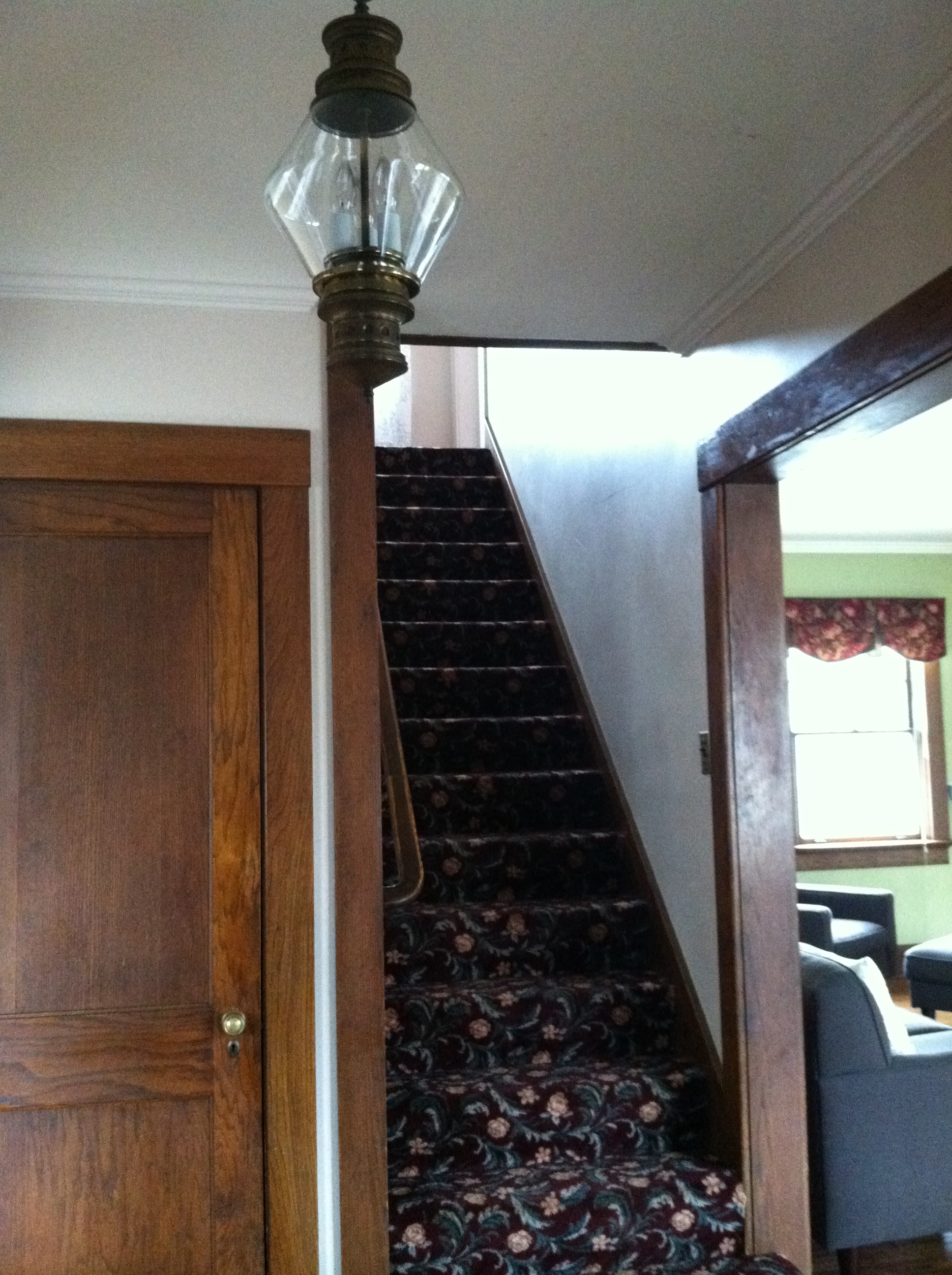
I’m renting an old house which has a lot of character like I like, but also had some paint choices that I didn’t so much like so I’ve spent a month of weekends re-painting it.  Below is the entryway and stairs leading to the second floor with carpet that as my friend Mary would say is “special.”  Since I’m renting and not wanting to invest too much, the special carpet stays.

2.26.13 102

The living room has a working fireplace and some great wood trim details but I wasn’t too fond of the almost army green walls and floral window treatments…

2.26.13 095

…so I painted the walls gray and put up some store-bought curtains and took down the dirty blinds.  Those things are impossible to keep clean!

5.4.13 024

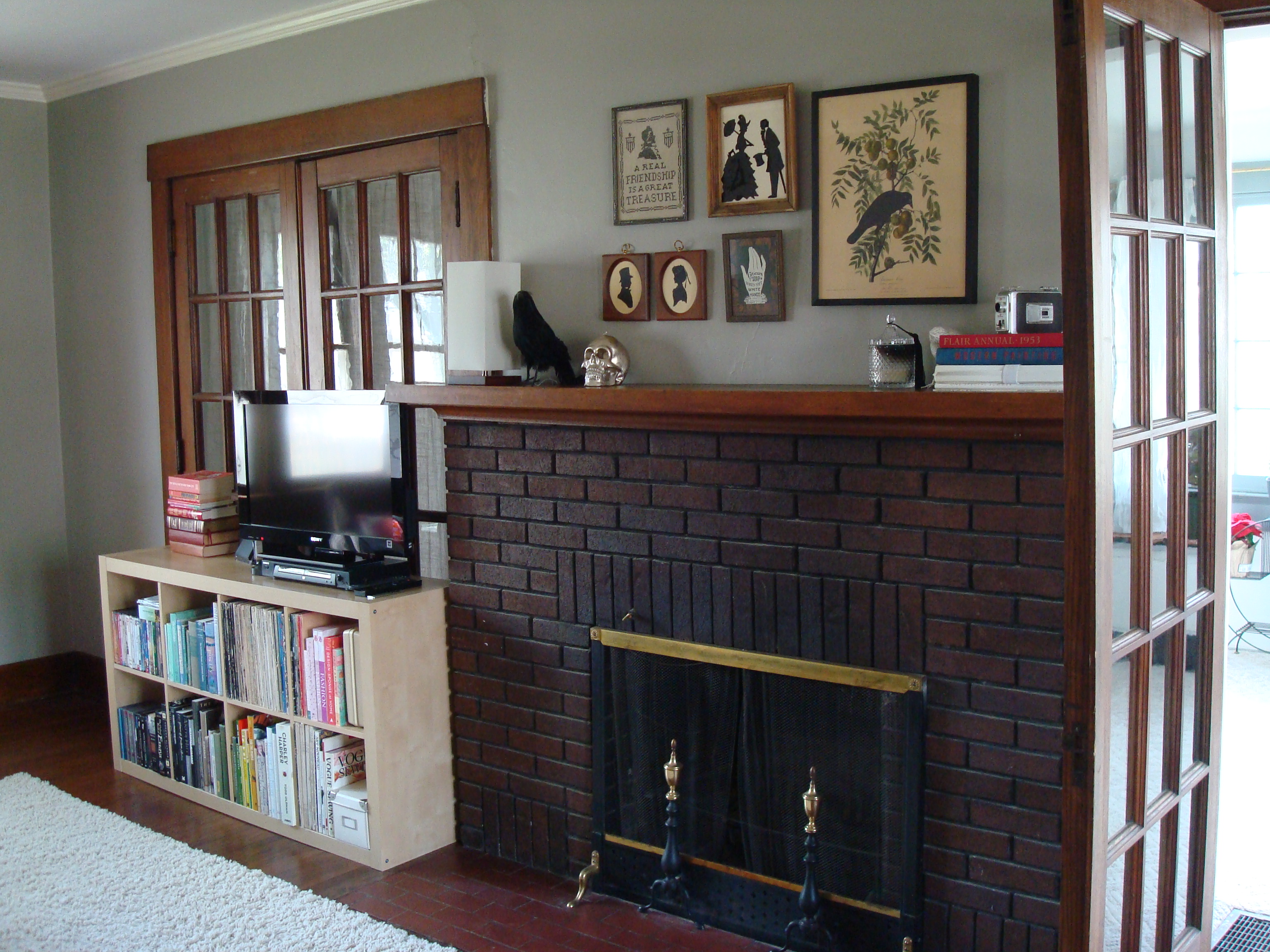
A little goth vignette over the fireplace.  The fake crow was a prop used in some Halloween store windows I helped put together years ago and I’ve always loved the way vintage silhouettes looked so it went from there.  Found the crow print at an estate sale in Wisconsin for like $1.  Gotta love that kind of art.

5.4.13 019

Since the walls and woodwork are fairly dark I made throw pillows in vibrant colors and put up a bright vintage travel print I picked up on the MoMA website for like $3 years ago.  It cost a heck of a lot more to get it framed, but I digress.

5.4.13 026

5.4.13 028

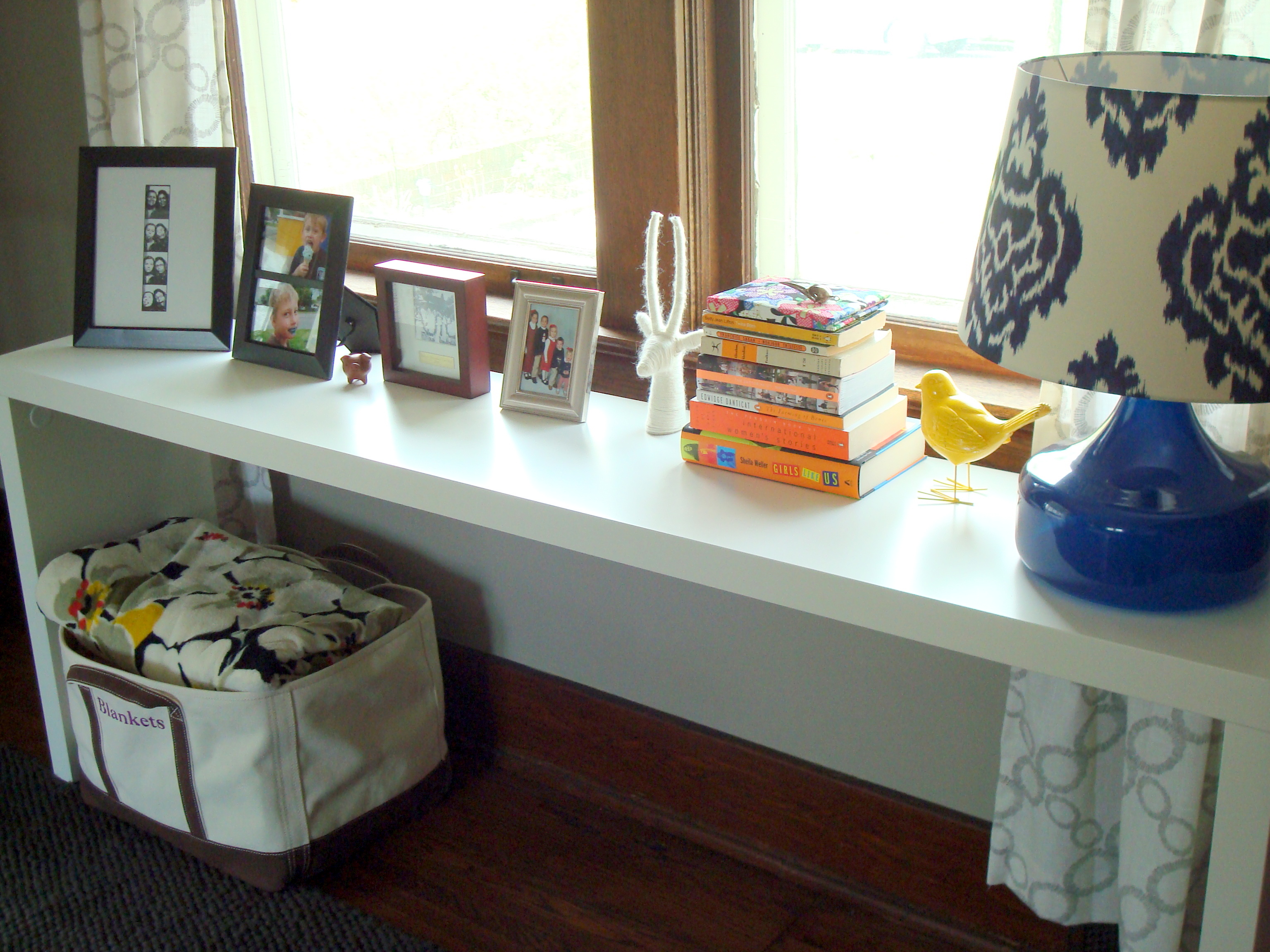
Yes, I color code my media.  It pleases me.

5.4.13 025

5.4.13 031

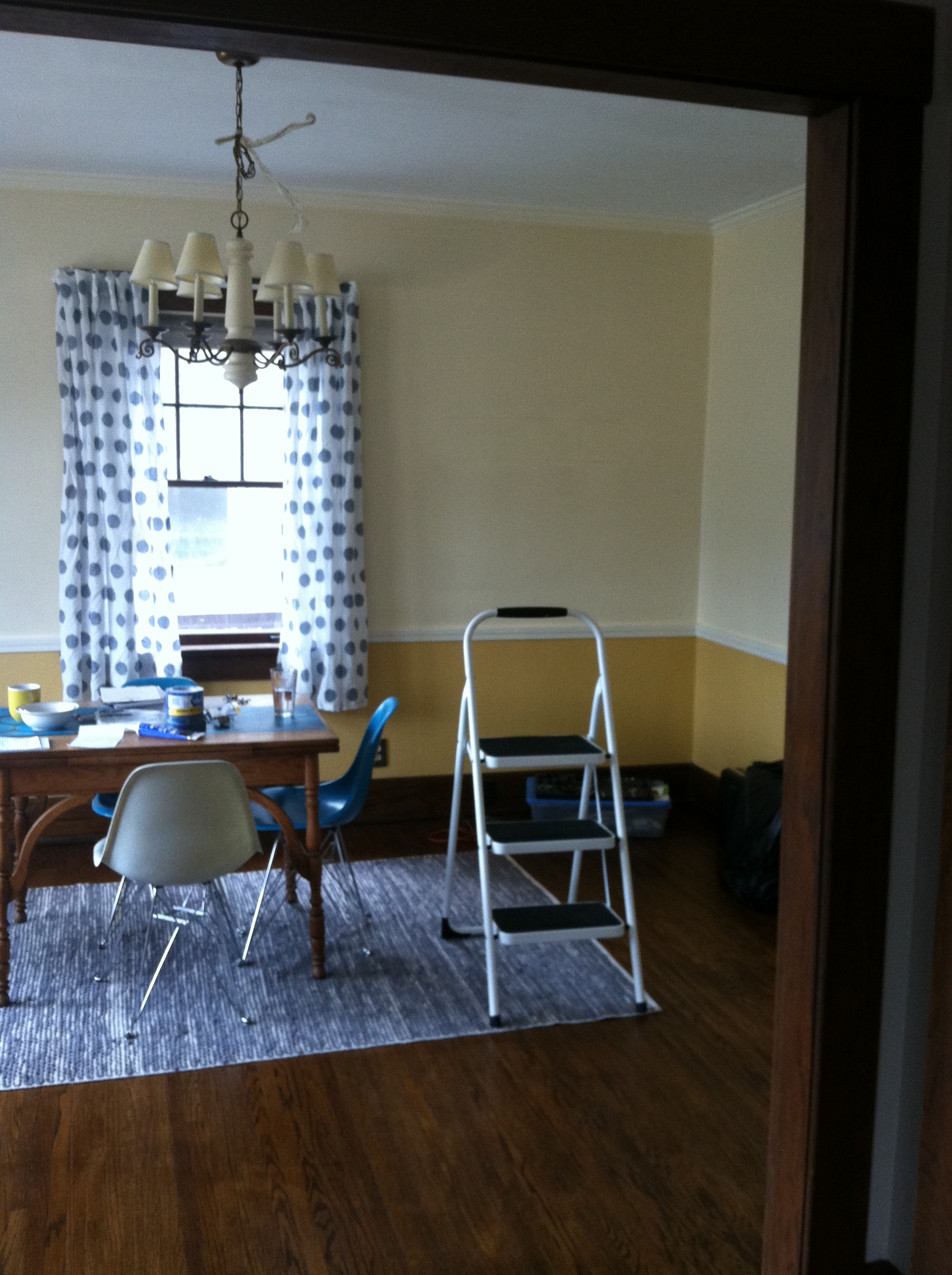
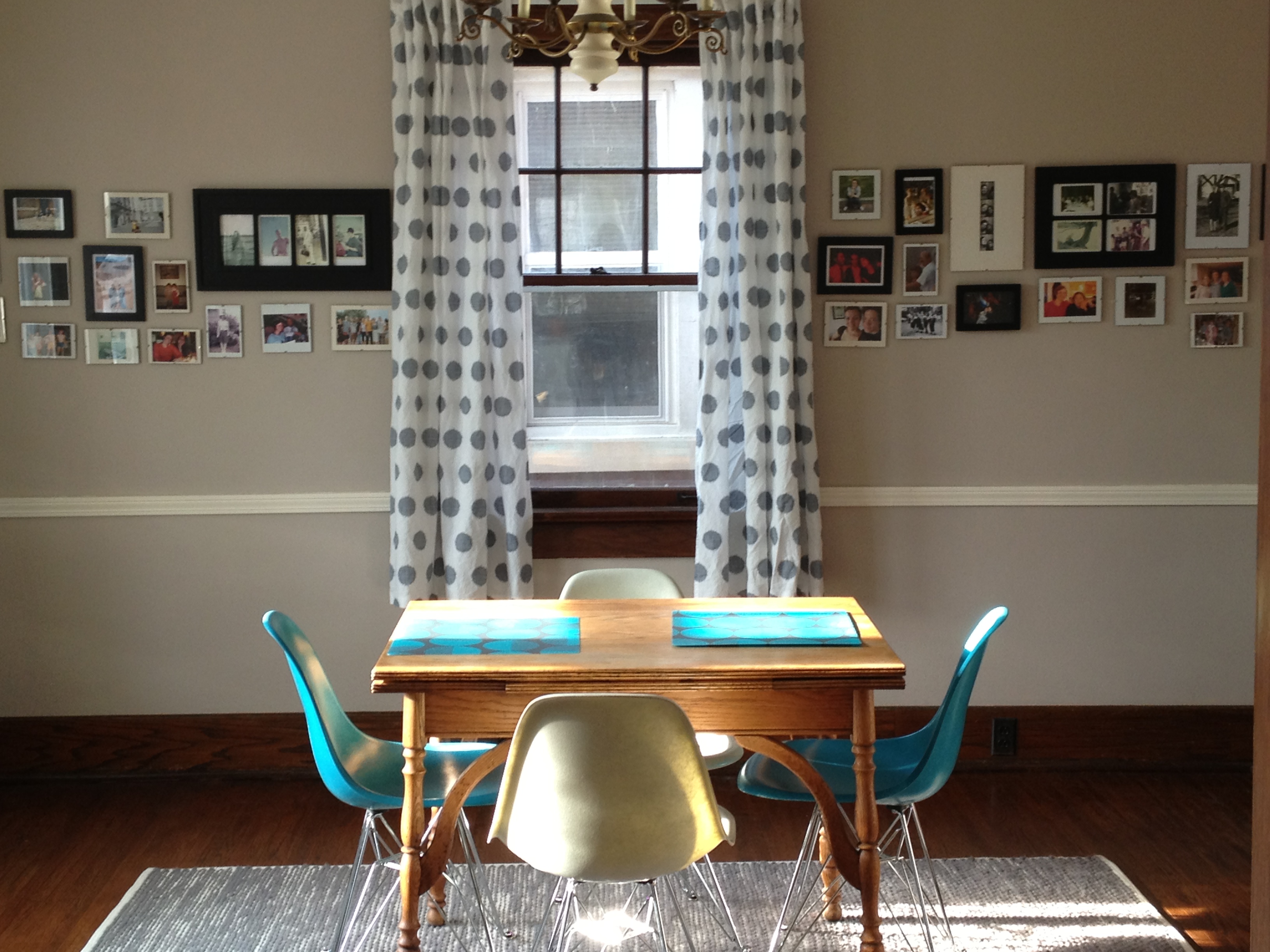
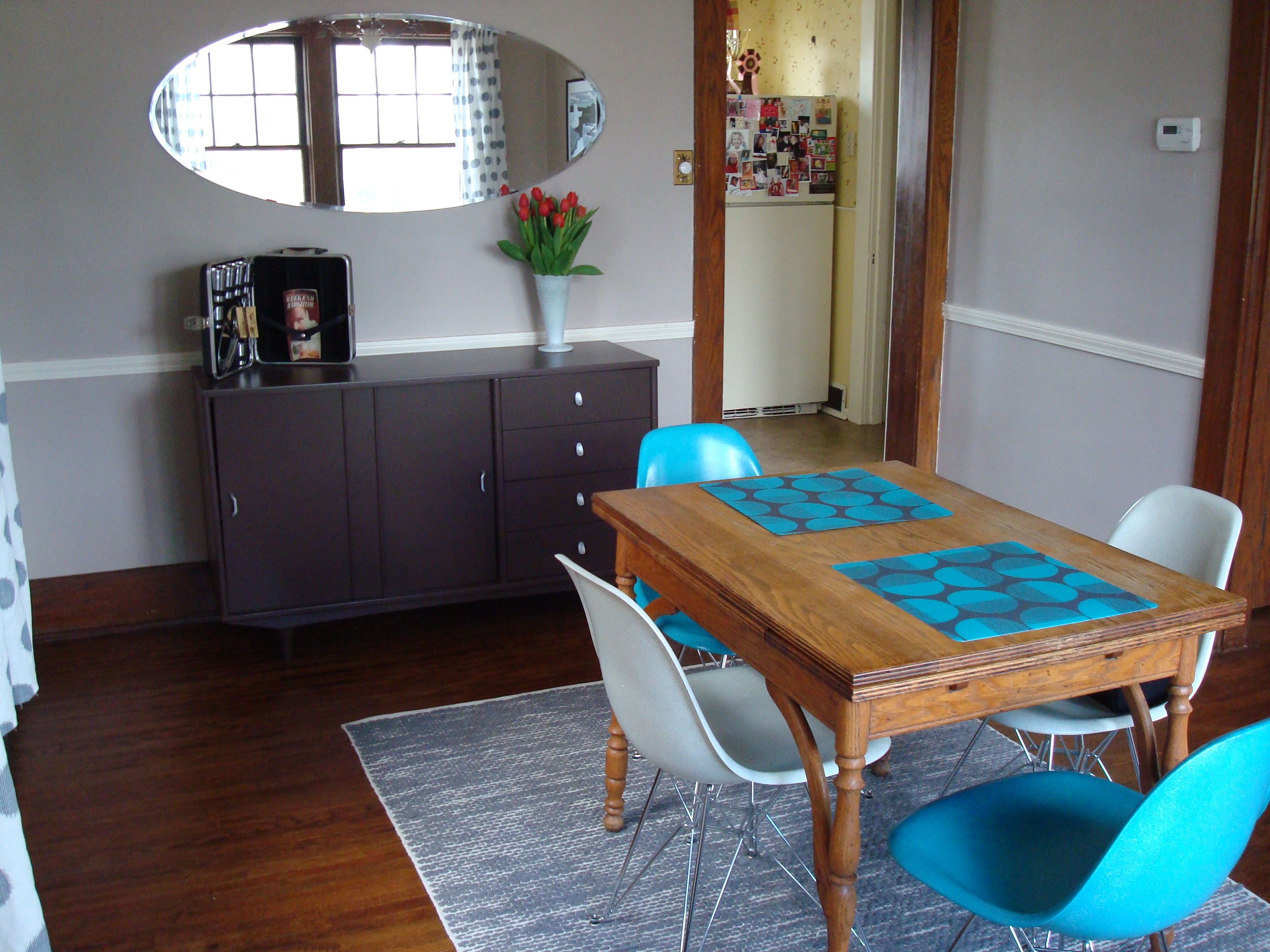
The dining room was the least offensive room, color-wise, but the two-tone yellow paint accented the fact that there are two different shades of trim (chair rail is white and crown moulding is cream) and so it had to be painted over…

2.26.13 103

…to a nice shade of taupe.

4-14-13 120

4.27.13 047

The other side of the entryway, which fortunately I did not have to paint as the walls transition nicely with what’s going on in the dining and living rooms on either side of it.  Love the old light fixture.

4-14-13 123

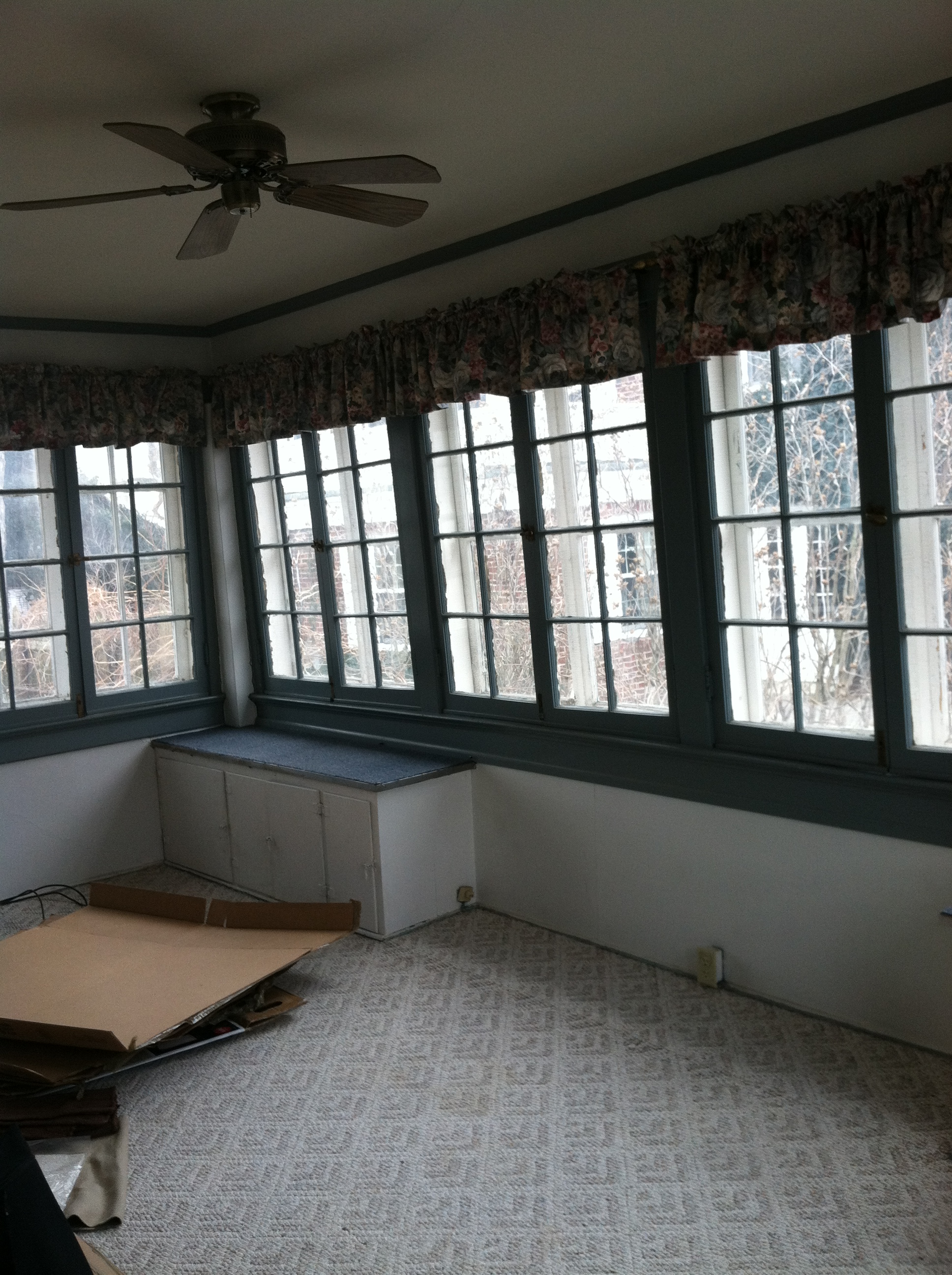
The solarium was my least favorite room of the house at first because it was dingy and the windows drafty and oh those floral window treatments…

2.26.13 099

But it’s amazing what a little white paint, curtains, and some plants will do to change a room.  Now it may very well be my favorite room in the house.  Still would like to get a large area rug to cover up the grungy berber carpet but it somehow looks cleaner now that the walls have been painted.

5.4.13 015

5.4.13 016

5.4.13 018

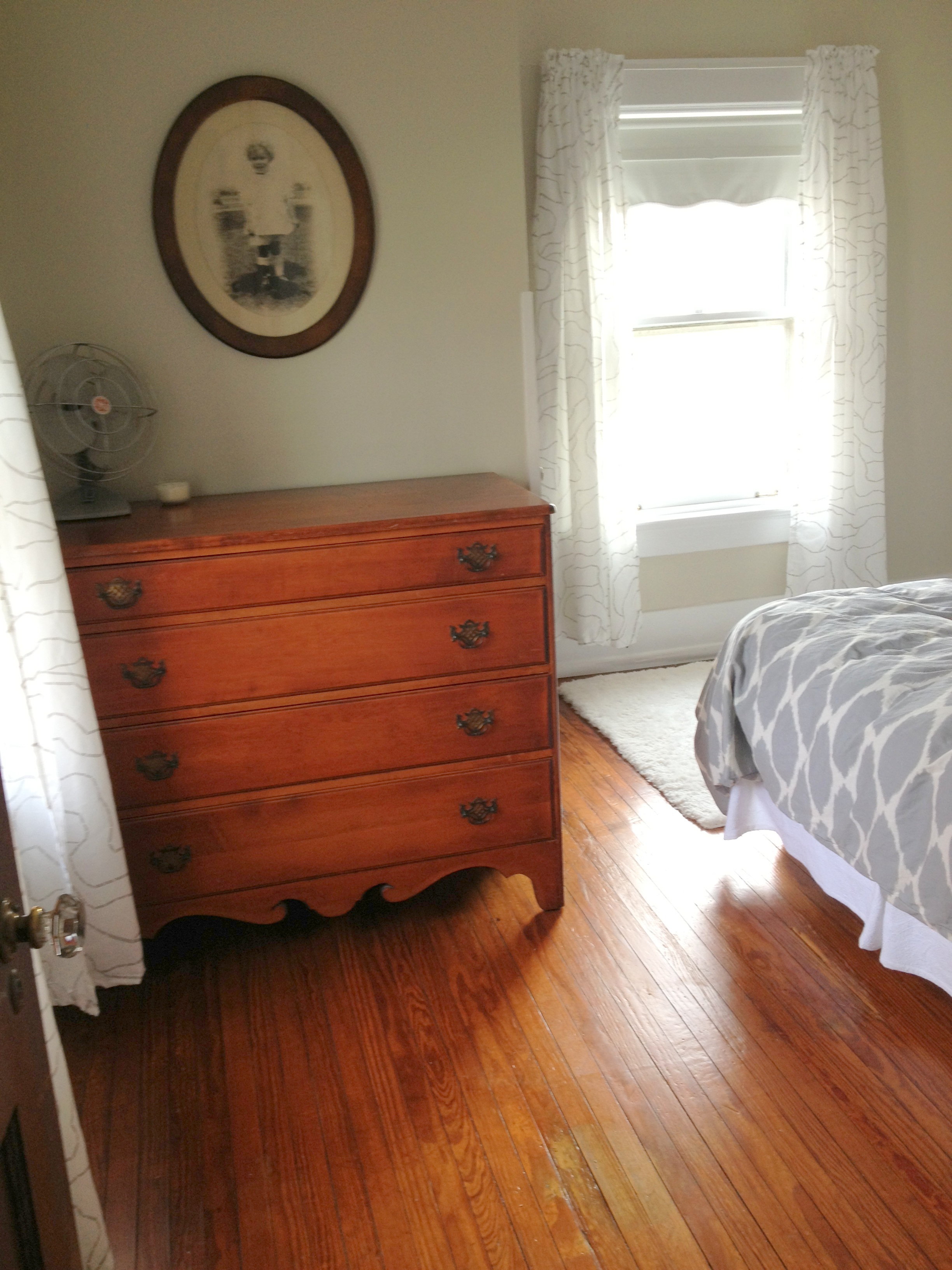
The family that lived here clearly had a daughter as one of the bedrooms was painted a pale pink that I actually could have lived with were it not for the butterfly and American Girl motifs painted on a few of the walls.  (Oh, and notice that both the crown moulding and the ceiling are also painted pink.  Yeah.  That was fun to paint over.)

2.26.13 112

Now it is a light tan and serves as a guest bedroom.

5.4.13 013

4-14-13 098

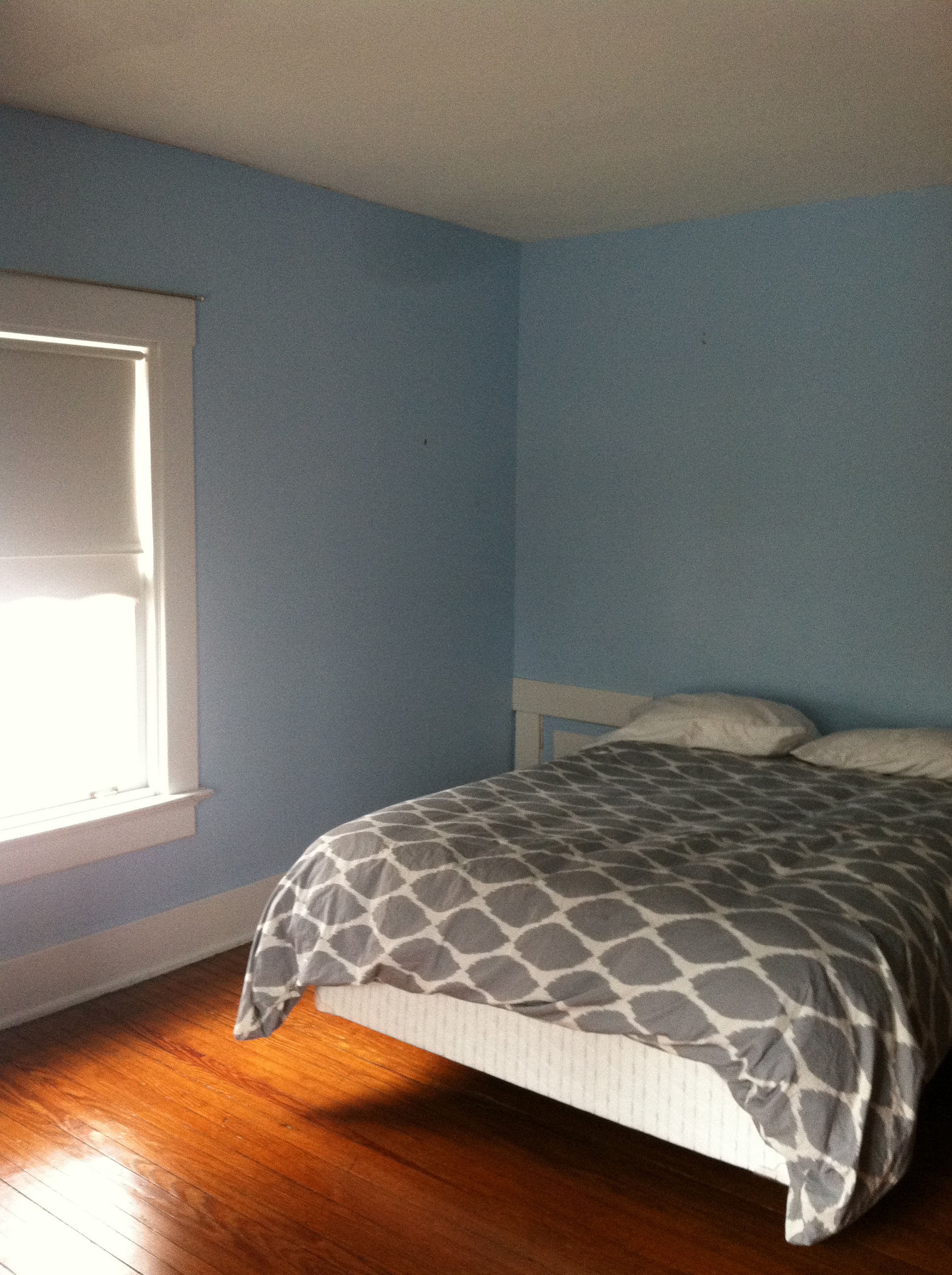
Clearly the family also had a son as the other small bedroom was painted blue and the son appears to have carved his name into the bedroom door.  Awesome.

2.26.13 115

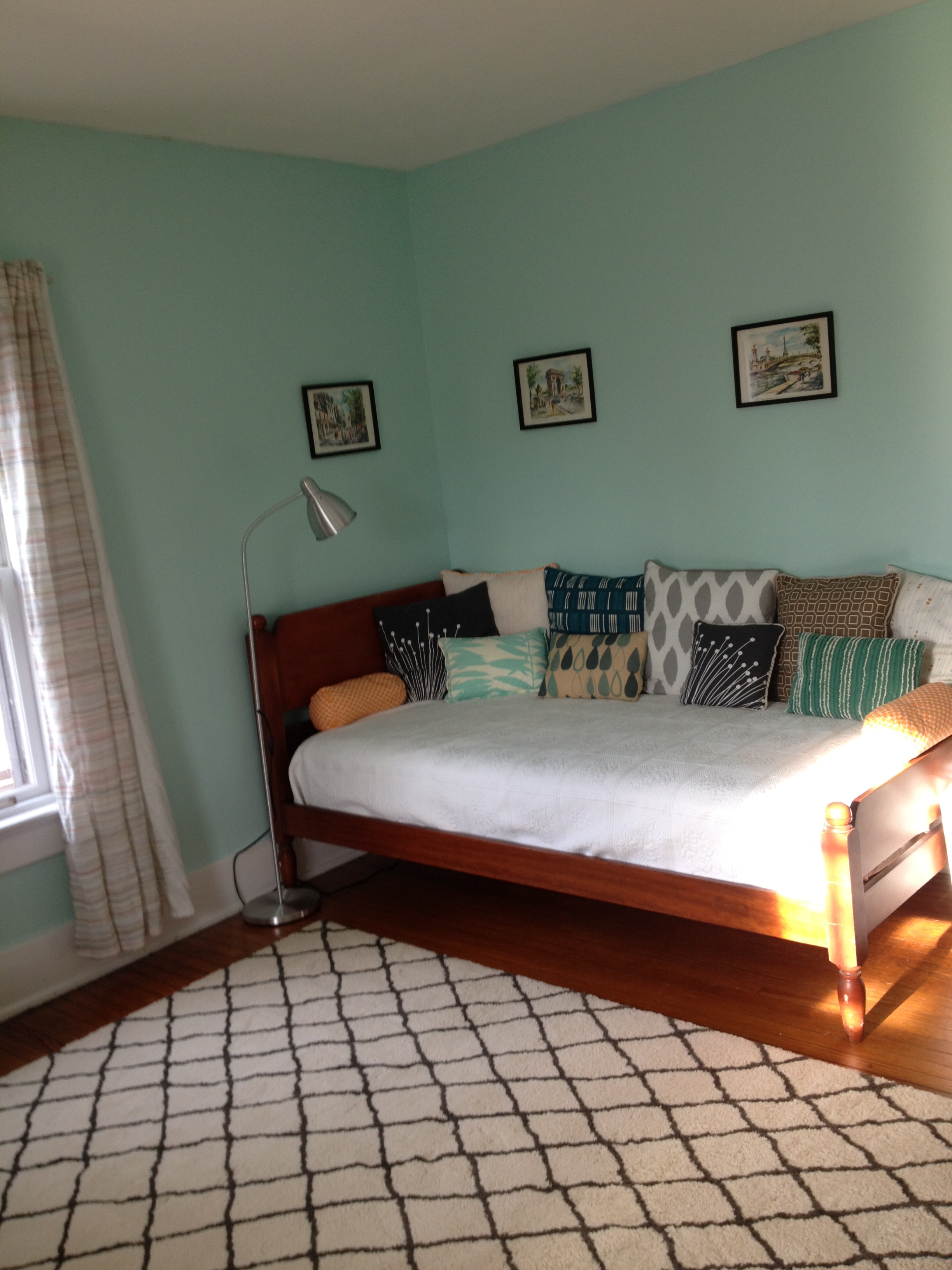
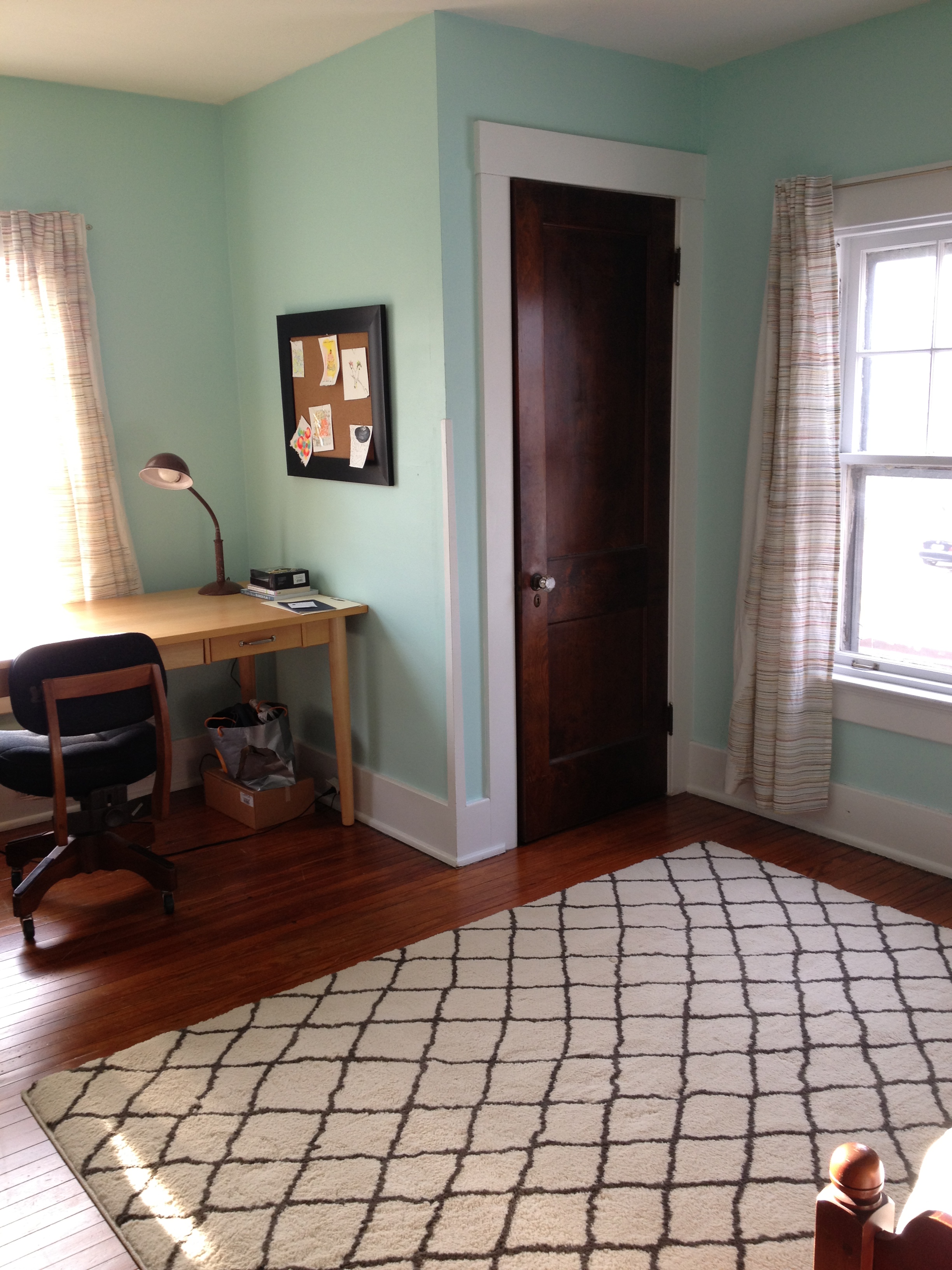
I chose a nicer, Robin’s egg blue and turned the room into my office/studio/extra guest bedroom.

4-14-13 106

4-14-13 107

4-14-13 105

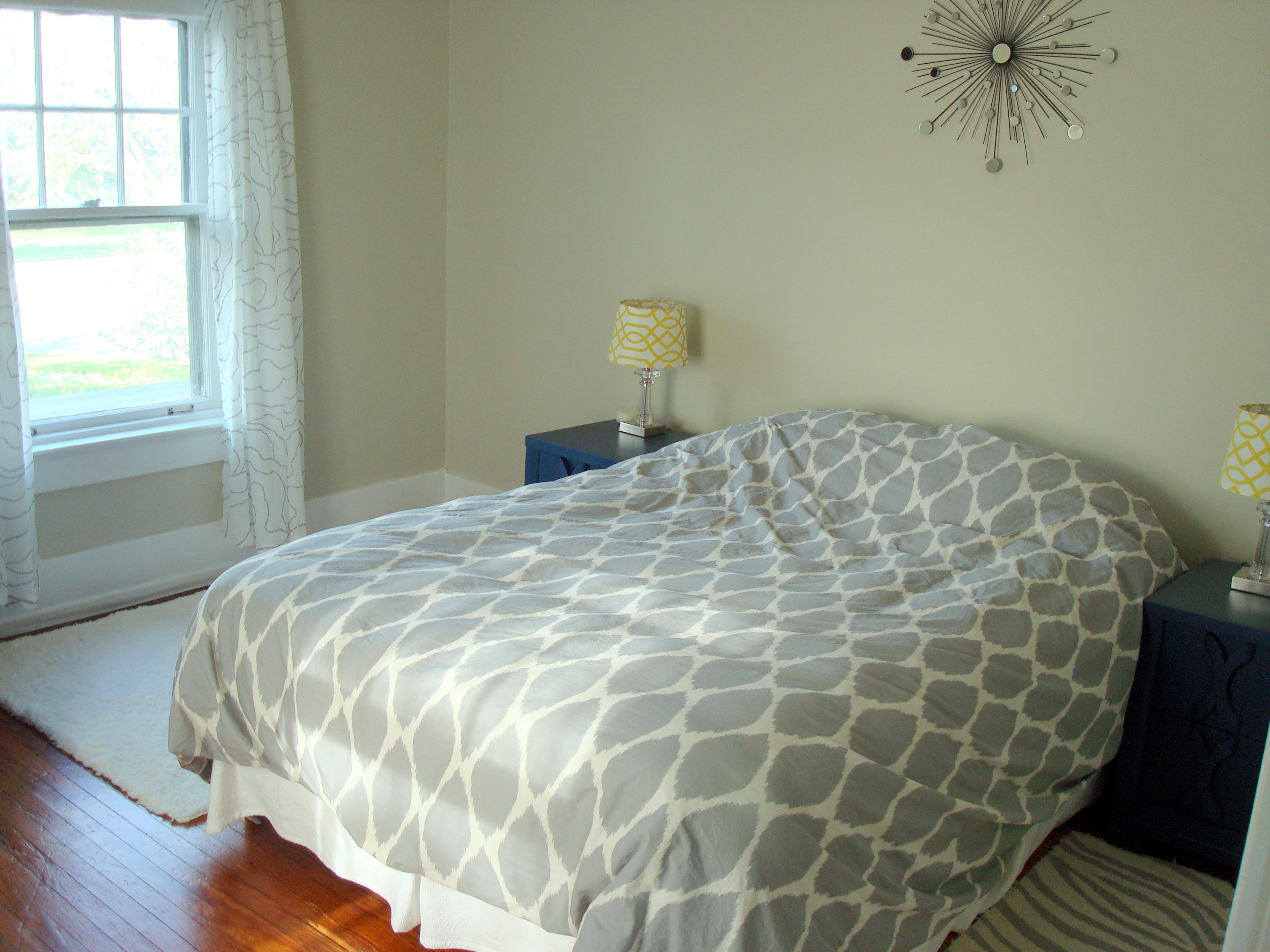
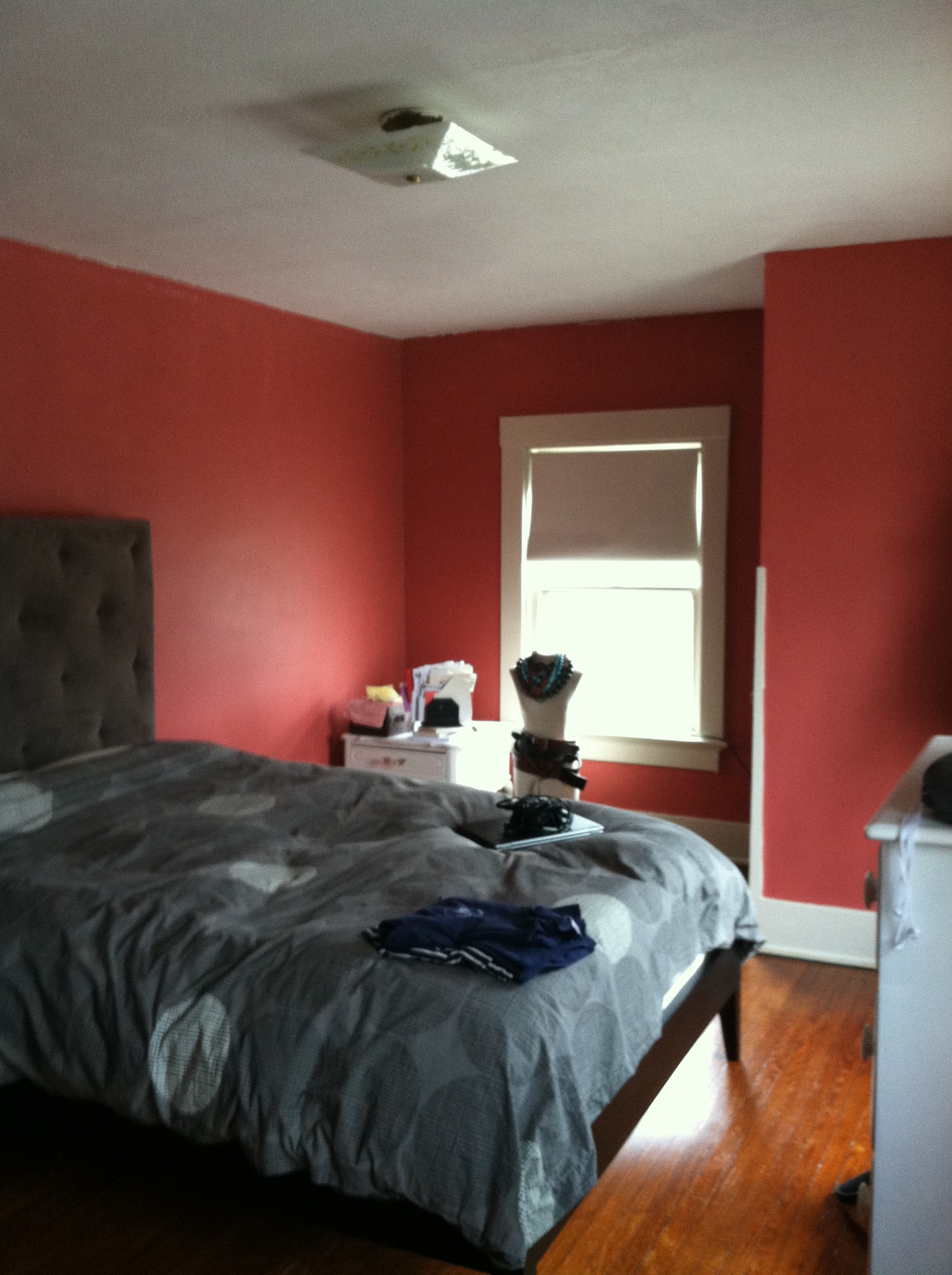
The master bedroom was painted coral and not just coral, but CORAL in ALL CAPS.  The photo below doesn’t do it justice but I swear to you it was almost neon.  It was hard to relax at night and fall asleep in a room that color.

2.26.13 117

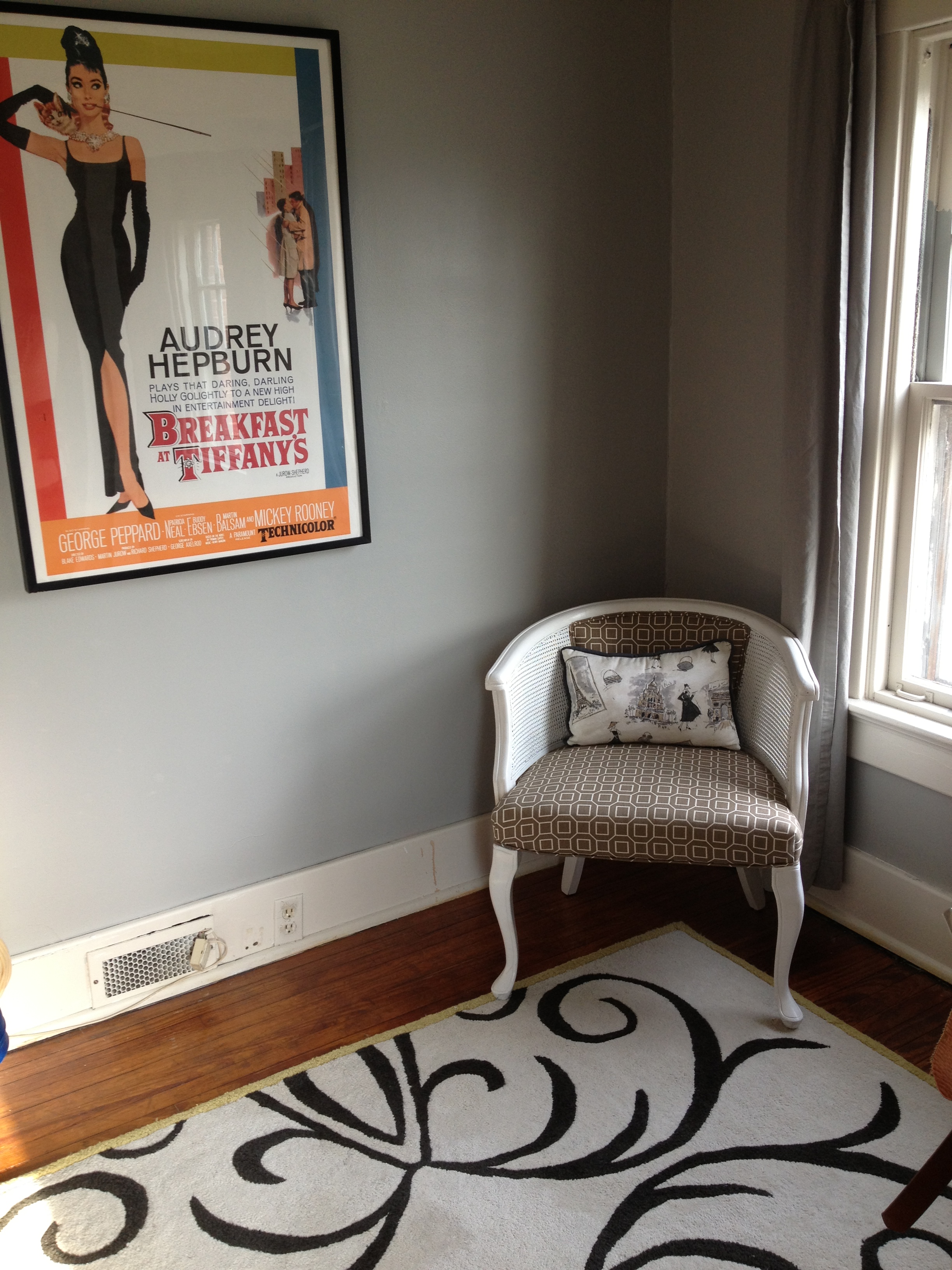
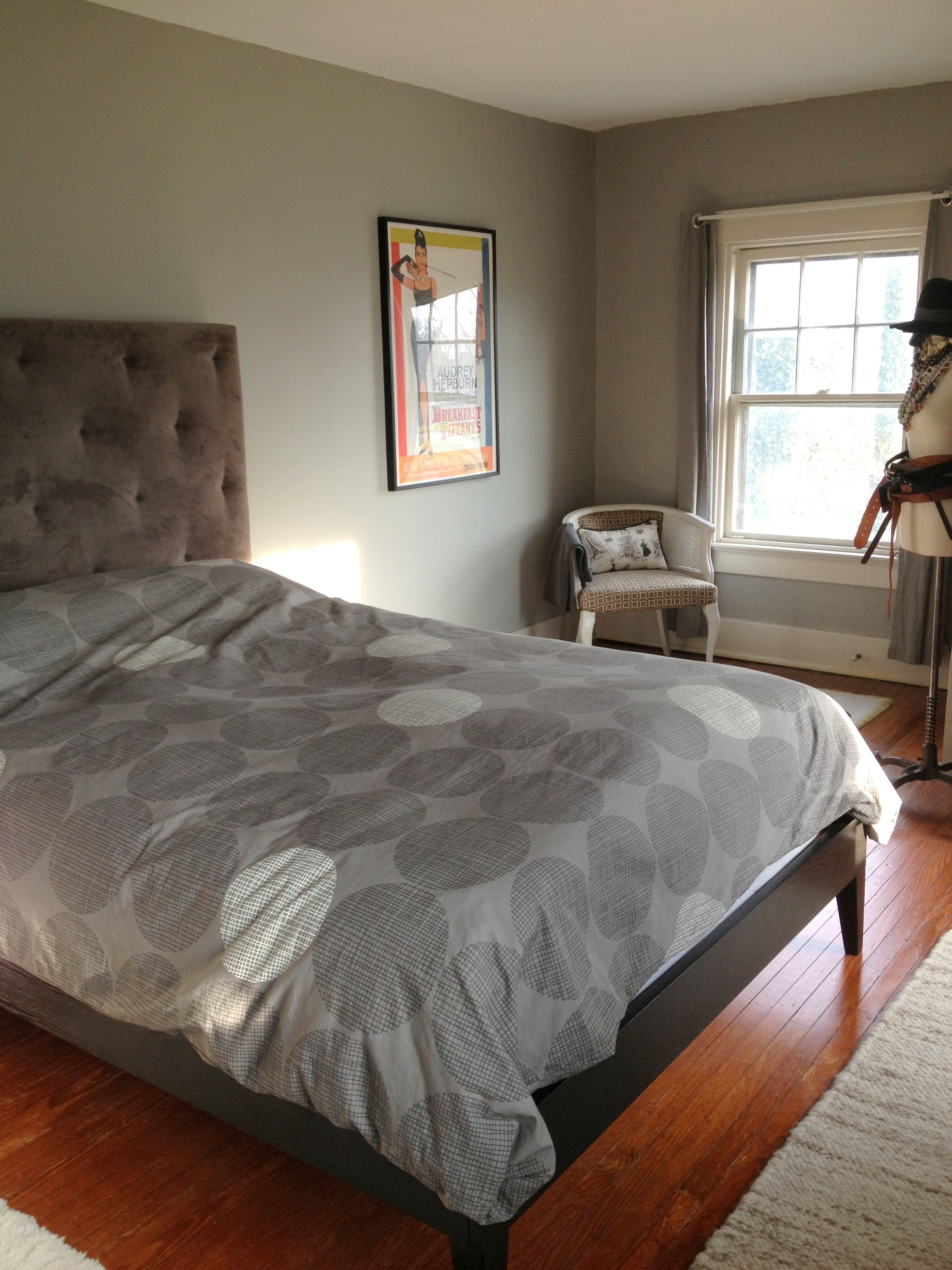
I sleep much better now that it is a soothing gray.

4-14-13 110

4-14-13 111

4-14-13 115

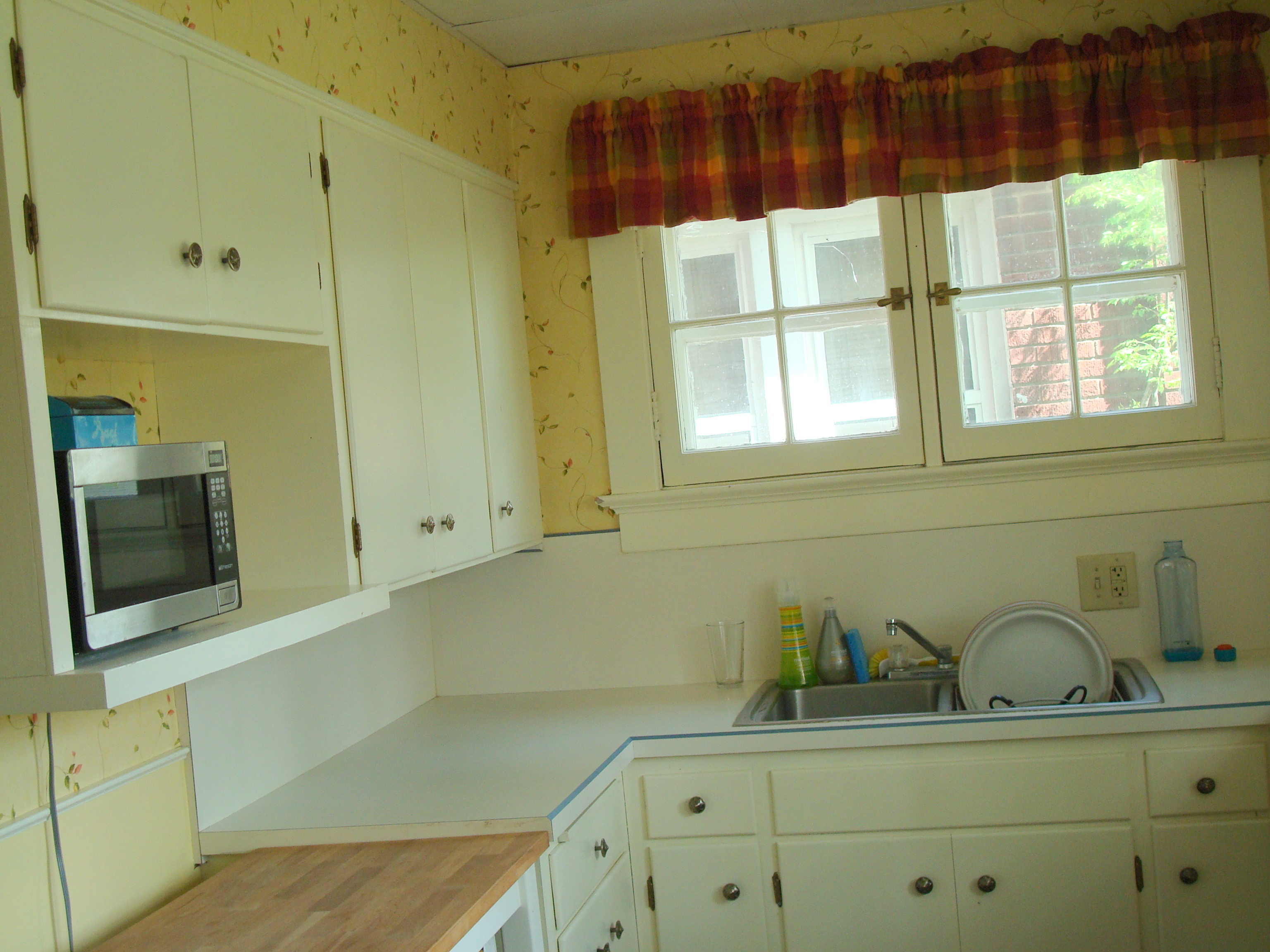
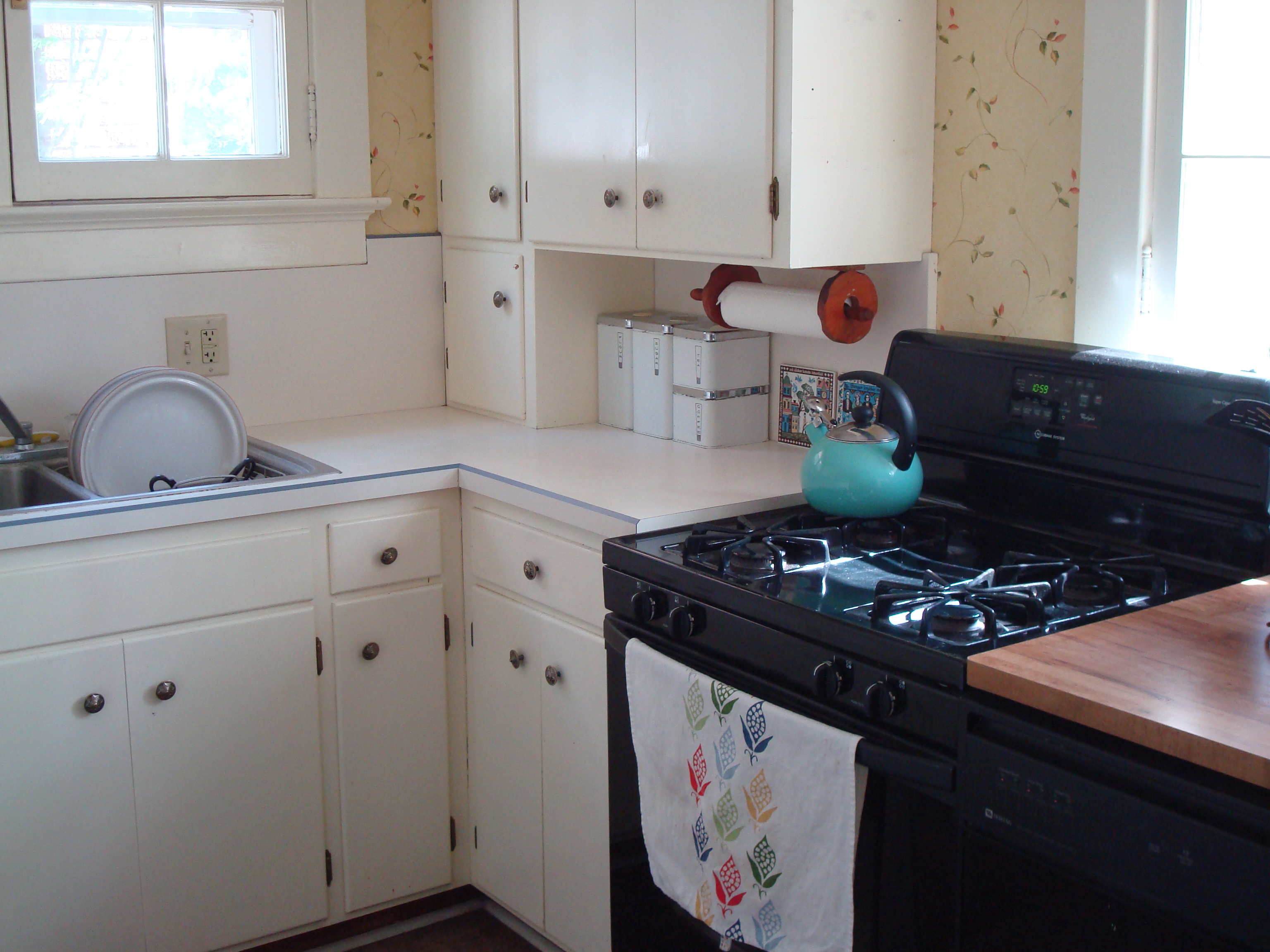
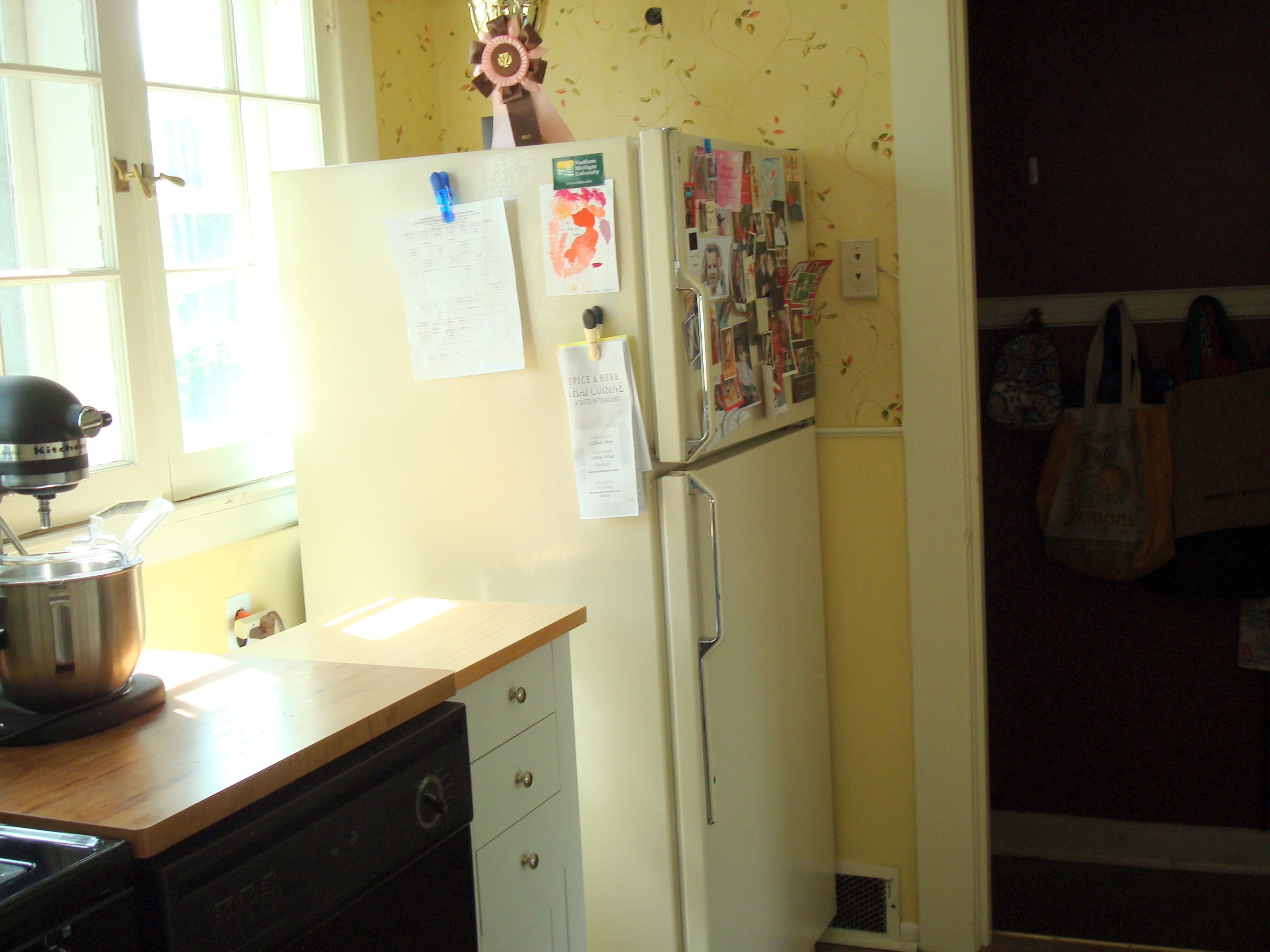
Since the kitchen is where the magic happens I wanted to include it, even though there’s not much to it.  I’ve had larger kitchens, but I’ve definitely had smaller too.  All of the kitchens I’ve lived in have been pretty kitschy and this is no exception.  The wallpaper is interesting as are the window treatments but I left them up as I figured it would be nearly impossible to find another fabric that would match remotely to the paper.  I did a little painting in here but neglected to take a before photo.  Just imagine the lower half of the wall painted in a celery green.  Special.

5.4.13 033

5.4.13 034

5.4.13 035